|
|
|
|
| News
| Articles, History,
Analysis | ICJ-Related
| Human
Rights | Books
| Treaties
| Events
| Baloch
Sites | Audio,
Doc
| Development | Contact
Us |
|
|
|
|
|
|
 |
|
'The Baluch': a 25-minute
video documentary.
Click to watch at vimeo: https://vimeo.com/106849279.
Click for coverage specific
to the killing of Baloch nationalist leaders Nawab Akbar Bugti in 2006, Balach
Marri in 2007, and the arrest of Balach Marri's brother political and human rights
activist Herbiyar Marri and fellow activist Faiz Mohammad Baluch in London in
December, 2007.
|
|
|
| |
|
|
Friends, we retired thebaluch.com, but it will remain here, serving as an archive of news and events dating through August 2010.
Thank you all for your support!
Long Live Balochistan!
thebaluch.com |
|
| Archive of:
Recent
News Highlights: |
| Articles, Essays, Interviews,
Books: |
| Human Rights, Events: |
Archive
of articles related to mining and exploitation of resources in Balochistan and
the region...
This also applies in Balochistan: In
Afghanistan, a Threat of Plunder,
by Paul Collier, NYTimes, Jul 19, 2010; the model
for development mentioned
also seems worth exploring |
| New: Lord Nazir Calls For Probe Into Diversion of Floodwaters to Balochistan, The Baloch Hal, Sep 5, 2010; More MPs call for judicial probe into dykes’ breaching, by Tahir Niaz, DailyTimes, Sep 5, 2010 |
| New: Three NATO Oil Tankers Set Ablaze, The Baloch Hal, Sep 5, 2010 |
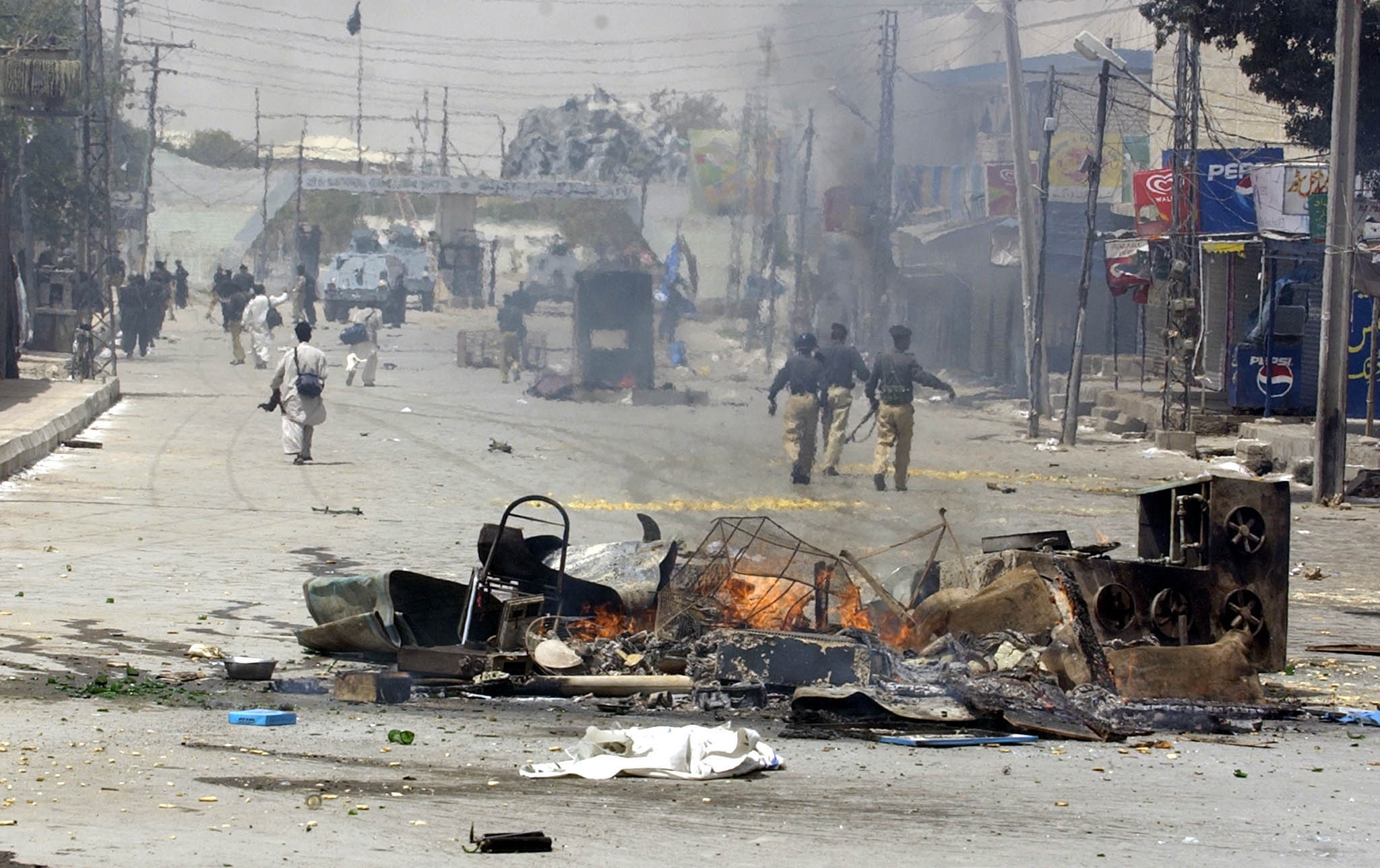
| BalochHal Editorial: Mistaking the Enemy, Sep 4, 2010; 75 killed, 200 Wounded in Quetta Suicide Attack, The Baloch Hal, Sep 4, 2010 |
| ICRC provides flood relief, calls Balochistan 'severely affected region', by Ahmar Mustikhan, Examiner, Sep 3, 2010 |
| 2 FC personnel killed in Khuzdar attack, BLA claimed responsibility for the attack, BalochWarna, Sept 3, 2010 |
| US to open consulate in Balochistan, says Patterson, The Tribune, Sep 2, 2010 |
| US to help flood-hit in Balochistan: consul general, Dawn.com, Sep 1, 2010 |
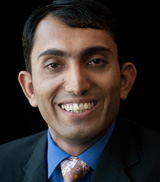 |
PANJGUR DIARY: Dr. Abid Shah — I, by Malik Siraj Akbar, Aug 29, 2010, Part II, Aug 30, 2010 |
| "The recent enforced disappearance of three citizens in Panjgur — Dr. Abid Shah, Abdul Sattar Baloch and Safeer Baloch—allegedly by the Frontier Corps (FC) gives a warning sign that the “threat” is at everybody’s doorstep..." |
 |
Indecent proposal, by Mir Mohammad Ali Talpur, DailyTimes, Aug 29, 2010 |
| Jamil Bugti Calls for Re-demarcation of Provinces, The Baloch Hal, Aug 29, 2010 |
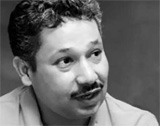 |
The great Baloch martyr, by Sanaullah Baloch, Daily Times, Aug 26, 2010; Balochistan ignored, Dawn, Aug 23, 2010 |
| From before: 'CIA worked with Pak to create Taliban', by Sanjay Suri, India Abroad News Service, March 6, 2001: "I warned them that we were creating a monster..." |
| The Last Nawab, BalochHal editorial, Aug 26, 2010 |
| Pakistan, Drowning in Neglect, NYTimes, Aug 25, 2010: "This is a place where peasants drown in rice fields they don’t own, where mud-and-brick villages are submerged to save slightly less expendable towns, and where dying villages stand next to airbases housing the most sophisticated fighter jets in the world. Such a country is owed more than just aid, it is owed nothing less than reparations from all those who preside over its soil. This includes politicians and bureaucrats..." |
| This is not the 70's, by Diagoh Murad, Diagoh Murad Blog, Aug 25, 2010 |
| In the region: U.S. Leaves Iraq Much Worse Off, by Adil E. Shamoo, truthdig.org, Aug 23, 2010: "[M]ost people in the United States do not know what happened in Iraq and what is happening there now. Our government, including the current administration, looks the other way and perpetuates the myth that life has improved in post-invasion Iraq. Our major news media reinforces this message. |
| Major human crisis looms in Balochistan, TheBalochHal, Aug 22, 2010 |
| Minister tasked with saving US airbase at the cost of the displacement of thousands, Asian Human Rights Commission, Aug 20, 2010: "According to the media reports, the Federal Minister of Sports along with soldiers from the army and a contingent of officials from the Sindh provincial government breached the Jamali Bypass in Jafferabad district of Balochistan province during the night between August 13 and 14 to divert the water entering the airbase which has remained in US Air Force hands since the war on terror started in 2001." |
| Global: Other Countries Probing Bush-Era Torture - Why Aren't We? by Shashank Bengali, McClatchy Newspapers, Aug 18, 2010 |
| In the region: The
US Has Lost in Afghanistan -- We Have to Come to Grips with What That Means,
by Conn Hallinan, Aug 16, 2010 |
| The
Baloch Hal editorial: Why
is CJP Afraid of Secularism?, Aug 20, 2010: "The CJP [Chief Justce
of Pakistan] has further scared his liberal supporters. Even those who
support the top judge’s
argument that Supreme Court of Pakistan should have the power to play the “big
brother” role in the country’s
politics are equally concerned about the political feelings of the CJP.
Who is going to guarantee that the Supreme Court, if granted more powers
than the Parliament, is not going to convert the country into a theocratic
state? What is going to happen to the rights of the millions of religious
minorities who have been victim of the religious zealots over the years?..." |
| Quetta,
Karachi: BSO-azaad and BNM activists protest against abductions of Baluch
leaders, BalochWarna,
Aug 20, 2010 |
| Airbase
near Jacobabad under US control, Senate panel told, by Imran Ali Teepu,
Dawn.com, Aug 19, 2010 |
| Akhtar
Mengal’s uncle Nadir Gichki shot dead in Tump, by Mohammad Zafar, Aug 19, 2010 |
| Baloch
Hal Editorial: Turmoil
in Panjgur, Aug 17, 2010 |
| Two
Balochistan towns face inundation, by Saleem Shahid, Dawn.com, Aug 17, 2010 |
| Jamali
demands Suo moto notice over diversion of flood water towards Balochistan,
TheNation, Aug 16, 2010: "Jan Jamali strongly lambasted some of the sitting
rulers who in order to trying to save Sindh and Jacobabad have diverted
the flow of flood water towards Balochistan." |
| Pakistani
forces crackdown in Baluchistan, dozens arrested including a leader of
BNM, BalochWarna, Aug
16, 2010 |
| Flood
threatens more Balochistan towns, DailyTimes, Aug 16, 2010 |
| Dera
Allahyar, Rojhan Under Water; Usta and Other Towns Evacuated, The Baloch Hal, Aug 16, 2010 |
| Pakistan's
leaders should heed the lesson of Bangladesh, by Delwar Hussain, The
Guardian, Aug 15, 2010: "Baluchis for example have been battling against
the Pakistani army since they were forcibly incorporated into the state
in 1947. Rather than ethnic diversity being at the root of this discontentment
as some commentators suggest, it is the years of oppression, forced detentions,
extra-judicial killings, exploitation and militarisation in these regions
that is at the root of their resentment. This is no different to East Pakistan
in 1970..." |
| New
wave of floodwater threatens Pakistan, The Guardian, Aug 15, 2010:
"Pakistanis are reluctant to contribute to government-run aid efforts,
fearing that the funds will be siphoned off through corruption." |
| Massive
Massive Violence Marks Independence Day Celebrations in Balochistan,
The Baloch Hal, Aug 14, 2010 |
| US
Consul General Reaffirms Support to Balochistan, The Baloch Hal, Aug
14, 2010, US Consul General to Karachi William Martin: "The new American
Consulate in Quetta will serve as an indispensable platform for the delivery
of aid for reconstruction and development." |
| In
the US: Secret
Assault on Terrorism Widens on Two Continents, by Scott Shane, Mark
Mazzetti and Robert F. Worth, NY Times, Aug 14, 2010 |
| Independence
Day: A Euphoric Day, by Diagoh Murad, Aug 10, 2010 |
| Nations'
international relations play an important role in the outcome of struggle
for liberation,
by M. Sarjov, Sarjau, Aug 10, 2010 |
Thinking
outside the box/global solutions:
A
Quick Sure Way to Defeating the Taliban, by Jonathan Marin,
Aug 8, 2010: "Indeed, the United States and other NATO governments could
buy the entire Afghan opium crop each year for far less than
the cost of keeping soldiers in Afghanistan..."
Law
Enforcement Against Prohibition: "LEAP does not promote
the use of drugs and is deeply concerned about the extent
of drug abuse worldwide. LEAP is also deeply concerned with
the destructive impact of violent drug gangs and cartels
everywhere in the world. Neither problem is remedied by the
current policy of drug prohibition. Indeed, drug abuse and
gang violence flourish in a drug prohibition environment,
just as they did during alcohol prohibition..."
War
on drugs: why the US and Latin America could be ready to
end 40-year struggle, by Rory Carroll and Paul Harris,
The Observer, Aug 8, 2010 |
| Islamabad
Refuses to Finance Water Schemes in Balochistan, The Baloch Hal, Aug 3, 2010> |
| Weakening
Pakistani Hold In Balochistan, by B. Raman, reposted at BalochUnity,
Aug 2, 2010 |
| Subsidy
on agriculture tube-wells withdrawn, by Saleem Shahid, Dawn.com, Aug
1, 2010 |
| Mengal
accuses government agencies of killing Baloch nationalists, The Baloch Hal, Aug 1, 2010 |
| Flood
Devastation Continues in Sibi, Kachhi Plains, The Baloch Hal, Jul 28, 2010 |
| In
the US: Obama
Administration In Danger Of Establishing "New Normal" With Worst Bush-Era
Policies, Says ACLU, American Civil Liberties Union, Jul 29, 2010; Torturing
the Rule of Law at Obama's Gitmo, by Chase Madar, counterpunch.org,
Jul 30, 2010; Democrat-backed
terror bill would ‘gut Miranda rights’, The
Raw Story, Aug 1, 2010 |
| US
announces special projects for Balochistan, The Baloch Hal, Jul 27,
2010 |
| All
Baloch shouldn't be tarred with same brush, by Cyril Almeida, Dawn.com,
Jul 25, 2010 |
| Unprepared
again, Dawn.com,
Jul 25, 2010 |
| Kucinich
Says White House Abused Its Power, Wants Forces Out of Pakistan, truthout.org,
Jul 23, 2010: "According to a statement by Congressman Dennis Kucinich
(D-Ohio), the White House has increased its military commitment to Pakistan
without Congressional oversight or approval..." (U.S.
Forces Step Up Pakistan Presence, by Julian Barnes, WSJ, Jul 20, 2010) |
| Thousands
rendered homeless by flood in Balochistan, by Saleem Shahid, Dawn.com, Jul 24, 2010
Saturday, 24 Jul, 2010 |
| Pakistan
increases power of army strongman General Ashraq Kayani, The Guardian, Jul 23, 2010: "He
is a favourite of the west despite the fact that he led the ISI from 2004
to 2007, exactly the period when the Taliban staged their comeback in Afghanistan,
allegedly with the agency's support..." |
| In Iraq: Toxic
legacy of US assault on Fallujah 'worse than Hiroshima', by Patrick Cockburn, The Independent, Jul 24, 2010 |
| BLA
claim to have killed 15 Pakistan army soldiers, BalochWarna, Jul 23, 2010 |
| Rains
Wreck Havoc in Balochistan,
Jul 23, 2010 |
| Kosovo's
independence is legal, by Peter Beaumont, The Guardian, Jul 22, 2010:
"UN court rules Decision in favour of Kosovo's independence could have
far-reaching implications for other separatist movements" |
| In
the US: How
Psychologists Profit on Unending U.S. Wars, by Bruce E. Levine, counterpunch.org,
Jul 22, 2010 |
| Report: Whither
Pakistan? Growing Instability and Implications for India, IDSA Task
Force Report, Intellibriefs.com, Jul 21, 2010 |
| Why
Iran is Bombing Iraq, and Why the U.S. Isn't Doing Anything About It,
by Dennis O'Brien, huffingtonpost, Jul 20, 2010, includes clip of Willem
Marx's report from Northern Iraq |
| From before: Balkanizing
Pakistan: A Collective National Security Strategy, by Michael Hughes, Huffington Post,
Jul 6, 2010 Wendy
Wendy |
| Iran
Accuses U.S, Pakistan of Supporting Terrorism, by Jay Solomon, Wall
Street Journal, Jul 20, 2010: "Tehran has long accused the U.S. and Pakistan
of training and arming Jundullah..." |
| Global: Calling
All Future-Eaters, by Chris Hedges, Truthdig, Jul 19, 2010: "Our moral obligation
is not to structures of power, but life..." |
| BNP
Policy Not to Be Changed On Teenagers’ Dictations: Akhtar Mengal, The Baloch Hal, Jul 20, 2010 |
| Situation
in Iranian Balochistan: An Update, by B. Raman, South Asia Analysis
Group, Jul 20, 2010 |
| Environmental: Greenpeace
finds evidence of GM rice contamination in China's emergency grain stores,
by Jonathan Watts, The Guardian, Jul 20, 2010: "Some environmental activists
suspect scientists and biotechnology companies may be deliberating spreading
genetically modified rice into seed supplies, paddy fields and supermarkets
so they can declare de facto approval of the products..." |
| The
Iranian revolutionary guards started an indiscriminate anti Baluch crackdown, BalochWarna, Jul
20, 2010 |
| A
hidden world, growing beyond control, by Dana Priest and William Arkin,
WashingtonPost, Jul 19, 2010 (orig.) |
| For validated independent news:
Project Censored International |
| In
Pakistan:
Trade
deal promises bright future for Afghanistan's farmers, An agreement
signed between Kabul and Lahore will permit access through Pakistan to India's
lucrative markets, by Jon boone, Guardian, Jul 19, 2010; Pakistan
denies India land transit route to Afghanistan, DailyTimes, Jul 19, 2010, "To
tackle the issue of unauthorised trade, it has been agreed that tracking
devices will be installed on all transport units and a mechanism for custom-custom
information sharing will also be established..." (background: The
Radcliffe Line is drawn through Wagah); Wagah – The tragicomedy of India-Pakistan, Reuters, Apr 23, 2010 |
| Taxes
in Pakistan Widen the Divide of Rich and Poor, by Sabrina Tavernise, NYTimes, Jul 18, 2010:
"This is a system of the elite, by the elite and for the elite,” said
Riyaz Hussain Naqvi, a retired government official who worked in tax collection
for 38 years. “It is a skewed system in which the poor man subsidizes
the rich man..." |
| In
the region: Afghan
Envoy Holbrooke and Senate in La La Land, by Medea Benjamin, alternet.org,
Jul 18, 2010: 'Holbrooke chided his predecessors who had trained Afghan
security forces for years, at enormous costs, without realizing that we
had to also teach them to read and write. Literacy, he assured the senators,
is now part of our training. No one asked why the Taliban fighters, who
are also illiterate, were outmaneuvering both the Afghan security forces
and U.S. military...Holbrooke assured the senators
that we are helping Afghans develop their resources and strengthen their
economy. Oh yes, he added, we want to make sure that the U.S. has “a
level playing field” in getting access to those minerals...Senator
Lugar who supports the war but remarked, during the hearing, that the U.S.
had become stuck in a “slow-motion caravan to ultimate failure."' |
| Baloch
Hal Editorial: Gilani
Must Respect GoB’s Stance on Reko Diq Project, Jul 17, 2010 (from before:
Balochistan
pledges to run Reko Diq, by Syed Fazl-e-Haider, May 27, 2010) |
| Iran
accuses US and UK of supporting group behind mosque attacks, CIA
denies claims it has been backing Jundullah, the Sunni separatist group which has claimed responsibility for the bombs, by Ian Black, The Guardian, Jul 16, 2010 |
In
the US: The
Fall of Obama,
by Alexander Cockburn, Counterpunch.org, Jul 16-18, 2010: "It’s awfully
early in the game to say it, but, as Marlene Dietrich said to Orson Welles
in Touch of Evil, 'your future is all used up.'" |
| In the region: Hearts,
minds and the same old warlords, by Stephen Grey, Le Monde diplomatique, Jul 2010 |
| Comprehensive
security for OGDCL in Balochistan areas, by Khaleeq Kiani, Dawn.com,
Jul 14, 2010 |
| Raisani
Seeks a Viable Proposal to Run Reko Diq Project, The Baloch Hal, Jul 13, 2010 |
| On
the topic of good governance--in short supply everywhere: an
example of how the US government increasingly does NOT represent its citizens,
but rather corporate interests. The fact that US marine scientists can
NOT get access to important taxpayer-funded government data regarding the
oil spill--while BP can--is a case in point. NOAA
Hoarding Key Data On Oil Spill Damage, by Dan Froomkin, Jul 13, 2010 |
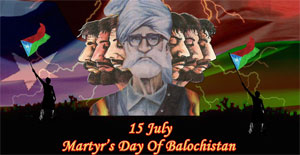 |
| Balochistan
Martyr's Day, Jul
15: Click on image for
details of the second Baloch insurgency led by Nawab
Nouroze Khan, poster by Baloch Vanguards |
| Balochistan
Belongs to Balochs; No “Equal Status” for Others: BNP, The Baloch Hal, Jul 12, 2010:
'...BNP central secretary general Habib Jalib Baloch
said Balochs were not bound under any circumstances by the international
agreements signed between Islamabad and different countries of the world
on projects related to the Baloch resources.“The Baloch people were
not consulted while inking these projects. Therefore, we do not abide by
their terms and conditions,” he said...' |
| Global: On
creativity: The
Creativity Crisis, Newsweek, Jul 10, 2010 |
| In the region: Revealed:
How strategy to train Afghan forces is in deep trouble, IoS investigation
finds Afghan army and police riddled with addicts, illiterates and insurgents, by Jonathan Owen and Brian Brady, The Independent, Jul 11, 2010 |
| New: The
world and Persian have ignored violence against Baluch for so long,
by M. Sarjov, Sarjau, Jul 5, 2010 reposted at BalochUnity, Jul 10, 2010 |
| Pakistan
Raises Bramdagh Bugti’s alleged presence in Afghanistan With US Authorities, The Baloch Hal, Jul 9, 2010 |
| Balochistan
On the Verge Of A “Civil War”: Telecommunication Minister, The Baloch Hal, Jul 8, 20110: "[Dr.
Ayatullah Durrani] warned that if the attitude of ‘hot heads’ did not change, the situation could take an ugly turn pushing the province close to a ‘civil war’..." |
| Fashionable
dreams in Balochistan, DailyTimes, Jul 8, 2010 |
| University
Of Balochistan On The Brink Of Closure Due To Fiscal Crunch, TheBalochHal, Jul 7, 2010 |
| Balochistan
Diary: Chamalang project: bury the past, buy the future, by Saeed Minhas,
DailyTimes, Jul 6, 2010 (from the editors: if anyone has further details
on this project, please send them to us: For ex., it says Rs 800 million
have been collected, out of which 1/2 has gone to security and social programmes.
How much of that 1/2 has gone to social programs? Do the poor benefit?) |
| Editorial:
Unreasonable Obstruction To A US Consulate In Balochistan, TheBalochHal, Jul 6, 2010 |
CIA
And Pakistan Locked In Aggressive Spy Battles, by Adam Goldman and
Matt Apuzzo, AP, Jul 5, 2010: "...Bumping
up against the ISI is a way of life for the CIA in Pakistan, the agency's
command center for recruiting spies in the country's lawless tribal regions.
Officers there also coordinate Predator drone airstrikes, the CIA's most
successful and lethal counterterrorism program. The
armed, unmanned planes take off from a base inside Pakistani Baluchistan
known as "Rhine."
(from the editors: AP would
better serve its readers if its writers would spend
time in Baluchistan, study ts history and troubles. The writers would then
know that serving up cliches like 'lawless tribal region' in reference to
Baluchistan, only strengthens the hands of the lawless who govern Pakistan.) |
| BLA
disowns killing of girls, threats to NGOs, Baluch Sarmachar, Jul 4,
2010 |
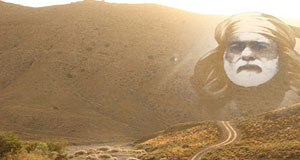 |
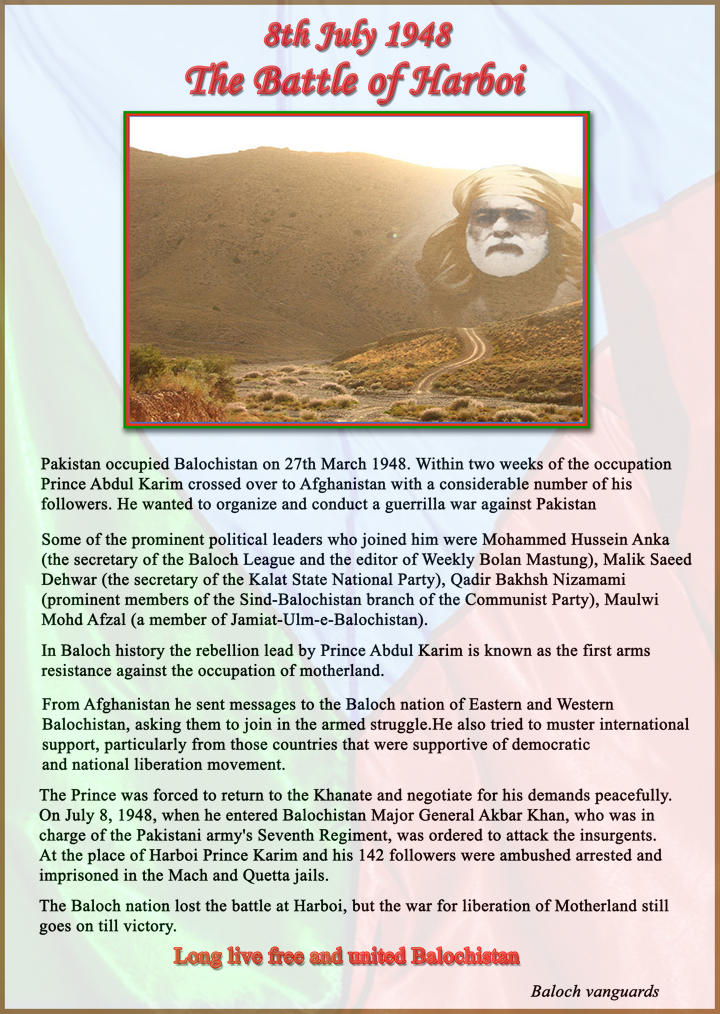
| July
8, 1948: Click
to read about the Battle of Harboi, essay about Prince Abdul Karim's
Baloch-led armed resistance against Pakistan, the first of five rebellions.
Posted by Baloch Vanguards |
| Balochistan
Diary: Trust deficit keeps growing, by Saeed Minhas, DailyTimes, Jul
5, 2010: "Failing to tend to development or even the basic needs of the
massive population, especially the youth, which now forms more than 57
percent of the total population of the province, political
bigwigs and revolutionaries of the past are finding themselves useless
in the face of aggressive, jobless and neglected youths. Many seasoned politicians,
who consider themselves champions of Baloch rights and are known for holding
the flag of rights-struggle since partition days, expressed concerns at
development in a post-Bugti scenario..." |
| Thousands
Of NATO Trucks, Tankers Stranded On National Highway, TheBalochHal, Jul 4, 2010 |
| “Balochistan
Refuses land for US, UK Consulates”: Senior Minister, The Baloch Hal,
Jul 4, 2010: "While the progressive people in Balochistan had widely welcomed
the US official decision to establish a consulate in Balochistan, the religious
right wing, which is supportive to Taliban, used the recent Facebook controversy
to muster enormous anti-US feelings during its protests against the popular
social network to link the caricature row with the setting up of a US consulate
in Quetta..." |
| Balochistan:
Not an Internal Matter, by Diagoh Murad, Jul 4, 2010 |
| : Reko
Diq, TCC and the Future of Baloch, by Gwaraam Baloch, BalochUnity.org,
Jul 1, 2010 (reposted here) |
| In
the region: Hunza,
Pakistan (Disaster), video documentary by Nisar Ahmed. Recounts how
the disaster unfolded and how the Pakistan government failed the citizens
of Hunza. |
 |
| Baloch
people have expectations from Gwadar Port: Raisani, DailyTimes.com.pk, Jul 1, 2010 |
| Iranian
revolutionary guards attacked Baluch villages under Pakistan’s occupation,
by Archen Baloch, Gwank.org, Jun 30, 2010 |
 |
Energy
Security In Exchange For Independence, by Dr. Jumma Khan Marri, Countercurrents,
Jun 26, 2010 (also at nyc.indymedia, japan,
indymedia |
| Karzai
met Kayani, ISI chief for 'talks' with Haqqani: report, Hindustan Times,
Jun 29, 2010 (more on
this topic) |
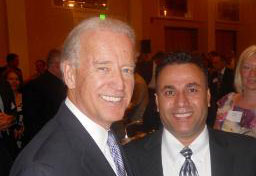 |
| Baloch
leader meets Vice President Joe Biden, draw his attention to the
Balochistan's situation, BSO-NA.org, Jun 25, 2010 |
| Renewed
strains between Islamabad and Washington, by Ahmed Rashid, BBCNews.com, Jun 25, 2010 |
| Local
reports on attacks and counterattacks in Balochistan, Jun 20, 2010 |
| From
before: Balochistan
on the brink,
by Zulfikar Shah, Rally Pakistan, Jun 18, 2010: "Today, the danger of the
dismemberment of the country is greater than ever before. The time has
come for Pakistan’s civil-military establishment to change its attitude
towards the people and their problems. Let the federating units be given
provincial autonomy so that a just socio-economic contract may be implemented..." |
| In
the US: High
court upholds anti-terror law, by Mark Sherman, AP, Jun 21, 2010: "The
court ruled 6-3 Monday that the government may prohibit all forms of aid
to designated terrorist groups, even if the support consists of training
and advice about entirely peaceful and legal activities..." (also, What
Counts as Abetting Terrorists? by the editors, NYTimes.com, Jun 21, 2010:
David Cole-"According to today’s Supreme Court decision, advocating
for human rights and peace can be prosecuted as a “terrorist” crime,
punishable by 15 years in prison..." |
| From Dad
Shah to Regi, by Malik Siraj Akbar, TheBalochHal, Jun 21, 2010 |
| Iran
hangs Sunni militant leader Abdolmalek Rigi, BBCNews, Jun 20, 2010;
Profile: Iran's
Jundullah militants, by Roger Hardy, BBCNews, Jun 20, 2010; Abdolmalek
Rigi hanged at dawn, BBCNews Urdu, Jun 20, 2010 |
| Quetta
car bomb blast kills soldier, Dawn.com, Jun 20, 2010 |
| Balochs
resent Iran-Pakistan gas pipeline: BNP, Baloch Hal, Jun 19, 2010 |
 |
The Grieving
ceremony of Raskoh (Chagai) in Washington, by Hafeez Hasan Abadi, translated By Diagoh
Murad (original:
DailyTawar) |
| Oman
to provide $45m grant for Gwadar development projects, by Mohammad Zafar, DailyTimes, Jun 19, 2010 |
| Editorial:
End of Mercy (Corps)?, Baloch Hal editorial, Jun 15, 2010 |
| Gas
pipeline project will benefit Balochistan immensely: Raisani, by Mohammad
Zafar, DailyTimes, Jun 15, 2010 |
| Iran
to execute Abdolmalik Regi soon (Parsdaily News), BalochWarna, Jun
15, 2010 (additional: arrest news
and video; report of 'confession';
report on hanging of Abdul
Hameed Rigi, brother of Abdul Malik Rigi) |
| Aid
group halts Pakistan work after employee slain, Dawn.com, Jun 15, 2010; Mercy
Corps shuts down offices in Balochistan after its driver’s murder,
The Baloch Hal, Jun 15, 2010 |
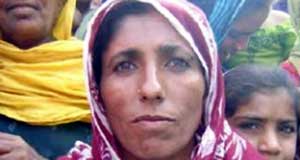
photo: Dawn.com |
| Headstrong
peasant woman challenges feudal lords, by Mohammad Hussain Khan, Dawn.com,
Mar 17, 2010: "I will contest the forthcoming local bodies’ elections
as there can be no better way than to fight injustices. I will fight as
long as I am alive...perhaps she may be among the few to have
carried out her election campaign on a donkey cart because of the shortage
of resources..." |
|
The
interests of Russia and America in Balochistan,
Crucial time for Baloch leadership to make right decision, by Hafeez Hasanabadi,
gwank.org, Jun 14, 2010 |
| In
the region: U.S.
Identifies Vast Riches of Minerals in Afghanistan, by James Risen,
NYTimes.com, Jun 14, 2010 |
| From
before: ‘Final
Solution’ Frenzy – Part Four: Final Solution for Pakistan,
News Central Asia, May 1, 2010: "...There are three main pillars of
the ‘Final Solution’: 1. Cut the western half of Balochistan
from the rest of Pakistan and declare it ‘international strategic
corridor’..." |
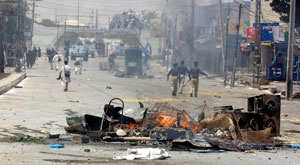
Protests in Balochistan over killings of BSO activists, Jun 13, 2010;
source: TheBalochHal.com |
| Iran
approves "peace pipeline" deal
with Pakistan, Dawn, Jun 13, 2010: "...The pipeline will connect
Iran's giant South Fars gas field with Pakistan's southern Baluchistan and
Sindh provinces..." |
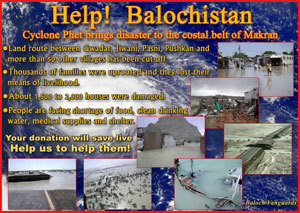 |
| BNF
appeals International Aid Agencies and Baluch Nation to help flood victims,
BalochWarna, Jun 11, 2010; Gwadar
Flood-victims protest over inadequate relief, The Baloch Hal, Jun 11,
2010; Baluch Kumakaar relief camp photos |
| Two
BSO-Azad activists gunned down in Khuzdar, The Baloch Hal, Jun 11, 2010 |
| US
Consul General meets CM Raisani, The Baloch Hal, Jun 11, 2010 |
| CM
declares Gwadar, Pasni, Jiwani declared calamity-hit areas, The Baloch
Hal, Jun 8, 2010; BNF
appeals International Aid Agencies and Baluch Nation to help flood victims,
BalochWarna and Baluchsarmarchar,
Jun 8, 2010 |
| In
the region: With
U.S. Aid, Warlord Builds an Afghan Empire, by Dexter Filkins, NYTimes.com,
Jun 5, 2010 |
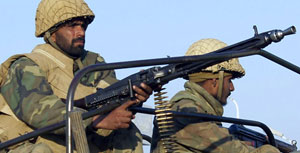
Pakistan army |
Report: Pakistani
Forces have seized water supplies in Kashaf, Bor, Bashali, Sabzal Bazar,
Katris and adjoining areas in Makauran, Baluchistan. (full report,
compiled from local sources); Release: International
community should intervene in Makuran Balochistan, against the new wave
of violence by Pakistan Army, forwarded by Asian Human Rights Commission
from BHRC, Canada, Jun 4, 2010 |
BHRC
Release: Baloch
Human Rights Council (Canada) expressed its deepest
concerns over the new wave of gross human rights violations committed by
the Pakistani army soldiers in the Makaran region of Balochistan..., Toronto,
Jun 1, 2010.
Forward by Imtiaz Baloch: "While
a brutal paramilitary crackdown continues unabated against the Baloch,
and while Ahmadis and Shias are being brazenly massacred by the Establishment
assets, the protests by Pakistani civil society and their Islamist allies
are mostly limited to the 9 Turks killed by the IDF..." |
| Pakistan
evacuates 60,000 as cyclone Phet looms, Dawn.com, Jun 3, 2010 |
| Canada’s transnational mining industry implicated in abuses, by Sakura Saunders, The Dominion, Jun 2, 2010 (reposted
at BalochUnity) |
| U.S.
urged to intervene: Pakistan military operation in Mekran, by Ahmar
Mustikhan, Balochwarna.com, Jun 2, 2010 (source) |
| Balochistan
set to have first science centre, Dawn.com, Jun 1, 2010 |
| Pakistani
military is currently carrying out massive operation in Gwader District
of Baluchistan, BalochWarna, Jun 1, 2010 |
| Professor
Saba Dashtyari reaffirms call for Balochistan’s independence, TheBalochHal, May 31, 2010 |
Hafeez Hasan Abadi |
Announcement
of the Establishment of USA Consulate in Quetta, by Hafeez Hasan Abadi,
May 30, 2010 |
| Police
kill BNP worker during Quetta protest, DailyTimes, May 30, 3010 |
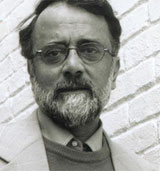 |
Before
the Endgame America's Fatal Flaws in Afghanistan, by Ahmed Rashid, Der Spiegel, May 26, 2010 |
| Pakistan:
Can the United States Secure an Insecure State?, by C. Christine
Fair, Keith Crane, Christopher S. Chivvis, Samir Puri, Michael Spirtas,
Intellibriefs, May 25, 2010 |
| Balochistan,
Power Politics and the Battle for Oil, by John Stanton, Global Research.ca,
May 25, 2010 |
| Excerpt
from an Interview with a European Journalist about Smoldering Balochistan, by by Hafeez Hasan Abadi,
May 24, 2010 |
| Balochistan
govt to buy shares in PPL, The Baloch Hal, May 21, 2010 |
| Pakistan
fears establishment of US consulate in Quetta: US
proposal for new consulate in Quetta a ‘security risk’, by Iqbal Choudhry,
DailyTimes, May 21, 2010; The
Construction of USA Consulate in Balochistan & the
Aftermath, interview with Mr. Kachkol Ali by Gwank.org, trans. Diagoh
Murad, May 16, 2010 |
| Johann
Hari: Islamists, their victims, and hypocrisy, by Johann Hari, The
Independent, May 20, 2010: "On the day we allowed two al-Qa'ida members
to remain, two other young people waited for the police to see them, and
hand them over to men who will kill them" |
| The
Baloch Hal editorial: The
insecure women of Balochistan, May 17, 2010 |
| Baloch-Pashtun
clashes erupt; 40 injured; 20 arrested; universities shut down, The
Baloch Hal, May 17, 2010 |
| Pakistan's
military and intelligence agencies turn a blind eye to extremist religious
groups, the Taliban and Saudi influence--see its results: |
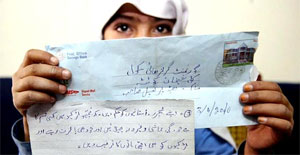
photo source: dawn.com |
| New: Balochistan
schools receive TTP’s threatening letters, Dawn.com, May 15, 2010; Private
schools threatened in Mastung against “western-style” uniform, The Baloch
Hal, May 15, 2010 |
| Skeptic
Life blog: Acid
Attack on Three Sisters in Balochistan!!!, by Imran Baloch, May 15, 2010 |
| The
Times Square Bomber: Home-Grown Hatred?, by Ahmed Rashid, The New York
Review of Books, May 14, 2010 |
| "...Not
surprisingly, the Zardari government, the army, and Pakistani politicians
have also muddied the waters...Islamabad continues to fudge the paramount
issue—the need
for Pakistan to launch a comprehensive campaign against all extremist groups
rather than the hit-and-miss anti-terrorism measures it is presently pursuing.
That selective campaign leaves untouched the Afghan Taliban based in Pakistan—including
Mullah Omar and other top leaders..." |
| From
before: Malik Siraj Akbar writes blog: How
Panjgur is losing the battle, Sep 25, 2009 |
| Now
Jihadi groups are inserting their influence on Baluch tribal chiefs, Sarjau, May
11, 2010 |
| BLUF
asks ICRC and all UN agencies to leave Balochistan, The Baloch Hal,
May 15, 2010; BRA/BRP
disown threats to ICRC’; term it agencies’ conspiracy
against Baloch movement, May 15, 2010 |
| TCC
distributes certificates among students, The Baloch Hal, May 15, 2010 |
| US
to open a “small consulate” in Balochistan, TheBalochHal, May 14, 2010: "The
United States of America is planning to establish a “small consulate” in
Balochistan to supervise development projects in the province, confirmed
US Ambassador to Pakistan, Anne W Patterson on Thursday..." (post at Express
Tribune) |
| Making
the impossible possible, by Kalsoom Lakhani, Dawn.com, May 14, 2010 |
| Marri-Mengal
tussle: Please stop the music, May 14, 2010 |
| Photos
of US ambassador Anne W. Patterson’s visit to Balochistan, TheBalochHal,
May 13, 2010; US
ambassador Patterson meets CM Raisani, May 13, 2010 |
| Farmers’ strike
paralyses Balochistan, by Shahzad Baloch, The Express Tribune, May
11, 2010 |
| Recent
Pak high-level meetings with Baloch leaders, including: Shahbaz
Sharif calls on Ataullah Mengal, May 9, 2010 |
| An
unfriendly foreign education project for Balochistan, by Malik Siraj Akbar, TheBalochHal, May 9, 2010 |
| “Mango diplomacy” will further divide the Balochs, by Malik Siraj Akbar, TheBalochHal.com, May 9, 2010 |
| Mental
harassment of Baloch women, by Parveen Naz, TheBalochHal, May 8, 2010 |
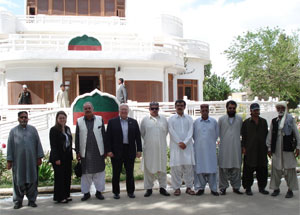 |
| US
diplomat meets Khan of Kalat family, The Nation, May 2, 2010, orig
article (on facebook) |
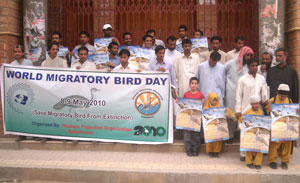 |
| Above: Houbara
Protection Organization and Chagai Conservation Society Celebrated the International
Migratory Bird Day in Quetta (apnarakshan.org),
May 8-9, 2010 |
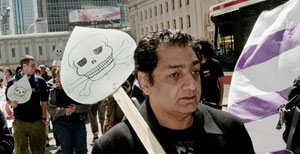 |
| In
Canada: Dr. Zaffar Baloch speech at
the UFT “Conference on the Canadian Mining Industry,” reposted
at BalochWarna |
 |
| May
7-9, 2010: Mining (in)Justice: At Home and Abroad conference), Baluchsarmachar,
May 7, 2010: "Mining (in)justice: at home and abroad is a conference on
the Canadian mining industry (including Tar Sands) set to take place in
Toronto on the weekend of May 7-9, 2010. It will feature leaders in movements
against Canadian mining companies both within and outside of Canada and
provide space for growing our own movements in alliance with communities
impacted by this industry." (report) |
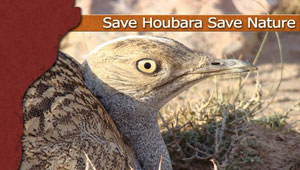 |
| The
Houbara Protection Organization: Please visit
this remarkable organization's website and donate to their efforts to protect
the houbara bustard and promote education. |
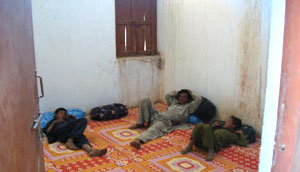 |
| View of a
Health Center in Dukki, 2010--known for its many coal mines and coal production
in Pakistan. Less than 1% percent of the vast revenues earned, however, is
spent by the Pak central govt. on impoverished Dukki. |
 |
New
site to launch within the next couple months: www.panjgur.com |

Hameed Sheikh as Omar Baloch in "Kandahar Break" directed by David Whitney |
Film: http://www.kandaharbreak.com/
Spoiler alert: the Baloch are saviors in
this film. The movie is set in Afghanistan in 1999 and includes scenes with
Baloch freedom fighters who explain their struggle. Additional
links: synopsis, youtube, youtube2.
Fan
on facebook (back
story), filmed, in part, in Kanak, Baluchistan. (cnn
video and interview with Hameed Sheikh; interview with director David Whitney) |
| Jirga
for including Rajanpur, DG Khan in Balochistan, The News, May 3, 2010 |
| Global: Water
pollution expert derides UN sanitation claims, by Juliette Jowit, The
Guardian, Apr 25, 2010 |
| Seminar
discusses impact of conflict on Balochistan’s politics and economy, The Baloch
Hal, Apr 21, 2010 |
| Baloch
Woman killed, 200+ activists detained in massive search operation in Quetta,
The Baloch Hal, Apr 20, 2010; also reposted at BalochWarna;
statement
by BSO-NA, statement by BHRC-Canada |
| Poetry: Burning
Reality, by Diagoh Murad, Apr 19, 2010 |
| CM
Raisani for alternative energy sources, The Baloch Hal, Apr 20, 2010 |
| Balochistan-The
Other Side of the Story, by Moign Khawaja, Neo Martian's Notes, Apr 18, 2010,
reposted at BalochUnity |
| U.N.’s
Bhutto Report Says What Pakistanis Already Know About Spy Agency and Army,
by Sabrina Tavernise, NYTimes, Apr 16, 2010 (original
report by UN) |
| Pakistan
suicide attack kills 10 at Quetta hospital, BBC News, Apr 16, 2010; Eight,
including journalist, killed, 35 injured in Quetta suicide blast, The
Baloch Hal, Apr 16, 2010 |
| Acid
attack: Violence
against women is against the Baluch tradition, by M. Sarjov, TheBalochHouse,
Apr 17, 2010; Editorial by The Baloch
Hal: Acidifying
two little sisters, Apr 16, 2010; Two
sisters injured in acid attack, by Urooj Zia, Balochwarna.com,
Apr 15, 2010, reposted from TheNews |
| Second
attack on Balochs students in Punjab within a week, reposted at BalochWarna
from source at sagaar.org, Apr 15, 2010 |
| U.N.
Report Finds Faults in Pakistani Bhutto Inquiry, by Sabrina Tavernise,
NYTimes, Apr 15, 2010 |
| Video: Beautiful
Chotok Waterfalls, Khuzdar, Balochistan |
| Existence of horrific disease in Kachchi a serious blow on face of humanity in 21st century, TheBalochHal, Apr 6, 2010 |
| In the region: How the Americans are propagandized about Afghanistan, by Glen Greenwald, Salon.com, Apr 5, 2010 |
| In the region: Karakorum Highway and the Indian Option, by CN Anand, Desicritics.org, Apr 2, 2010 |
| APCA
to hold long march to wards Islamabad, The Baloch Hal News, Mar 29, 2010 |
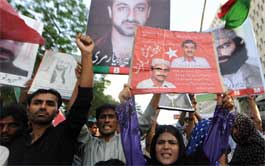
Video: BSO-BNF
rally in Lyari, Karachi, youtube.com, Mar 27, 2010: Mar 27, the day Balochistan
was annexed to Pakistan by force, is observed as a 'Black Day'
 |
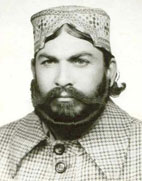 |
Mir
Hazar Khan Marri and Baloch national struggle, a historical analysis,
by Shah Nawaz Marri, Mar 27, 2010, balochunity.org |
| The war on WikiLeaks and why it matters, by Glen Greenwald, Salon.com, Mar 27, 2010 |
| Foreigner
has interests in preserving Pakistan, by M. Sarjov, Balochunity.org, Mar 27, 2010 |
| Release: BSO-NA
opposes Iran-Pakistan Gas Pipeline accord, termed it as “Grand Religio-Commercial
deal of the century”, by BSO-NA.org, Mar 27, 2010: "We consider Balochistan
as an occupied territory and Pakistan has no legal and moral
right to sign any such deal.” |
| Dr.
Zaffar Baloch interview on Gwank Radio, gwank.org, Mar 28, 2010 |
| Balochistan:
Pakistan's broken mirror, by Madiha R Tahir, TheNational, Mar 25, 2010 |
| Unjust
Demands, by Diagoh Murad, Mar 25, 2010 |
| Conference
calls for new social contract, by Mohammad Hussain Khan, Mar 24, 2010 |
| Educationist
shot dead by the BLA in Quetta, by Saleem Shahid, Dawn, Mar 23, 2010 |
| In
the region: U.S.
may expand use of its prison in Afghanistan, by David S. Cloud and
Julian E. Barnes, LA Times, Mar 21, 2010 |
| Global,
from before: Billionaires
and Mega-Corporations Behind Immense Land Grab in Africa, by John Vidal,
Information Clearing House, Mar 11, 2010 |
| Baloch
Women Panel protest against occupation of Baloch lands, BalochWarna.com,
Mar 20, 2010; Balochistan
seeks return of land from Pak Navy, The Nation, Mar 23, 2010 |
| Hindu-Sikh
Minorities in Pakistan: The Vanishing Communities, by Maloy Krishna Dhar,
Frontieir India, Mar 19, 2010; reposted at Intellibriefs |
| Jal
Jihad a ploy to hide Pak Punjab stealing Sindh & Balochistan water,
Bharti Jain, Mar 17, 2010, reposted at Intellibriefs |
| Two
Nato tankers attacked in Balochistan, Dawn.com, Mar 16, 2010 |
| Karachi
'water mafia' leaves Pakistanis parched and broke, by Alex Rodriguez,
LA Times, Mar 15, 2010 |
| Four
Baloch students including three females awarded 5 years each on 2010/3/15,
Balochwarna.org, Mar 15, 2010 |
| In
the region: Tarbela
Dam & Karkoram Highway Threatened in Pakistan, by C.N. Anand, DesiCritics.org,
Mar 13, 2010: "...The difference between the earlier two situations
of 1841 and 1858 and now is that Pakistan has created a lot of assets in
the form of the Karkoram Highway (KKH) with many bridges, and the world's
largest earth and rock-fill dam, the Tarbela dam." related links: |
|
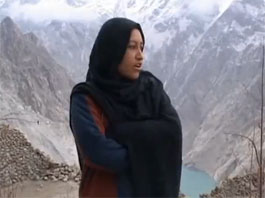
| youtube link
about Attaabad, Hunza, afer landslide; youtube; Aga
Khan Development: The Sinking Paradise of Gojal in Upper Hunza, by Dr
Shahid Siddiqui, The Ismaili News, Mar 7, 2010; more incredible photos |
| In
the region: GBUM
in support of Diamer dam protest and condemning Pakistani atrocities,
TheBalochHouse, Mar 2010 |
| Reko
Diq at melting point, by Syed Fazl-e-Haider, atimes.com, Mar 12, 2010;
reposted at TheBalochHouse |
| Germans,
Italians for investment in Balochistan, TheBalochHal.com, Mar 11, 2010 |
| Operator
hopeful of salvaging $3bn copper venture, Dawn.com, Mar 10, 2010; reposted
at TheBalochHouse |
| Rigi’s arrest helped the Iranian regime reconsolidate itself, by Reza Hossein Borr, Mar 9, 2010 |
| In
the U.S.: Calling
All Rebels, by Chris Hedges, Truthdig.com, Mar 8, 2010 |
 |
| New
discovery: The
Baloch House website: a new blog for those monitoring events and trends
in Balochistan. |
| Culture
Day Mourning, Mar 7, 2010, by Diagoh Murad, Baluch Sarmachar, Mar 7, 2010 |
| Kebab
originated in Balochistan: Making
it contemporary, by Jackie Pinto, Mar 7, 2010 |
| Balochi
grammar: A
Grammar, Phrase Book and Vocabulary of Baluchi (as Spoken in the Sultanate
of Oman), by Major N.A.Collett MA FRAS, publ: 6th Queen Elizabeth's
Own Gurkha Rifles and late of the Sultan's Service, 1983 |
| Mysterious
disease kills hundreds of kids in Bolan, by Bari Baloch, TheNation.com, Mar 6, 2010 |
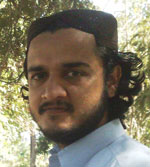 |
Top
Baloch Rebel Leader Arrested by Iranian Intelligence, by Trapped
Truth, Feb 23, 2010
|
| The
plot thickens: The
arrest of Abdul Malik Regi; something seems fishy, by R. Denaro, Mar
5, 2010; Rigi's
Escape Plan Foiled by Iranian Fighter Jets, Intellibriefs, Mar 2, 2010:
"Later on Friday, in a televised confession, Abdolmalek Rigi said
that in a Dubai meeting with CIA agents, the United States offered to provide
him with military aid to wage an insurgency against the Islamic Republic
of Iran..." (question: Does this mean that Rigi had NOT been doing
biz with the US as long claimed by Iran?); |
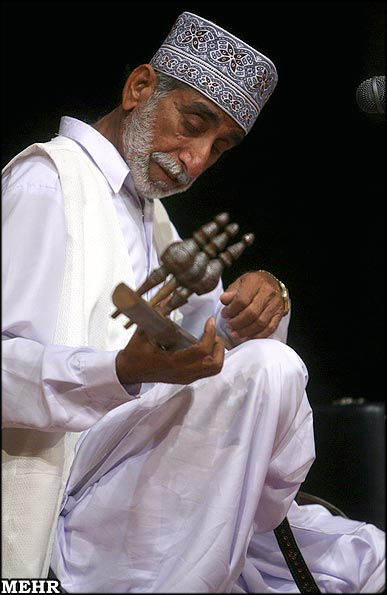 |
The
Baloch House: Great
Iranian Baluchi vocalist Kamal Khan dies, Tehran Times
Art Desk, Mar
4, 2010 |
| In
the region: Exit
from Afghanistan: Playing the Game and not learning the lessons, by
D. Padma Kumar Pillay, Mar 3, 2010; originally posted at Institute for Defence
Studies & Analyses |
| In
the region: Iranian
DNA or Fear of Déjà vu?, by Tara Mahtafar, PBS.org, Mar 3, 2010: "Is
the Green opposition beset by the inability of Iranians to work together,
or is it simply trying to avoid repeating the mistakes of 1979?..." |
| New: Blast
claims lives of two students in Khuzdar, Dawn.com, Mar 3, 2010; Pakistan
FC attacked Cultural function in Balochistan, Two killed, Balochwarna.com,
Mar 3, 2010; Khuzdar: Blast
in a cultural show in Engineering University, BSO-Na.org |
| US
to supply 1000 bomb kits to Pakistan: report, Dawn.com, Mar 3, 2010 |
| The
Second Deception, by K. Subrahmanyam, reposted at Intellibriefs, Mar 2, 2010 |
| 'Break
up Pakistan into four Independent States, by Indian American Intellectuals
Forum (IAIF), Memorandum to U.S. State Dept., Mar 1, 2010, Intellibriefs |
| Pakistan: A
dangerous mixture in Balochistan, Source: IRIN, posted at alternet.org,
Mar 1, 2010 |
| Resources
in Mongolia: Mongolian
Harvard Elites Aim for Wealth Without ‘Dutch Disease,’ by
Michael Forsythe, Bloomberg.com, Feb 16, 2010 |
| The
End: of The
Baloch Hal, Feb 12, 2010 |
| Pakistani
security forces targeting Baloch students, BalochWarna.com, Feb 16, 2010; Balochistan
government helpless in front of Pakistan’s notorious intelligence agencies,
Balochwarna.com, Feb 13, 2010 |
| Development
= Exploitation, by Diagoh Murad, Feb 11, 2010 |
| Complete
provincial autonomy for federating units: Nawab Raisani, The Baloch
Hal, Feb 10, 2010 |
| Provinces’ differences soar over water distribution, The Baloch Hal, Feb 9, 2010 |
 |
| Recent
articles by Mir Mohammad Ali Talpur: includes Is
a rollback possible? which details Baloch IDP and refugee experiences
from the late 70s (click for
full pic) |
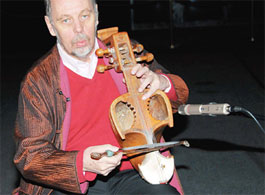
Professor Jean During |
| Music: Dar
brings Baluchi music to Kuwait, Arab Times Online, Feb 2, 2010: "On Monday,
Feb 8, Dar Al-Athar Al-Islamiyyah introduced their friends and patrons to
the fascinating world of ‘Baluchi Music and Trance Healing’ at the Al-Maidan
Cultural Centre through a lecture, images, beautiful sound bites and a rare
and unpublished video footage shot in Karachi, Pakistan..." |
 |
Balochistan
is no Bangladesh, by Sushant Sareen, The Baloch Hal, Jan 20, 2010 |
 |
From
before: Queen
of Balochistan: Jennifer Musa, Irish nurse who became head of a tribe
in Baluchistan and dedicated her life to its interests, Telegraph, Jan
18, 2008 |
| Also see: Irish-born
woman is ‘Queen of Balochistan’, Dawn.com, Dec 14, 2006 |
| From
before: Balochi
Oral Tradition, by Sabir Badalkhan, 1992: "...Balochi oral tradition
needs the urgent attention of folklore scholars...the most urgent necessity
is to interview living minstrels and record their repertoires, for all of
them have reached an advanced age and no new minstrels have emerged for decades... |
| From
before: 1883: The
Land of The Five Rivers and Sindh, by David Ross, London (see page 51
re: Balochistan...) |
| Historical
footnote on Baloch tribes from Martin Axmann's 'Back to the Future': "...A
Brahui tribe is based primarily not upon agnatic kinship like an Afghan
tribe, but upon common good and ill; in other words, it is cemented together
by the obligations airsing fromt he blood-feud, and heterogeneity, rather
than homogeneity. This is the striking feature of its composition. Round
a nucleus several groups of diverse orgin, including Afghan, Baloch, Jat,
and even some freed slaves, gathered together in time of emergency and
ultimately became consolidated into a tribe...All comers gained easy admission
to the tribe. As soon as a man joined the tribe, he became a permanent
participator in its fortunes both good and ill. Then having shown his worth,
he was given a vested interest in the tribal welfare by acquiring a portion
of the tribal land, in return for which he was bound to share all tribal
responsbilities...Starting therefore with the
principle of participation in common good and common ill, participation
in the tribal land came to be the essence of tribesmanship."
p. 38, Oxford U Press, 2008. |
Observations
on political parties: Though System
Failure by Stephen Hayes of The Nation (Jan 14, 2010) is about American
democracy 'pitched precariously on the tipping point of oligarchy,' he
describes a phenomenon that can be found anywhere in the world. Psychology
can explain some of this, but the overall description is interesting:
...In
1911 the German democratic socialist Robert Michels faced a similar problem,
and it was the impetus for his classic book Political Parties. He was motivated
by a simple question: why were parties of
the left, those most ideologically committed to democracy and
participation, as oligarchical in their functioning as the
self-consciously elitist and aristocratic parties of the right?
Michels's answer was what he called "The Iron Law of Oligarchy." In
order for any kind of party or, indeed, any institution with a
democratic base to exist, it must have an organization that delegates
tasks. As this bureaucratic structure develops, it invests a small
group of people with enough power that they can then subvert the very
mechanisms by which they can be held to account: the party press,
party conventions and delegate votes. "It is organization
which gives
birth to the domination of the elected over the electors," he wrote,
"of the mandataries over the mandators, of the delegates over the delegators.
Who says organization, says oligarchy."
Michels recognized the challenge his work presented to his comrades on
the left and viewed the task of democratic socialists as a kind of
noble, endless, Sisyphean endeavor, which he described by invoking a
German fable. In it, a dying peasant tells his sons that he has buried
a treasure in their fields. "After the old man's death the sons dig
everywhere in order to discover the treasure. They do not find it. But
their indefatigable labor improves the soil and secures for them a
comparative well-being."... |

|
| Video: Golbang
Baloch's promo video @youtube! |
 |
| Video-pictures
of Quetta cinema: On May 31, 1935, Quetta suffered a great earthquake.
At the time of the quake, Quetta's
OPERA TALKIES cinema was showing the Hollywood
movie CROSS COUNTRY CRUISE..." (check out other videos of the earthquake
at this link). |
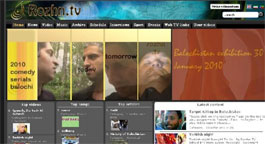 |
| New
Baloch TV station: www.rozhn.tv is
the first Balochi TV on the internet. RozhnTV covers Western Balochistan,
as well as the wider scope of Baloch news, culture and entertainment. If
you are on facebook, please join Rozhn tv's group here. |
| Classics:
On Colonization: The
Wretched of the Earth, by Frantz Fanon, preface by Jean-Paul Sartre,
1963 (pdf) |
Video: A
very brief chat with Begum Jamila Khan regarding
her dedication to education.
Kalat, 2006. |
 |
| Video: Historian
and former court minister of the Khan of Kalat Ahmad Yar Khan Brief gives
a brief account of the establishment
of the first primary school for girls in Kalat in 1947. |
 |
| Video: In
this clip, Agha
Aziz and Agha Nauroz show us the site of old Kalat palace.
Note: Agha Nauroz Ahmadzai was tragically killed in 2008. (We apologize
for the quality of the sound recording--we were no match for the winds
of Kalat.) |
 |
| New: Pakistan
awards six exploration blocks, Oil & Gas Journal, Feb 5, 2010 |
| New: Water
Management employees threaten self-immolation, The Baloch Hal News, Jan 28, 2010 |
| New: Baloch
Lawyers not to take part in Supreme Court Bar Association’s protest, BalochWarna.org, source: Daily Tawar, Jan 27, 2010 |
| New: Desperate
Pakistan, Desicritics.org, by CN Anand, Jan 25, 2010: "Pakistan is
on an IMF administered drip." |
|
| U.S.
Offers Pakistan Drones to Urge Cooperation, by Elisabeth Bumiller, NY Times, Jan 21, 2010 |
| Pakistan
spooks act as U.S. journalists, Washington informed, by Ahmar Mustikhan, NowPublic, Jan 22, 2010 |
 |
I’m
ready for direct talks with Army: Hayrbyar Marri, The Nation, Jan 14,
2010 |
|
| Crisis
Cell interview with Hairbyar Marri, youtube.com (part
II, part
III) |
| New: What
the future may hold, by Iqbal Jafar, Dawn.com, Jan 14, 2010 |
| Could
the Pakistani Government Fall over Karachi Violence? What would it Mean
for Obama's War on al-Qaeda?, by Juan Cole, Informed Comment, Jan 11, 2010 |
| Thousands
protest against “Genocide” of Baloch people in Karachi, Balochwarna.com,
Jan 11, 2010 |
| Brief
analysis on Military Intelligence and ISI based induced terrorist organization
MQM and ‘puppets on unseen strings’, by Gull Baloch, Jan
11, 2010 |
| Baloch
Hal editorial: Bloodshed in Karachi, Jan 9, 2009; Over
50 suspects nabbed from Lyari, Geo.tv, Jan 9, 2010; Karachi
Baloch on the Crossroads, by Diagoh Murad, gwank.org, Jan 8, 2010 |
| Developing
Gwadar as an Additional Supply Route for US Millitary, A Report of
the CSIS Transnational Threats Project and the Russia and Eurasia Program,
IntelliBriefs, Jan 5, 2010 (orig.
source) |
| Historic
NFC Award inked, dawn.com, Dec 30, 2009: "The provincial share
of the divisible pool would increase from 47.5 percent to 56 percent in
the first year of NFC and 57.5 percent in the remaining years of the Award.
Under the new formula, Punjab would get 51.74 percent from the divisible
pool, Sindh 24.55 percent, NWFP 14.62 percent and Balochistan
9.09 percent. |
from
thebaluch: It is interesting to read how variables determining the
distribution of financial resources are weighted (see the Dawn.com article
below). The formula assigns a low value to factors that characterize Balochistan
(poverty and area) and a high value to the variable that benefits Punjab
(population). More importantly, revenue generation, presumably to which Balochistan
contributes a great deal through its gas and natural resources, is weighted
a paltry 2.5% (If anyone can tell us how 'revenue generation' was defined,
please email us at wj@thebaluch.com. If we are wrong, if Balochistan's revenue
generation is, in fact, not significant, and we have not correctly understood
the progressiveness of this agreement, please do educate us). The article
further states that Punjab has given up 1.27%, Sindh, 0.39% and NWFP 0.26%
while Balochistan has gained. Hmmm, let's see, 1.27% + 0.39% + 0.26% adds
up to the kingly sum of 1.92%, not much of a change.
Still, the Baloch Hal reports
there will be a big jump in revenue for Balochistan: from Rs 60 billion to
Rs 200 billion in the next fiscal year and that "In a way, Punjab had
surrendered 18 per cent of its share while Federal Government had surrendered
10 per cent. All these resources will be given to the smaller provinces of
Sindh, NWFP and Balochistan." This may be progress, but Balochistan
will only receive 9.09% of the pool and that still seems insufficient to
us. |
| Balochs
mark Premier Gillani’s Balochistan visit with widespread protests,
The Baloch Hal, Dec 29, 2009 |
Source: dailytawar.com |
by
Hafeez Hasanabadi: The
mourning of hibernating consciences, translated
by Zrombesht, Dec 28, 2009; The announcement
of Balochistan package, translated
by Archen Baloch. |
| Balochistan: BSO-NA's
response to Federal Govt Package, statement by Dr. Wahid Baloch, IntelliBriefs, Dec 23, 2009 |
 |
Hina
Rind elected first female Baloch journalist as KPC GB member, The Baloch
Hal, Dec 22, 2009 |
| Baluchistan's
Sovereignty and The Emerging Empire - II, by Ahmad Marri, Dec 22, 2009 |
| Balochistan
refects deal and fights on for freedom, by Peter Tatchell, The Samosa, Dec
15, 2009 |
| Other
options to military surges: Afghan
Enclave Seen as Model for Development, by Sabrina Tavernise, NYTimes.com,
Nov 12, 2009 |
| Balochistan
to get one hundred billion in next fiscal year, The Baloch Hal, Dec 13, 2009 |
| Baloch
separatists unmoved by package, talks offer, by Mumtaz Alvi, Dec 13, 2009 |
| New
NFC formula a step towards provincial autonomy, CM Raisani, by Bari Baloch, TheBalochHal, Dec 13, 2009 |
 |
Ballistic
exile, by
Murtaza Ali Shah, TheBalochHal, Dec 9, 2009 (reposted from The
News) |
| Cases
against Bramdagh Bugti, Dr. Allah Nizar, 87 others withdrawn: Balochs
categorically reject the government “drama”, vow to continue struggle,
by Malik Siraj Akbar, The Baloch Hal, Dec 9, 2009: 'Dr. Lehri said the
government was “joking” with the Balochs by offering them packages
and amnesty. He complained that a central leader of his party, Sangat Sana,
had been whisked away by the intelligence agencies days after the announcement
of the Balochistan package by the federal government...' |
| List
of 992 missing people issued, Dawn.com, Dec 9, 2009 |
| The
AfPak apparition: The Baloch people are paying a very real price for a videogame
war on a phantasmagorical land, by Kamila Shamsie, Guardian.co.uk, Dec 8,
2009 |
| A
Military coup in Pakistan? by Tarek Fatah, Globe and Mail, Dec 8, 2009 |
| Khan
Suleiman Dawood Khan's reaction to the Balochistan package, youtube,
Dec. 7, 2009 |
| The
Baloch Hal editorial: Drone strike on Balochistan: Where is the right target? Dec
7, 2009: "...Our biggest fear is that if international journalists and observers
are not allowed entry inside Quetta and other parts of Balochistan, the
anti-Baloch elements in the country’s armed forces and intelligence
networks will possibly mislead the Americans and direct the drone strikes
on the Baloch population..." |
| Special
Report on Balochistan, The News, Dec 6, 2009 |
| Pakistan's
Insider Jobs? by C N Anand, Desicritics.org, Dec 5, 2009 |
| New: The
Balochistan Package: Band-Aid on a Bullet Wound, by Alia Amirali, BalochUnity.org, reposted from The Friday Times, Lahore, Dec 4, 2009 |
| The
Baloch Hal Editorial: Sectarianism: A threat to secular Balochistan, Dec 4, 2009 |
| Hyrbyair
Marri interview with Geo News, Balochwarna.org, Dec 4, 2009 |
| Hyrbyair
Marri speech and Q&A session at Oxford University, (Part
II, Q&A:
Part
I, II, III, IV, V) Dec 3, 2009 |
| Separatists,
Islamists and Islamabad Struggle for Control of Pakistani Balochistan, by Chris Zambelis, The Jamestown Foundation, Dec 3, 2009 |
| Neutral
BBC’s one sided attitude, by Hafeez Hassanabadi, trans. by Zrombesht, Dec 3, 2009 |
| Take
the War to Pakistan, by Seth G. Jones, NYTimes, Dec 3, 2009 |
| Baluchistan
- The Forgotten Cause, by C.N. Anand, Desicritics.org, Dec 2, 2009 |
| The
reasons Westeners not interested in Balochistan issue, by Zrombesht, gwank.org, Dec 1, 2009 |
| The
only solution to the Afghan problem, by
Hafeez Hassanabadi, trans. by Archen
Baloch, orig. publ. at dailytawar.com,
Nov 30, 2009 |
| Expats
in Germany all for Baloch rights, by Meera Jamal, The Baloch Hal, Nov 28, 2009 |
| Pakistan
conspiracy theories stifle debate,
by Ahmed Rashid, BBC News, Nov 27, 2009 |
| In
the region: Blackwater's
Secret War in Pakistan, by Jeremy
Scahill, Nov 23, 2009; Marines
plow ahead with anti-poppy campaign
in Afghan district, by Tony Perry,
LATimes.com, Nov 29, 2009; Afghans
Detail a Secret Prison Still Operating
on a U.S. Base, by Alissa
J. Rubin, NY Times, Nov 28, 2009; 2
Afghans allege abuse at U.S. site,
by Joshua Partlow and Julie Tate, The
Washington Post, Nov 28, 2009; Afghanistan
runs on well-oiled wheels, by Pratap Chatterjee,
atimes.com, Nov 19, 2009; Paying
off Afghanistan's warlords, by Pratap
Chatterjee, Salon.com, Nov 17, 2009; Why
the Afghan Surge Will Fail, by Conn
Hallinan, Foreign Policy in Focus, Nov
12, 2009 |
| Balochistan:
too small an olive branch, by Qurratulain Zaman, OpenDemocracy.com, Nov 27, 2009 |
| Pakistan
frets over expected US military surge,
Dawn.com, Nov 26, 2009: "‘Sending
more troops to Afghanistan, there’s
fear that the influx of militants may
be towards Balochistan,’ Gilani
told a news conference." (comment:
At the Nov. 21 Baluchistan International
Conference, foreign policy researcher
Raja Karthikeya spoke of the danger of
Pakistan conflating Taliban/militant
and Baloch national groups. We will post
his article when we receive a copy.) |
| On Balochistan
package: Announcement
of package is to pave way for military
operation: Dr. Allah Nazar Baloch, gwank.org, reposted at balochwarna.org,
Nov 27, 2009; Hyrbyair
Marri interview with
BBC News Urdu, Nov 25, 2009;
Editorial: Reactions
to Balochistan package, Dailytimes.com.pk,
Nov 25, 2009; Balochistan
real issues not addressed, says Imran,
reposted at The Baloch Hal, Nov 26,
2009; Balochistan
nationalists reject package, by Amanullah
Kasi, Dawn.com, Nov 25, 2009 |

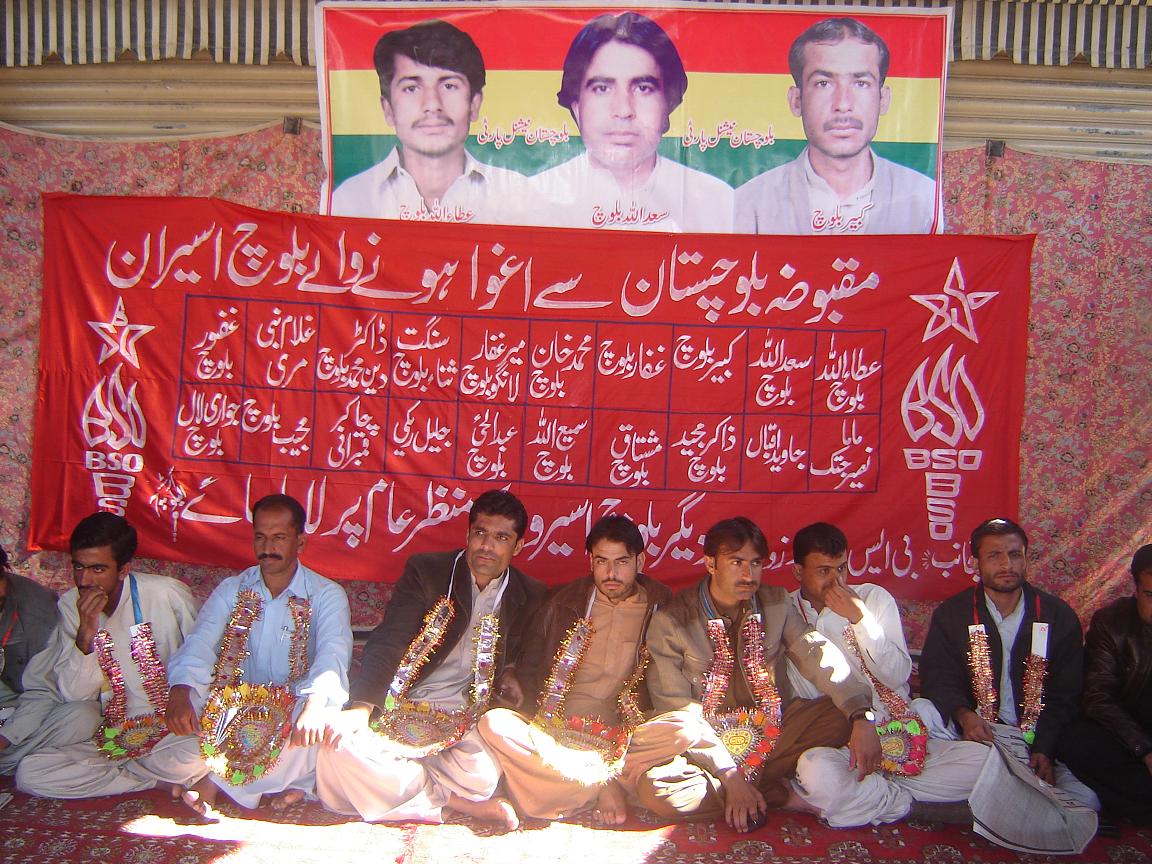
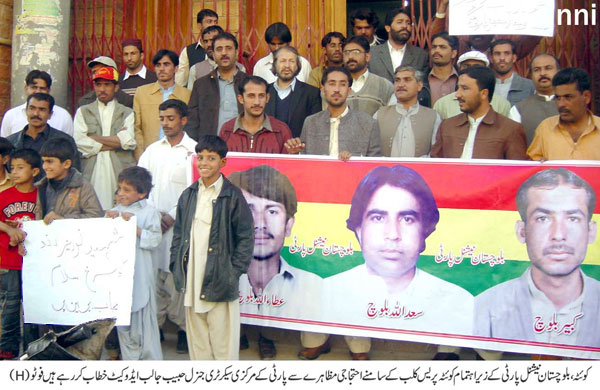
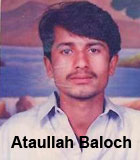
Karachi Press Club. Nov 24, 2009: Rally and hunger strike over missing Balochistan
National Party members: Kabeer Baloch, Attaullah Baloch and Sadullah Baloch |
 |
Balochistan Package; Too
Little Too Late!!!!!, by Imran Baloch,
Skeptic Life, Nov 24, 2009 |
| ISI
helped Taliban supremo Mullah Omar flee
from Quetta to Karachi, Times of
India, Nov 20, 2009 |
| US:
Expert who infuriated India offered key
post, by Aziz Haniffa, Rediff.com,
Nov 20, 2009: "Pakistan continues to support the Afghan Taliban. This means that Pakistan is undermining the very war on terrorism that it has received a handsome reward allegedly to support." |
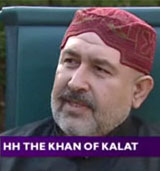 |
Khan
of Kalat seeks international guarantors,
by Amanullah Kasi, Nov 16, 2009 |
| Oxford:
A seminar titled “The Conflict in Balochistan – Why
has it happened and what is its future?” was
held at the University of Oxford, Department
of Politics and International Relations,
coverage at BalochWarna.com, Nov 16, 2009
(video links to come) |
| Baloch
nationalists pessimistic about government
package, by Malik Siraj Akbar,
DailyTimes.com.pk, Nov 16, 2009: 'Balochistan
Agriculture Minister Mir Asadullah Baloch
said the “civil and military bureaucracy
in Islamabad was trying to bluff the Baloch
through packages, to divert attention
from seeking complete provincial autonomy”.' |
| From
Kabul to Kashmir, by Selig Harrison, Time Magazine, Nov 2009 |
| Too
fat to fight, by Alexander Cockburn: "Increasingly,
young Americans are getting too fat to
fight, which is just as well – because
the antiwar movement is in terrible shape,
probably because yesterday’s peace marchers
are all too busy on weekends jogging,
careening along on their bikes or going
to yoga classes..." |
| Leave
Afghanistan to the Afghans, by Patrick Cockburn, Nov 9, 2009 |
| Afghanistan's
Sham Army, by Chris Hedges,
Truthdig.com, Nov 9, 2009: “It is
this system of waste and private profit
from public funds that keeps Kabul in
ruins. It is this system that manages
to feed Westerners all across the country
steak and lobster once a week while an
estimated 8.4 million Afghans—the
entire population of New York City, the
five boroughs—suffer from chronic
food insecurity and starvation every day.
When you go to Bagram Air Base, or Camp
Phoenix, or Camp Eggers, it’s clear
to see that the problem does not lie in
getting supplies into the country. The
question becomes who gets them. And we
wonder why there’s an insurgency.” |
| Baloch
economy, Dawn.com, Nov 10, 2009: "IN
its latest economic report on Balochistan
the World Bank has not presented us with
good news. Pakistan’s poorest province
is growing poorer.." |
| Defending
the Arsenal, In an unstable Pakistan,
can nuclear warheads be kept safe? by
Seymour M. Hersh, The New Yorker,
Nov 16, 2009 |
On
American troops:
'Undeployables'
sent to the Afghan front, by Dahr Jamail,
and Sarah Lazare, atimes.com, Nov 10, 2009;
and When
war comes home, by Dahr Jamail, atimes.com,
Nov 10, 2009
|
Pentagon
Pouring Your Money Into Afghanistan:
Are They Preparing for a Very Long War?,
by Nick Turse, Tomdispatch.com, Nov
9, 2009
|
| 'Pakistan
is the problem in Balochistan',
Observer Research Foundation, Nov 6,
2009 |
| Destabilizing
Baluchistan, Fracturing Pakistan The
Triangle of Jundallah, the Taliban,
and Sipah-e-Sahaba, by Mahdi Darius Nazemroaya, Global Research.ca, Nov 2, 2009 |
| New
to us: blog Skeptic
Life, by Imran Baloch |
| Video: Himalayan
glaciers under threat, Chris Morris
reports, BBCNews, Nov 2, 2009 |
| New: Secy
Board of Education Balochistan shot in
Quetta, Dawn.com, Oct 31, 2009 |
Ban
on criticising president, army, judiciary
proposed, by Irfan Bukhari, DailyTimes.com.pk,
Oct 30, 2009: "...It was noted that some
anchorpersons unduly criticise state institutions
and ridicule prominent personalities and
recommended that there should be a check
on that. Another
member said there were certain anchorpersons
who criticised the ideology of Pakistan. “This is not
acceptable as it is against the national
interest,” he said..."
|
AFP/File Photo
Balochistan
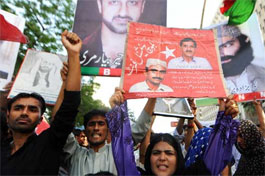
ignored, Dawn editorial, Oct 27, 2009: "Today there is a feeling in Balochistan that the province is part of the federation on paper alone, at the mercy of a state that continues to exploit its natural wealth and quell any sign of dissent with disproportionate force. Promises by the centre mean little, for the simple reason that they have rarely been honoured..." |
| Malik
Siraj Akbar interview on Deutsche Welle
about Jundullah chief, DW-World.de, Oct
21, 2009 |
| 30
killed in Iran blast, Jundollah claims
responsibility, Dawn.com, Oct 18, 2009 |
| Iran
suicide bombing kills Revolutionary Guard
commanders, by Robert Tait, The
Guardian, Oct 18, 2009; Iranian
commanders assassinated, BBC News, Oct 18, 2009 |
| Raisani
briefed on hazardous emissions from
gas fields, Dawn.com, Oct 18, 2009:
"...PPL’s gas extraction and
processing plant in Sui emitted over 36
tons of sulphur. ‘This toxic gas has
been emitted for decades without any monitoring
and its effects on environment have not
been assessed,’ an official said..." |
| Taliban
trying to establish base in Balochistan:
US, by Saleem Shahid, Oct 15, 2009 |
| Resource
investment risky in Balochistan,
Dawn.com, Oct 14, 2009 |
| Tackling
Baloch bitterness, by Shahid
Kardar, Oct 12, 2009: "Of Balochistan’s
total budgeted revenue receipts 94 percent
are expected to flow from the federal
government, highlighting both the heavy
dependence on federal transfers and the
huge mismatch between the assigned responsibilities
of the province and the wherewithal available
to it to discharge such obligations..." |
| ‘Balochistan solidarity campaign’ to be launched, by Malik Siraj Akbar, reposted at BalochUnity.org, Oct 10, 2009 |

Peter Tatchell (l) and Karlos Zurutuza (r) receive Shaheed Nawab Akbar Bugti Award
Video acceptance speeches:
Peter Tatchell's speech and here
Karlos Zurutuza's speech
Hairbyar Marri's speech and here, other videos
Baluch journalists threatened, sacked for telling truth: Marri, by Ahmar Mustikhan, BalochWarna.com, Oct 7, 2009 |
| Shaheed
Nawab Akbar Bugti Award to be granted
to two European journalists, Mr. Karlos
Zurutuza and Mr. Peter Tatchell, on behalf
of American Friends of Balochistan on
October 4, 2009 in London. Click
here for details regarding location. Everyone
is invited to attend. |
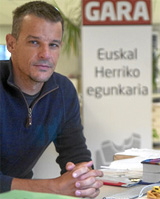
Karlos Zurutuza |
Los
baluches necesitan que el mundo les
preste atención, by Karlos
Zurutuza, Gara.net, Sep 7, 2009 (left:
Karlos Zurutuza) |
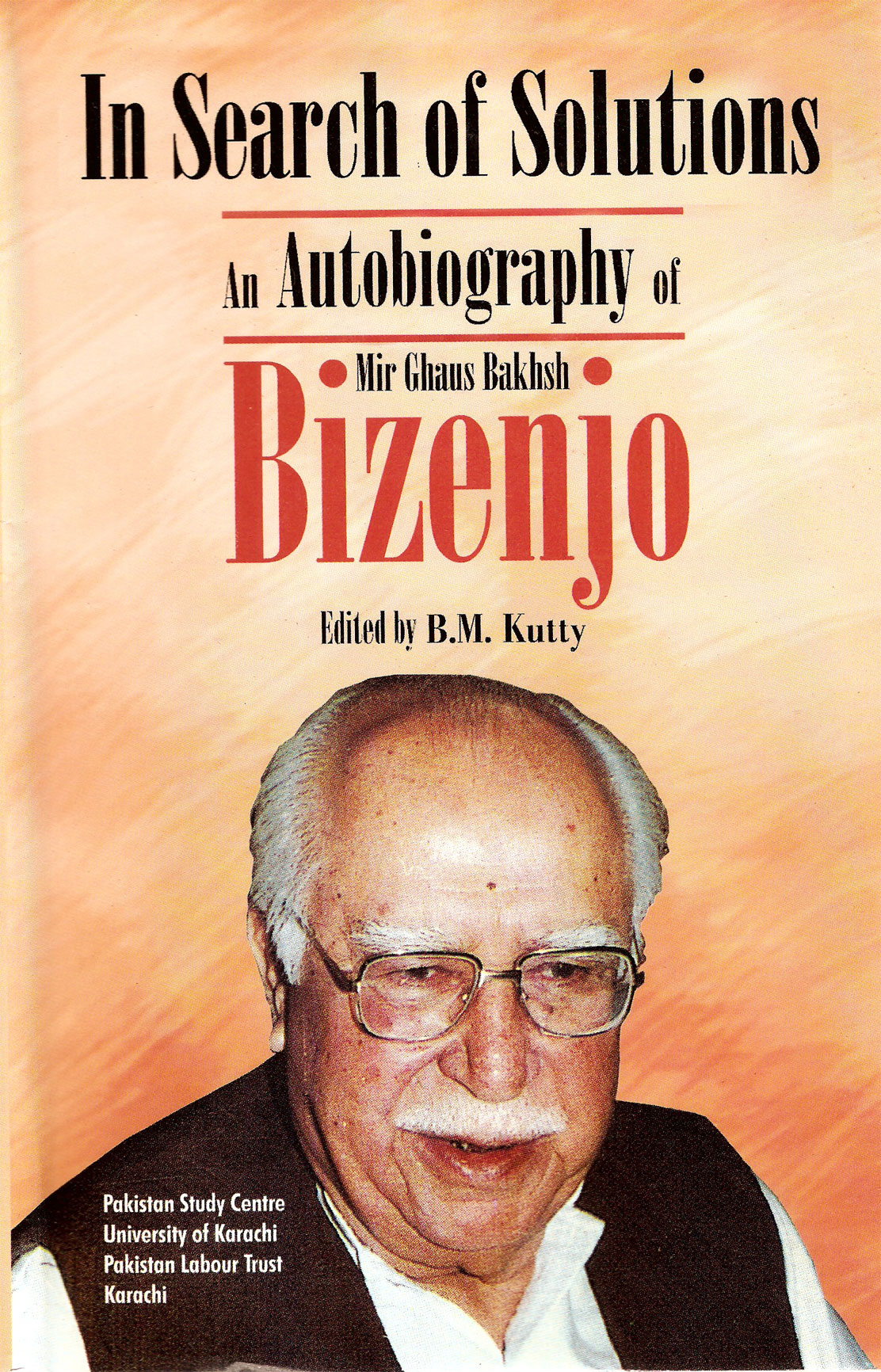
| Bizenjo’s autobiography
launched, TheNews, Sep 30, 2009 |
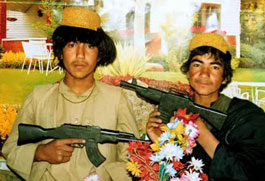
Be sure to check out this fascinating video
essay by photog Thomas
Dworzak with
commentary by Ahmed
Rashid. (Scroll
down to watch 'Taliban 2009' video.) |
| The View From Pakistan's Spies, by David Ignatius, WashingtonPost.com, Sep 29, 2009 |
| U.S. Says Taliban Has A New Haven in Pakistan, by Pamela Constable, WashingtonPost.com, Sep 29, 2009 |
| From before: Baloch Ethnic Nationalism in Pakistan: From Guerrilla War to Nowhere?, by Adeel Khan, June 2003: "In 1962, when Henry Kissinger was in Pakistan on a troubleshooting mission for US President J. F. Kennedy, a local journalist asked him to comment on Baloch insurgency. His answer was: 'I wouldn't recognize the Balochistan problem, (even) if it hit me in the face.'" |
| Interview with Brahmdagh Bugti: ‘Some
Balochis support sardari, others
democracy', by Qurat ul ain Siddiqui
Dawn.com, Sep 28, 2009 |
| US
threatens airstrikes in Pakistan,
by Christina Lamb, TimesOnline, Sep
27, 2009: "The United States is
threatening to launch airstrikes on
Mullah Omar and the Taliban leadership
in the Pakistani city
of Quetta as frustration mounts
about the ease with which they find
sanctuary across the border from Afghanistan." |
| WB-supplied
fund for NWFP, Fata and Balochistan,
by Baqar Sajjad Syed, Dawn.com, Sep 24,
2009: "But, diplomats here said donors ‘clearly
lacked confidence in Pakistan's resource
distribution mechanism' and feared that these areas might not benefit from the
funds given to the government..."; US
fears aid will feed graft, DailyTimes.com.pk,
Sep 24, 2009 |
| Pakistan,
Iran helping Taliban: McChrystal,
DailyTimes.com.pk, Sep 24, 2009 |
| In
the region: The
Huge Hole in Gen. McChrystal's Afghan
Counterinsurgency Strategy, By Franklin
C. Spinney, Counterpunch.org, Sep 22, 2009; 'The
Obama Administration Has Completely Failed',
Human rights lawyer Tina Foster talks to
SPIEGEL about detainee abuses in the US
military prison in Bagram, Afghanistan and
her disappointment with the Obama administration. |
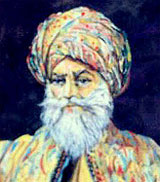
Mir Nasir Khan (1749-1817) |
From
1975: Mir
Nasir Khan (1749-1817) from Inside
Baluchistan, by Khan-e-Azam Mir
Ahmed Yar Khan Baluch, Royal Book Company,
1975. (pdf) |
| Publication
from 1904: The
Baloch Race. A Historical and Ethnological
Sketch, by M. Longworth Dames, London,
1904 |
| Gas
exploration hampered by Balochistan security
situation, by Tahir Niaz, DailyTimes.com.pk,
Sep 21, 2009 |
| Baluch
hero Bugti calls for referendum under
UN aegis, by Ahmar Mustikhan, Sep
20, 2009 |
| Twelve
high profile terrorists nabbed in Quetta,
Dawn.com, Sep 17, 2009; also see: balochwarna.org
coverage |
| |
Government solution = no solution: Baloch
amnesty linked to renouncing of terrorism,
by Khawar Ghumman, Dawn.com, Sep 18,
2009; "According
to government sources, the amnesty will
be announced if Baloch militants and activists
promise to renounce anti-state activities." (see BalochUnity.org
coverage)
PM
to discuss package with Baloch leaders,
by Ahmed Hassan, Dawn.com, Sep 16, 2009; ‘Govt
to announce Balochistan package soon’,
Dawn.com, Sep 17, 2009 |
| Pak
purchased weapons worth US $ 4.5 bn in
2005-08, rediff.com, Sep 17, 2009 |
| Balochistan
initiative,
by Dr Rashid Ahmad Khan, reposted at balochunity.org, Sep 15, 2009 |
| Witness
to violence in Swat valley, eyewitness
reports collected by BBC Urdu's Abdul
Hai Kakar, BBCNews.com, Sep 14, 2009 |
| Nationalists
want more Baloch on PPP committee, by Zulfiqar Ghuman, DailyTimes.com.pk, Sep 13, 2009 |
| Is
Baluchistan becoming another East Pakistan?,
by Kuldip Nayar, The Sunday Times, Sep
13, 2009:
"Baluchistan may go the same way if Islamabad does not wake up to the excesses
committed in the province. Shooting down one's own
people for asking for a place in the sun is creating a cleavage which will be
difficult to fill. After the
experience of Bangladesh, Islamabad should have learnt the lesson..." |
| Malik
may visit Kabul to meet Brahmdagh,
By Syed Irfan Raza, Dawn.com, Sep 12, 2009 |
|
Los
baluches necesitan que el mundo les preste
atención, by Karlos Zurutuza,
Gara.net, Sep 7, 2009 (left: Karlos Zurutuza) |
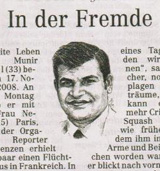 |
Sep
6, 2009: Munir Mengal, chairman of Baloch
Voice, Paris, France, was the special
guest of 'Nacht Der Median' (Media Night)
in Hamburg, Germany. |
| The
event was attended by more then 1,200
media personalities.
Hamburg Press Club president,
Mr. Karlheinz Hauser, welcomed
Mr. Mengal to the event and said that
Baloch Voice will add a new chapter to
media history when it airs.
Mr. Mengal gave a detailed briefing about the situation in Balochistan,
the closings of newspapers, Baloch
abductions, and BLA, BLF, and
BRA groups. Please follow links for German
coverage here and here. |
| I
am not anti-tribalism: Bramdagh Bugti,
by Malik Siraj Akbar (in Urdu), Sep 5,
2009 (Ham Shahri, Oct 4, 2009 issue) |
Banok
Karima: the Baloch Leila Khaled,
by Malik Siraj Akbar, Sep 4, 2009;
Video
of Baanok Karima Baluch Speaking
in Mand, Aug 12, 2009 |
 |
Interview
with Baloch woman, BBC Urdu, Sep 3,
2009 |
 |
Balochistan
Rugs. Interview
with Jerry Anderson. This
text is related to the album about rugs.
(Thanks to Mir Mohammad Ali Talpur for
making us aware of this book.) |
| Gas
firms blocking rehabilitation of Bugtis:
JWP, Dawn.com, Sep 2, 2009 |
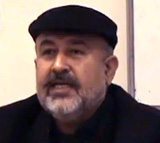 |
Khan
of Kalat speech on the Anniversary of
Nawab Akbar Bugti's death, Aug 30,
2009 |
| Iran
will start laying gas pipeline in Pakistan
next year, by Ijaz Kakakhel, DailyTimes.com.pk, Sep 1, 2009 |
| A
Bombing in Baluchistan, NYTimes.com,
Aug 31, 2009 |
| HRCP
slates ‘bid to gag Balochistan newspapers’,
DailyTimes.com.pk, Aug 29, 2009: "The
Human Rights Commission of Pakistan (HRCP)
on Friday called upon the government to
respect the freedom of press in Balochistan
and end the “virtual siege” of
independent newspapers' offices in the province..." |
| Quetta
blasts disrupt rail traffic, gas supply, Dawn.com, Aug 29, 2009 |
| U.S.
Accuses Pakistan of Altering Missiles,
by Eric Schmitt and David E. Sanger, NYTimes.com,
Aug 29, 2009: “There’s a concerted effort
to get these guys to slow down,” one senior
administration official said. “Their energies
are misdirected.” |
| Administrative
costs could halve US aid: Tareen, DailyTimes.com.pk, Aug 28, 2009 |
| Balochistan:
Are the Balochis ready for external
support?, posted at balochunity.org,
Aug 28, 2009 |
| Restive
Balochistan, Dawn editorial, Aug
27, 2009 |
| High
time to take up Bugti murder case, by
Amir Mir, Aug 27, 2009;
Bugti's
son seeks murder case against Musharraf,
reposted at BalochWarna.com |
| Bugti
anniversary: 'Down with Pakistan' day
marked in Washington D.C., by Ahmar
Mustikhan, newsvine.com, Aug 26, 2009; |
|
BBC
interview with Khan of Kalat, Aug
26, 2009: In Balochistan, only the military
has a say. |
| Recipients
of the
Nawab Akbar Khan Bugti Reporting Award, 2009 |
Karlos Zurutuza
|
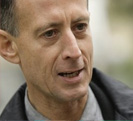
Peter
Tatchell |
|
| Two
Euro journalists to get Nawab Bugti award, NowPublic, Aug 25, 2009 |
| CM
Balochistan calls for provincial autonomy,
Dawn.com, Aug 25, 2009 |
| “Extreme
military pressure” forces closure of
daily, Reporters Without Borders,
Aug 25, 2009 |
| Is
the U.S. Citizenship and Immigration
Services more politically
sensitive than generally assumed?, Aug 24, 2009: 'lists 'Baluchistan (Pakistan)'
as a change of address option. |
| Balochistan
to be transit route for IP gas pipeline, The News, Aug 23, 2009 |
| |
| >> MORE
IN NEWS ARCHIVE... |
| |
| from
before: |
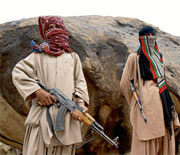 |
Photos from West and East Balochistan by Karlos Zurutuza |
Note: The four articles below by Karlos Zurutuza were published in Spanish in June, 2009, by gara.net:
Islamabad should have attacked the Taliban in Pakistan a long time ago (trans. Daisann McLane);
East
Baluchistan: The forgotten, endless war (trans. by Daisann McLane);
Other articles in Spanish:
Baluchistán:
una guerra olvidada que no cesa; Otra
jornada de lucha en Quetta, capital de
Baluchistán; Islamabad
tenía que haber atacado a los talibán
en Pakistán hace mucho tiempo; La
alargada sombra de los minaretes dorados
de Zahedán, Gara.net, Jun 18-29,
2009 |
|
| |
| >> MORE
IN NEWS ARCHIVE... |
| |
| |
| |
| |
| |
| |
| |
| |
| |
|
| |
| |
|
|
New: A tragedy within the tragedy, by Mir Mohammad Ali Talpur, DailyTimes, Sept 5, 2010 |
| "...The Baloch sufferings raise not an eyebrow; the missing are still missing; Zakir Majeed’s family has been on hunger strike at the Quetta Press Club for months now but to no avail, Chakar Marri and Zaman Khan Marri are still missing along with hundreds others. I wonder if Mr Martin Mogwanja realised that the ‘tragedy within a tragedy’ holds true for both the sufferings of the Baloch due to natural calamities as relief is malevolently restricted and the state atrocities that they have been bearing since 1947." |
| New: (Please click for Sep 5, 2010 Jaffarabad update); Social Sangat and Baloch Publication have initiated a new campaign to help flood victims. You can read about this initiative on facebook and visit the Social Sangat website for information on how to donate. |
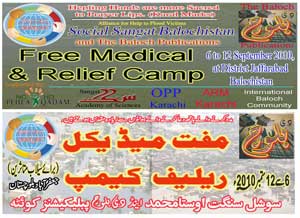 |
| Dawn editorial: Balochistan’s woes, Aug 27, 2010: "Even in the flood relief operations, Balochistan has largely been left to fend for itself..." |
 |
| Two local organizations that can be counted on to put your donations to work to help kids like these above. Please give generously. |
| Update: Aug 30, 2010: Our friends at Social Sangat (below) have sent us this update: In Karachi they have just collected medicines and goods from the Baloch
community of Muscat, Oman, for the relief camp at Jaffarabad. Parveen Naz is still in Karachi, meeting with organizations, and has just learned that a Karachi-based organization will provide one million
rupees' worth of medicine and and food goods. Also they met with
Karachi's Baloch community in Liyari and the youth are starting a ''door to door'' campaign to raise funds and collect goods for the camp in Jaffarabad. If you can donate goods or $, please visit their website for info on how to contribute! |
To
help flood victims send donations to:
Karachi Student Welfare Forum
To send donations via Western
Union:
A/C No: 01683981901
Bank's Name: Standard Chartered Bank, Johar Branch Account
N.I.C No: 41203-4632578-3
Name of the Organization: Karachi Student Welfare Forum
Mobile no: 0333-7070755, 0345-2958997
Location: Karachi, Sindh
E-mail: kswforum@gmail.com
|
To help
flood victims send donations to:
The Baloch Publication and Social Sangat
(using Western
Union or Moneygram, or whatever
option one prefers):
Title: SANGAT LIBRARY
AND SOCIAL SERVICES
Account Number:
40335315 1000164
Bank Name: Muslim
Commercial Bank Ltd.
Branch code:
MCB- 0562. Usta Muhammad Balochistan
Bank
SWIFT Code:
MUCBPKKA
For
further details:
Miss. Parveen
Naz, (Editor The Baloch Mag)
Email: naz.parveen@ymail.com,
missjeeap@gmail.com
+92 333 3505644
Mr. Khalid Mir
(Director Social Sangat)
Email: khalidmir.88@gmail.com,
socialsangat@gmail.com
+92 345 3838131 |
 |
The Anarchic Republic of Pakistan, by Ahmed Rashid, The National Interest, Sept-Oct, 2010 |
| "THERE IS perhaps no other political-military elite in the world whose aspirations for great-power regional status, whose desire to overextend and outmatch itself with meager resources, so outstrips reality as that of Pakistan...Pakistan’s civilians, politicians and intellectuals are helpless; they cannot make the deep state see sense as long as the West continues its duplicitous policies of propping up the military-intelligence establishment in opposition to popular society while demanding that the Pakistani civilian government wrest back control of the country..." |
| 1 million people face starvation in Balochistan, says minister, by Mohammad Zafar, DailyTimes, Aug 24, 2010: [Senior Minister] Sadiq Umrani, who also belonged to Naseerabad, has said that the chairman of National Disaster Management Authority had stopped the different NGOs from helping the flood survivors in Balochistan..."I have spent a week in Naseerabad division and have seen no official from the local administration or any member of non-government organisations (NGOs) in the flood-hit area, and people are living in the open without food and clean drinking water"... |
| Destruction of the angry glaciers, by Nizamuddin Nizamani, DailyTimes, Aug 24, 2010 |
 |
The
Karachi Student Welfare Forum is raising money to help
victims of the floods in Sindh. They have already managed
to send two power boats and 3 inflatable boats for rescue
work, as well as rations for 500 families for up to
a week, now they are working a volunteers and supporting
people who are coming from affecting areas. Please give
generously. (More
details and information on how to donate) |
To
help flood victims:
To send donations via Western
Union:
A/C No: 01683981901
Bank's Name: Standard Chartered Bank, Johar Branch Account
N.I.C No: 41203-4632578-3
Name of the Organization: Karachi Student Welfare Forum
Mobile no: 0333-7070755, 0345-2958997
Location: Karachi, Sindh
E-mail: kswforum@gmail.com
|
 |
From
before: Politics of Alarm, by Mehreen Zahra-Malik,
The Baloch Hal, Aug 6, 2010 |
 |
August
11, 2010 Interview: Hayrbyar
Marri, Baluch liberation leader, by Karlos Zurutuza.
Reposted from the Spanish
original at gara.net |
| On
the 63rd anniversary of Baluchistan's declaration of independence,
Hayrbyar Marri, a prominent leader of the Baluch cause,
speaks in an exclusive
interview about one of the world's
most forgotten conflicts. "There is only one point to
negotiate with Pakistan—insists Marri—and
that's the unconditional withdrawal of all occupation
forces." |
|
Sarmad
lives on, by Mir Mohammad Ali Talpur, DailyTimes.com.pk,
Aug 8, 2010 |
|
Murders
Most Foul, by Malik Siraj Akbar, The Baloch Hal, Aug 6, 2010 |
photo: Arif Ali/AFP |
The
Taliban's New Target, Losing Faith in Pakistan's Future, by Gerhard Spörl, Der Spiegel, Aug 5, 2010 |
| "...But
where would their revolution begin? Ché, their
idol had fought his way out of the mountains and into
the cities. Pakistan was their Cuba. And their mountains
were in Balochistan, a poor province where the mountain
tribes, as tested by war as their Afghan counterparts,
had been fighting for independence, or at least autonomy,
for years..." |
 |
If
Yes to Kosovo Why not Balochistan? By Dr. Jumma
Khan Marri, Aug 3, 2010 |
| Iran
and Pakistan have been looting Baluchistan resources,
because Baluch have no power to stop them, by
M. Sarjov, Sarjau, Aug 3, 2010; Claim
to independence is clear political objective for the Baluch
masses, by M.
Sarjov |
| Balochistan:
Behind an Iron Curtain, by Vikram Sood, NewKerala,
Aug 3, 2010, reposted at intellibriefs |
| Weakening
Pakistani Hold In Balochistan, BalochUnity,
Aug 2, 2010 |
| Dara
Shikoh: still persecuted, by Mir Mohammad Ali Talpur,
DailyTimes, Aug 1, 2010: "History’s false
and biased version has fully been exploited for the
ulterior motive of strengthening the elite’s hold
over all facets of life and implementing their version
of Islam..." |
| Mandatory
Decision Taken Imprecisely, by Diagoh Murad, July 29,
2010: "...In the meantime the family members of Zakir Majeed
are on a hunger strike which has entered its 74th day and
still no Court or Judicial inquiry commission has been
able to respond to their demands..." |
| New: Special
Report from Balochistan - I, by Amir Mateen, The
News, Jul 25. 2010 |
 |
Inside
the Fog of War: Reports From the Ground in Afghanistan,
NYTimes.com, Jul 25, 2010 (via wikileaks.org);
Pakistan
Spy Service Aids Insurgents, Reports Assert
interview
with Julian Assange |
Updates: The
U.S. 'war on terror' produces even more madness:
WikiLeaks
must be stopped, by Marc A. Thiessen, WashingtonPost.com,
Aug 3, 2010
Today Anwar, tomorrow, who knows? Lawyers
Seeking Terror Suspect’s Case Sue U.S., by Charlie
Savage, NYTimes, Aug 3, 2010; Aug 3 follow-up article:
Why
We Sued to Represent Muslim Cleric Aulaqi, by Bill
Quigley, truthout.org op-ed: "...What this case is really
about is not Aulaqi but about our government disregarding
the rule of law..."
The US lays the groundwork to go after Julian Assange: WikiLeaks
'has blood on its hands' over Afghan war logs, claim
US officials, by David Leigh, The Guardian, Jul
30, 2010
Wikileaks
Posts Mysterious 'Insurance' File, Wired.com,
Jul 30, 2010 (in
case anything happens to Julian Assange, i.e., abduction
by US law enforcement.)
Do
Disclosures of Atrocities Change Anything? by
Alexander Cockburn, counterpunch.org, Jul 30, 2010
(Note: the same seems to apply in Balochistan. We
have been documenting disappearances/killings of Baloch
since 2006, yet reports of these atrocities appear
to have no effect whatsoever on Pakistan's government
officials, elites or military.) |
| Penchant
for self-destruction, by Mir Mohammad Ali Talpur, DailyTimes, Jul 25, 2010 |
| Knight,
not pawn: Habib Jalib Baloch, by Dr. Mohammad Taqi,
The Baloch Hal, Jul 23, 2010 |
| Burning
issues in troubled Balochistan, by Abubakar Siddique,
atimes.com, Jul 22, 2010: "But the more than 8
million predominantly pastoral Balochis are an impoverished
lot. They face state discrimination in Iran and Pakistan
and wait for a day when their lives will be more important
to regional states than the mineral resources and trade
routes in their lands..." |
| Stop
the Baloch's bleeding, by I.A. Rehman, Jang.com,
Jul 18, 2010 (scan
of article) |
| Another
nail in the coffin, By Sheikh Asad Rahman, The Baloch Hal, Jul 18, 2010 |
 |
End
of endurance, by Sanaullah Baloch, Jang.com, Jul
18, 2010; and Blood
Blood Balochistan, The Baloch Hal,
Jul 18, 2010 (in Urdu) |
|
Resenting
the yoke, by Mir Mohammad Ali Talpur, DailyTimes,
Jul 18, 2010 |
 |
Bombings
in West Balochistan, a predicted disaster, by Karlos
Zurutuza, Jul 17, 2010 (original
Spanish version published by Gara.net) |
| Balochistan
Situationer: Moderate bridges continue to cave in,
by Saeed Minhas, Daily Times, Jul 17, 2010: "Seen
from the social scientist’s point of view the
reasons are simple: looming poverty, joblessness, lack
of development, dictatorially-run political establishments
and last but not the least, the recurring use of force
to hush up all public demands need urgent and immediate
attention, claimed few remaining and willing-to-talk
academicians in the province..." |
| BalochHal
Editorial: Adieu
Comrade Jalib, Jul 15, 2010; audio
interview with Malik Siraj Akbar, Deutsche Welle
(Voice of Germany), Jul 15, 2010 |
 |
Petraeus’s Baby, by Ahmed Rashid, July 2010 |
| Life
on the Geopolitical Fault Lines: Does Contemporary History
of Balochistan Reflect Poland’s Past? – Part
II, by Belaar Baloch, Jul 14, 2010; Part
I, Jun 26, 2010 |
| Balochistan:
Not an Internal Matter, Pt II, by Diagoh Murad,
Jul 13, 2010; Part I,
Jul 4, 2010 |
 |
”Ultimately,
the World Will Have to Directly Negotiate With the Balochs”:
Sardar Khair Baksh Marri, Trans. from Sindhi news interview
by Malik Siraj Akbar, Jul 11, 2010 |
 |
Small
mistakes, by Mir Mohammad Ali Talpur, DailyTimes,
Jul 10, 2010 |
 |
A
HUGE congratulations to Malik Siraj Akbar! Balochistan
journalist Awarded Humphrey Fellowship 2010-11,
The Baloch Hal, Jul 8, 2010 |
| "Whose
Projeny - Part III, Part
I, and Part
II, by Mir Mohammad Ali Talpur, BalochUnity and
DailyTimes, Jun 20, Jun 27, and Jul 4, 2010 |
| "The
Pakistani state and elite have not only always turned
a blind eye to the venomous hate and intolerance preached
by millions of pulpits that adorn this ‘land of
the pure’, but have also actively promoted it. They
patronised preachers of murder and mayhem, thereby creating
an atmosphere of fear and intimidation in which no one
can object to their sinister and pernicious dogmas. Extremists
have been allowed to hijack culture, morality, history,
attitudes, and even the minds of people. |
 |
BalochHal
editorial: How
Much Support For Jundullah Is Too Much? Jun 30,
2010 |
| "...The
Baloch movement needs to have clearly defined answers
of several crucial questions to satisfy the rest of the
world about the structure of a proposed independent Balochistan.
Such a roadmap should implicitly define the relationship
between the state and religion; role of tribalism and
the status of women and religious as well as ethnic minorities
in an independent Balochistan, the ultimate goal for which
parties like BNF are struggling right now.
BNM has adopted a timely stance and rightly warned BNF not to compromise on Baloch
nationalist ideology by backing religious fundamentalism.
By supporting religious fundamentalists, Baloch nationalists
would be compromising on their ideological foundations
and make it more difficult for the international community
to support the Baloch movement..." |
| BalochHal
editorial: National
Party’s Political Suicide, Jun 28, 2010 |
| Life
on the Geopolitical Fault Lines: Does Contemporary History
of Balochistan Reflect Poland’s Past? Part I,
by Belaar Baloch, Jun 26, 2010 |
|
BalochHal
editorial: Imposing
Arabic language on Baloch children, by Malik Siraj
Akbar, Jun 19, 2010: "...the government of Balochistan
stunned everyone on Friday with its ridiculous decision
to introduce Arabic language from class one to class
tenth all over the province..." |
"...This
is clearly a politically motivated decision of the government
of Balochistan to please some Arab sheikdoms. Learning
Arabic language in the contemporary world is totally
meaningless for the Baloch kids or the children of any
other non-Arab nation. Arabic does not hold any significance
in today’s world where English-speaking countries
like the US dominate all technological advancements.
While teaching English at primary level makes sense,
Arabic even does not merit a second thought as a more
pressing issue right now is the induction of mother
tongues at schools and colleges... |
| The
Sun in the Sky: The Relationship between Pakistan's
ISI and Afghan Insurgents, by Matt Waldman, Carr
Center for Human Rights Policy, Kennedy School of Govt,
Harvard University, June 2010 (pdf) |
|
Citizens,
not subjects, by Sanaullah Baloch, Dawn.com, Jun
14, 2010 |
| "Many governments across the world make use of disasters as an opportunity to reach out to marginalised masses and address their grievances. But Islamabad’s confused and biased establishment exploits disaster as an opportunity to further suppress communities under the pretext of national security..." |
| Lackadaisical
urgency, by Mir Mohammad Ali Talpur, DailyTimes, Jun
13, 2010: "The claims that the army’s replacement
by the FC has eased the ‘state of siege’ situation
in Balochistan are fallacious..." |
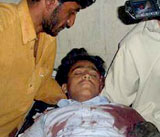 |
Baloch
Hal editorial: Khuzdar
bleeds again, Jun 13, 2010; Widespread
protests in Balochistan against killing of BSO activists,
The Baloch Hal, Jun 12, 2010 |
| One
Myth, Many Pakistans, by Ali Sethi, NYTimes.com, Jun 13,
2010: "Some years later, in a secluded college library
in Massachusetts, I read a very different account of the
Two-Nation Theory. Here I learned that it was devised
in the 1930s by a group of desperate Muslim politicians
who wanted to extract some constitutional concessions
from the British before they left India..." |
 |
Reflections
on the Flotilla massacre, by Pervez Hoodbhoy,
Viewpoint, Jun 11, 2010: "Israel is responsible
for abductions and disappearances, but does anyone
have an estimate for the number of "disappeared
persons" in Baluchistan?" |
|
| Microcosms
of the state, by Mir Mohammad Ali Talpur, DailyTimes,
Jun 6, 2010: "It was the handiwork of a well organised
group and probably not the first time that heroin travelled
ticketless to Karachi..." |
| Battle
for Pakistan, by Najam Sethi, The Baloch Hal, Jun
5, 2010 |
| The
Question of Balochistan, by Urooj Zia, The Baloch
Hal, May 31, 2010 |
| New-Gara.net
Spanish version: Pruebas
nucleares en Baluchistán este, by Karlos
Zurutuza, May 29, 2010; English version: Nuclear
testing in Balochistan: a local physician´s testimony,
Interview by Karlos Zurutuza, 2009, Apr 3, 2010 |

A child in Dalbandin, an area affected by the radiation. Photo by Karlos Zurutuza |
| Nuclear
testing in Balochistan: a local physician´s testimony,
Interview by Karlos Zurutuza, 2009, first published
in English, Apr 3, 2010 |
| Hunza,
May 29, 2010: "Overtopping"
has begun. For coverage of evolving crisis, scroll down
the page. |
| Pakistani
Ineptitude - Mega Flood Looming, by CN Anand, DesiCritics.org,
May 27, 2010 |
| The
charge of the Chainsaw Brigade, by Mir Mohammad
Ali Talpur, May 23, 2010, BalochUnity.org |
| Religion
as a panacea for Baloch nationalism, by Malik Siraj
Akbar, TheBalochHal, May 21, 2010 (reposted at BalochUnity) |
| Baloch
nationalism gone wrong, by Malik Siraj Akbar, TheBalochHal,
May 20, 2010 |
| Talibanisation
creeping into Balochistan, by Jan Assakzai, May 19,
2010, reposted at BalochUnity |
| Strategic
mess, by Mir Mohammad Ali Talpur, DailyTimes, May
16, 2010 |

Karlos Zurutuza |
| An
interview with journalist Karlos Zurutuza, by Sara
Etxart, NoticiasdeGipuzkoa, May 14, 2010: "The indifference
of the international community towards the Baloch issue
is outrageous." (Spanish
original) |
| Balochistan:
a flawed policy, by Sanaullah Baloch, Dawn.com, May 12, 2010 |
| Hunza,
May 29, 2010: "Overtopping"
has begun. |
| A new ghost political party, Gilgit-Baltistan National Congress, emerges at international stage, PamirTimes, Jun 15, 2010 |
| Daily
coverage of rising waters and affected areas at: http://pamirtimes.net/ |
| Pakistani
Ineptitude - Mega Flood Looming, by CN Anand, DesiCritics.org,
May 27, 2010 |
| Karakoram
traders flee border post, by Syyed Fazl-e-Haider,
Asia Times, May 21, 2010 |
| 15
ft remaining for a spillover to take place, Pamir
Times, May 20, 2010 |
| Army
moves in to evacuate vulnerable population in Hunza – Nagar
and Gilgit, PamirTimes.net, May 16, 2010 |
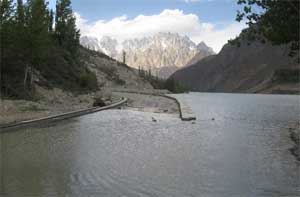 |
| The
likelihood of a flood from the Attabad landslide,
by Professor Dave Petley, Durham University, England,
May 15, 2010 |
| Multiple
dimensions of the Hunza disaster, by Dr. Shahid
Siddiqui, May 15, 2010: "...The most painful part
of the issue was the downplaying of the disaster by
the federal and local authorities. They tried to create
the impression that everything was either all right
or under control. The reality, however, was just the
opposite..." |
| Quick
meltdown inevitable? Simulation
of the erosion process of landslide dams due to overtopping
considering variations in soil erodibility along depth,
by D.S. Chang and L.M. Zhang, Hong Kong University of
Science and Technology, Natural Hazards and Earth System
Sciences |
| Pakistan
PM to visit Attabad lake amid flood fears, BBCNews,
May 14, 2010 |
| Army
plays down risk of flooding to villages, Dawn.com,
May 13, 2010. As CN Anand, however, notes in The
Hanzkuts of the Lost Horizon, "It does not
need an expert to realize that the need of the hour
was to was to work day and night and pare down the height
of the block to the maximum possible...Locals have complained
that during day time, a full eight-hour shift is not
being carried out..." |
| Tarbela
Dam & Karkoram Highway Threatened in Pakistan, by
CN Anand, Mar 13, 2010 |
| Karakorum
Highway submerged between Ghulkin and Gulmit, PamirTimes,
May 12, 2010; Tarbela
can absorb Hunza lake water, Dawn.com, May 12, 2010 |
| The
Hanzakuts of The Lost Horizon-Imminent Catastrophe,
by CN Anand, Desicritics, May 10, 2010: "A catastrophe
that occurs once in a hundred years is imminent in the
next 20 days..." |
| Indian
plot against Northern Areas, by Sajjad Shaukat,
SanaNews, May 9, 2010 |
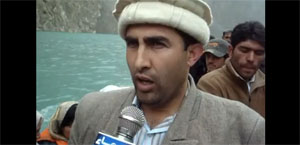 |
| [Citizens'
Voice] “We have spilled blood for this country,
our needs should be fulfilled” (interviews, Pt
I, Pt
II), May 8, 2010 |
| Karakorum
Highway and the Indian Option, by CN Anand, Apr
2, 2010 |
| Aljazeera's
coverage: Pakistan
landslide engulfs villages, Mar 13, 2010 |
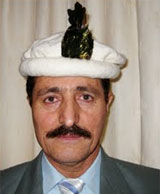 |
From
before: Chairman of the Balawaristan National
Front (BNF) Abdul
Hamid Khan's remarks to Bangkok conference. |
| Pakistan: Quo
Vadis?, by B. Raman, South Asia analysis
Group, May 14, 2010: "While the
Pakistan Army feels confident that it will be able to
crush separatist movements in Balochistan and Sindh despite
the imagined Indian role, it does not have a similar confidence
with regard to the Pashtuns...Unless
Islam is demilitarized and sent back to the mosques and
madrasas where it belongs, Pakistan stands in danger of
being weakened and destabilized by its own creations..." |
| The
bridge of indignities, by Mir Mohammad Ali Talpur, DailyTimes, May 9, 2010 |
| In
the US: What
makes the Times Square bomber different from other Pakistani
terrorists, by Ahmed Rashid, May 5, 2010 |
| Two
wrongs never make a right, by Mir Mohammad
Ali Talpur, DailyTimes, May 2, 2010 |
| Winning
the Battle of Algiers, by Mir Mohammad Ali Talpur,
DailyTimes.com.pk, Apr 25, 2010 |
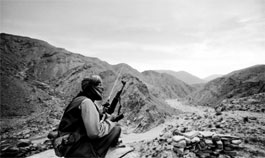 |
| Full
Frame: Lost
in Balochistan, a photographer documents life with the
Balochistan Liberation Army, by Marc Wattrelot,
Special to Global Post, Apr 23, 2010 |
| Shammed
Amendment, by Diagoh Murad, Diagoh Murad blog, Apr
23, 2010 |
 |
| "The
Supreme Court no longer talks of the missing persons”,
An exclusive interview with Nasrullah Baloch, chairman
Voice for Missing Baloch Persons (VMBP), The Baloch
Hal, Apr 21, 2010 |
| The
Pakistan Telecommunication Authority (www.pta.gov.pk)
has characterized this website as carrying 'blasphemous'
content. As we see no religious material on this website,
I can only interpret this to mean that the Pakistan government
regards itself as god, or at a miminum, sacred. It has
a high opinion of its achievements. |
 |
| Conned
again, by Mir Mohammad Ali Talpur, DailyTimes, Apr
18, 2010 |
| Balochistan-The
Other Side of the Story, by Moign Khawaja, Foreign
Policy Journal, Apr 18, 2010; Between the Lines: Hardliners,
sideliners..., by Moign Khawaja, Apr 26, 2010 |
|
Interview
with Ahmed Rashid: Ascending
From Chaos? By Jan Singfield, Majalla Magazine,
Jeddah, Apr 16, 2010 |
| Grim
Future Awaits, by Diagoh Murad, BalochWarna.com,
Apr 11, 2010 |
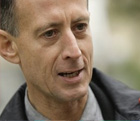 |
Peter
Tatchell: The people of Baluchistan have a right to
self-determination, by Peter Tatchell, The Independent,
Apr 14, 2010 |
| VIEW:
Falling back on tribal structure, by Nizamuddin
Nizamani, DailyTimes, Apr 3, 2010 |
A child in Dalbandin, an area affected by the radiation. Photo by Karlos Zurutuza |
| Nuclear testing in Balochistan:
a local physician´s testimony, Interview by Karlos Zurutuza, 2009, first published in English, Apr 3, 2010 |

Dulip/Johnny Dass alias Dali |
| Balochistan
Darkness Visible - Bleeding War In Pakistan Province,
Eurasia Review, Apr 1, 2010 |
| Historical: A Page from the Past, by Mir Mohammad Ali Talpur: "In keeping with the Pakistani tradition of camouflaging history a vital chunk of the country’s past has been shrouded in mystery for over 20 years. This was the period of 1973-1977, when the Baloch rose in revolt against a state that had relentlessly oppressed them for decades and military operations against the Baloch people were at their peak." |
 |
| Historical: Please
also see Mir Ali Mohammad Talpur's account: Memories of
Another Day: Part
I, Part
II, Part
III, Newsline Special, June 2009. |
|
ANALYSIS: Qu’ils mangent de la brioche, by Mir Mohammad Ali Talpur, DailyTimes, Apr 4, 2010 |
| Assessing
Article 370, by Mir Mohammad Ali Talpur, DailyTimes,
Mar 28, 2010 |
 |
Pakistan’s other fault lines, by Sanaullah Baloch, DailyTimes,
Mar 28, 2010 |
| Editorial: Inquiry
Commission for missing persons, The
Baloch Hal, Marr 25, 2010 |
| IPI:
the Baloch perspective, by Sanaullah Baloch, Dawn.com,
Mar 22, 2010 |
| Masters,
not friends, by Mir Mohammad Ali Talpur, Daily Times, Mar 21, 2010 |
| New
by Robert Fisk: Into
the terrifying world of Pakistan's 'disappeared',
by Robert Fisk, The Independent, Mar 18, 2010; The
mysterious case of the Grey Lady of Bagram, Mar 19,
2010; As
things get worse in Pakistan, the optimism continues to
soar, Mar 20, 2010 |
| British
terror trial: UK collusion with Musharraf's dictatorship,
by Peter Tatchell, Naked Punch, Mar 21, 2010 |
| U.S.
may expand use of its prison in Afghanistan, by David
S. Cloud and Julian E. Barnes, LA Times, Mar 21, 2010 |
| Missing
persons, Dawn editorial, Mar 20, 2010 |
| Encountering
fundamentalism, by Nizamuddin Nizamani, DailyTimes,
Mar 17, 2010 |
| In
the region: Fiction
of Marjah as City Was US Information War, by Gareth
Porter, Inter
Press Service, Mar 8, 2010, reposted at truthout.org:
"It turns out, however, that the picture of Marja
presented by military officials and obediently reported
by major news media is one of the clearest and most dramatic
pieces of misinformation of the entire war..." |
|
In
the region: AfPak
dialectics can work in India’s favour, by Sushant Sareen,
Institute for Defence Studies and Analyses, Mar 9, 2010,
reposted at Intellibriefs |
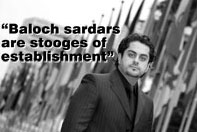
Mehran Baloch, Jang.com.pk |
| From
before: Interview
with British Baloch Leader, Mehran Baloch,
by Murtaza Ali Shah, The
News on Sunday, reposted at America
at War, Dec 27, 2009 |
| Malthus’s
disciples, by Mir Mohammad Ali Talpur,
DailyTimes, Mar 7, 2010: "There are some 23,300
nuclear weapons, made and maintained at enormous cost and
enough to destroy the earth a thousand times over, in the
arsenals of eight states..." |
| The
Balochistan truth, by Sanaullah Baloch, DailyTimes.com.pk, Mar 3, 2010 |
| Midas’s
gold, by Mir Mohammad Ali Talpur, DailyTimes.com.pk,
Feb 28, 2010: "Barrick’s track record is
pathetic... Considering the environmental consequences,
all licenses to Reko Diq should be cancelled. |
| "Musings
on Pakistan" Random Thoughts, by Mir Mohammad Ali
Talpur, DailyTimes.com.pk, Feb 14, 2010 |
|
What
Happened in New Delhi conference?, by Malik Siraj
Akbar, Feb 11, 2010 |
| ‘I
Come Not To Praise Charlie Wilson, But To Bury Him,’
By Melissa Roddy, The Public Record, Feb 11, 2010 |
| From
before: On
the matter of Pakistan, by David Dienstag, Jezail.org,
Aug, 2009 |
| From
before: Iranian
Baloch & Social Innovation: A Critical Look, by
Dr. Ahmad Reza Taheri, 2009: "...as is the case
with other societies, in order to develop a culture
of innovation in Balochistan, attention must shift on
effective education...It is only through a mental revolution
that one can improve one's culture and update one's
religious beliefs..." |
| From
before: Conflict
in Dera Bugti, by Nizamuddin Nizamani, originally
published in Dawn.com (with detail on underground
resource revenue distribution) |
 |
| The
extraordinary wildlife of Balochistan's Hingol National
Park is endangered for a number of reasons. Because this
and other parks could be a valuable source of revenue
for the Baloch people if promoted as sustainable eco-tourism
and photography, as well as make a huge contribution to
a variety of fields in science, we will cover more on
this topic in the future. For now here is an introduction
to Hingol
National Park. And here is a link that describes opposition
to hunting these magnificent creatures. More to come... |
|
Buy
land — they’re not making it anymore,
by Mir Mohammad Ali Talpur, DailyTimes.com.pk, Feb 7,
2010 |
|
A
short discussion on a few nuisance but necessary questions
about Baloch national freedom struggle, by Hafeez Hassanabadi,
Translated by Zrombesht, orig. source: dailytawar |
|
Islamabad’s ‘gunboat’ policy,
by Sanaullah Baloch, Dawn.com, Feb 1, 2010 |
| Sanaullah
Baloch: "...The broader aim underpinning the recent daylight
murders of senior Baloch leaders is to prevent at all
costs any mobilisation among the Baloch, or the raising
of their political consciousness. Islamabad is using inhumane
methods to intimidate Baloch political activists, seeking
by such means to render impossible any organised struggle
against the colonisation and exploitation of Baloch land
and resources..." |
| Understanding
the Baloch insurgency, by Alok Bansal, Pragati, The Indian National Interest Review, Feb 2010 |
Anti-Baloch
clique? — II, by Mir Mohammad Ali Talpur, DailyTimes.com,pk,
Jan 31, 2010;
also: Anti-Baloch
clique? — I, By Mir Mohammad Ali Talpur, TheBalochHal, Jan 16, 2010 |
| Interview with
Sardar Sherbaz Khan Mazari: 'Baloch
have reached point of no return', by Sajid Hussain,
TheNews, Jan 31, 2010, and BalochWarna |
|
Balochistan’s
unattended IDP crisis, by Malik Siraj Akbar, DailyTimes.com.pk,
Jan 31, 2010 |
|
Pakistan
the oppressor, by Peter Tatchell, Guardian.co.uk,
Jan 28, 2010 (full
set of links to Peter Tatchell's coverage) |
| It
is wrong to perceive that the Baluch nationalism is
the ambition of a few, by M. Sarjov, intellibriefs.blogspot.com,
Jan 28, 2010, |
| Gates
Sees Fallout From Troubled Ties With Pakistan, by Elisabeth
Bumiller, NYTimes.com, Jan 24, 2010: "Pakistani
journalists asked Mr. Gates...whether the United States
would expand the drone strikes farther south into Baluchistan,
as is under discussion. Mr. Gates did not answer." |
| "Parallel
Government," The FC in Balochistan, by Mir Mohammad
Ali Talpur, Jan 23, 2010 |
| "...The
US provides the 80,000-strong force $ 75 million a year
for five years from the $ 750 million FATA package. It
also sustains FC in Balochistan because it is supposedly
performing the duty of guarding Balochistan (from its
own people I suppose?)..." |
| The
age of the killer robot is no longer a sci-fi fantasy, by Johann Hari, The Independent, Jan 22, 2010: "You can't appeal to robots for mercy or empathy - or punish them afterwards." |
| Pakistan
may get drones - but implications of robotic wars are
very grave, Jan 22, 2010: interview with Peter Singer, author of Wired for War. |
| A
CM's Heart Change, source: The Frontier Post, Jan 21,
2010, reposted at Ostomaan.org |
| Plans
to sabotage the Balochistan package, by Malik Siraj
Akbar, The Baloch Hal, Jan 20, 2010 |
|
Balochistan
is no Bangladesh, by Sushant Sareen, The Baloch
Hal, Jan 20, 2010, also posted at intellibriefs; Balochistan:
Sardars Vs Middle class Leaders, Intellibriefs.blogspot.com,
Jan 21, 2010 |
 |
A
case study on the lack of democracy and socio-economic
development of Balochistan, by Sheikh Asad Rahman,
The Baloch Hal Exclusive, Jan 19, 2010 |
| Afghanistan:
only the first move in the grand chess game for control
of Central Asian resources, by Michael Payne, Jan 9,
2010: "So if anyone still thinks that the surge in
Afghanistan is strictly intended to defeat the Taliban
and the remnants of Al-Qaeda, it's time to think again.
This is the new launching point for the eventual control
of the Balochistan region..." |
What
do Haiti and Balochistan have in common?
One is
currently exploited by a central government and the other
was brought to its knees by the French, Spanish and American
governments. This article below is relevant because it
is conceivable that Balochistan could throw off one yoke
only to find itself pressured by a new set of smooth operators.
Already international
players are stepping in to ask Pakistan why Balochistan
canceled a mining contract. This article by respected
scholar Noam Chomsky is harrowing and a must-read for
anyone who is interested in global trade and power: The
Tragedy of Haiti, by Noam
Chomsky, reposted in truthout.org, orig. published in
1993. To read full article, please be sure to click through
all 'segment' links. |
| The
Surge: A Strategic Opportunity needs to be Exploited,
by Belaar Baloch, Belaar's Perspective, Jan 13, 2010:
"It is this uncertain environment that will ultimately
create a strategic opportunity for the Baloch to further
their interests; and, it is up to our leadership to determine
how to wisely plan the initiatives to seize this opportunity
which lies at our doorstep..." |
| From
before: "The Marines and U.S. officials
in Khan Neshin are trying to bypass corruption
and inefficiency by working directly through [Massoud] Balouch."
U.S., Taliban compete to help Afghan towns; Bypassing
Kabul's corruption helps U.S. effort, but retaining
talent is hard, MSNBC.com, Dec 29, 2009 |
| Luckless
Gwadar, by Mir Mohammad Ali Talpur, DailyTimes.com,
Jan 10, 2010: "Sham mega events and failed mega-projects
are no answer to the aspirations of the people..." |
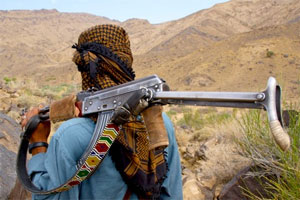 |
Vice
Magazine has published several language editions of
the article titled 'A meeting with Lashkar-e-Balochistan,'
by Karlos Zurutuza: German, Italian, Spanish, Japanese, English; For
other editions of this story: gara.net (download
pdf in Spanish), The
Diplomat, and at thebaluch: A
meeting with Lashkar-e-Balochistan, by Karlos
Zurutuza, Nov 17, 2009 |
| For
entertainment (what imagination!): RAW
organizes seminar with aim to target Baluchistan,
by Christina Palmer, TheDailyMail.com, Jan, 2010 |
| Balochistan:
Ground Zero. A piece about the exploitation of Balochistan,
by Mir Mohammad Ali Talpur, reposted from DailyTimes,
com.pk, Jan 1, 2010 |
 |
The
price of ‘Pakistan Khapay’, by Malik
Siraj Akbar, taqaza.com, Jan 1, 2010 |
Ahmar Mustikhan |
"Aren't
you afraid that the Americans might use you tactically,
against the Taliban, and then, like the Kurds, abandon
you once you have outlived your purpose?" - Stewart
J. Lawrence poses questions for Ahmar Mustikhan |
| Interview: Foreign
and defense policy expert Stewart J. Lawrence interviews
Ahmar Mustikhan: Baluchistan
and the Af/Pak War, Dec 30, 2009, Counterpunch.org,
reposted at Intellibriefs |
| Interview with
Mehran Baloch: Baloch
sardars are stooges of establishment, by Murtaza
Ali Shah, The Baloch Hal, Dec 28, 2009 |
|
The
Balochistan 'package,' by Sanaullah Baloch, Dec
21, 2009 |
| Baloch
Hal Editorial: Baloch
journalist under terrorism charges, Dec 17, 2009 |
| Contempt
of Court and the Pakistan Army, by CN Anand, Desicritics.org,
Dec 17, 2009 |
 |
Dec
12, 2009: The Sindhi American Political
Action Committee (SAPAC) is pleased to announce
the launching of its website! www.sindhpac.org |
|
| A
meaningful amnesty, by Mir Mohammad Ali Talpur,
The Baloch Hal, Dec 12, 2009 |
| The
darkest December, by Ahmad Faruqui, Dawn.com,
Dec. 7, 2009 |
| Text
highlight: Remarks
by Selig Harrison at the Baluchistan International
Conference, Nov 21, 2009: "...This is the key
to understanding why Pakistan is so dysfunctional.
It’s an artificial political entity. The British
put together five ethnic groups that had never before
co-existed in the same body politic historically.
The Bengalis were the biggest. They outnumbered all
of the other four combined—the Punjabis, the
Pashtuns, the Baluch and the Sindhis. Five became
four of course when Bangladesh seceded [in 1971]..." |
| Development: The
Saindak Saga, by Mir Mohammad Ali Talpur, reposted
from the DailyTimes.com.pk,
Dec 5, 2009; Editorial:
Outstanding dues of Sui Gas,
The Baloch Hal, Dec 3, 2009 |
 |
| Video
highlight: Speech (Part
I, Part
II, Part
III) by Andrew Eiva at Baluchistan International
Conference, Nov 21, 2009. Mr. Eiva is best known for
his impact on policy and the selection of effective
weapons systems during Afghanistan's struggle against
Red Army occupation. Currently, he is working on a
concept for the Sudanese resistance to use their oil
and gas reserves as a tool for unity and victory.
Eiva thinks a similar approach could benefit the Baluch
drive for independence. Do not miss Mr. Eiva's background
info at jezail.org. |
|
| Text
highlight: Humaira Rahman spoke of the self-determination
trap at the Baluchistan International Conference
on Nov 21, 2009. Here is a link to the article
by Marc Weller she referred to in this segment of
her speech. |
| World
Bank's Balochistan
Economic Report, WorldBank.org, Nov 6, 2009: summary and full
report |
| Bitter
Truth by Diagoh Murad, Nov 29, 2009 |
| The
Baloch ‘Intifada,’ by Sanaullah Baloch,
Dawn.com, Nov 23, 2009: Started soon after the military
takeover of Gen Pervez Musharraf, the Baloch popular
resistance to oppression is now entering its 10th
year. |
| Exclusive:
The War against Baloch, by Sanaullah Baloch,
The Baloch Hal, Nov 20, 2009: "No other state in the
world so openly assassinates or defends state murders
and mass repression as legitimate instruments of rule.
Islamabad is using the most brute and inhuman methods
to track down and kill leading Baloch political activists." |
| New
online newspaper! The
Baloch Hal. From Editor-in-chief MALIK SIRAJ AKBAR: "...The
Balochhal, which is a Balochi word for Baloch news,
intends to bring the news from Balochistan as it happens.
We are a team of young media professionals without
biases towards any religion or political ideology.
Ours is a liberal and secular policy under which we
will provide equal coverage to all stakeholders in
Balochistan." |
|
A
meeting with Lashkar-e-Balochistan, by Karlos
Zurutuza, Nov 17, 2009: "The enemy tries to
portray us as terrorists, but the Baloch have only
been defending themselves from the illegal occupiers
since day one. Today we all pursue the same goal:
the liberation of Balochistan”, remarks the
leader of this battalion of 20 guerrillas...
For other editions of this
story: gara.net (download
pdf in Spanish), The
Diplomat and Vice
Magazine |
| Where
is the Chief Justice of Pakistan?, by Malik Siraj
Akbar, Malik Siraj Akbar writes, Nov 15, 2009: "Voice
of the Missing Persons (VMP) is a newly
formed organization in Balochistan. It comprises of
the family members of the disappeared people’s
families. No one takes an interest in their issues anymore,
they complain. Everyone is scared to speak in their
support." |
| Predatory
mining in Balochistan and Afghanistan: Afghan
cash starts going to China, by Syed Fazl-e-Haider,
atimes.com |
| From
before: Jewel
in the Crown: Reqo Diq Copper and gold Deposits in
Balochistan Province of Pakistan, Sold for a Song,
by Dr. Babur Zahiruddin, Economistan.com, Sep 13,
2009 |
| Pakistan
creates its own enemy, by Muhammad Idrees Ahmad,
Le Monde diplomatique, Nov 2009: Asif Ezdi: "...because
the state has failed [the youth], massively and comprehensively:
the wellspring of Islamic militancy in Pakistan is
to be found in the alienation of the mass of the population
by a ruling elite that has used the state to protect
and expand its own privileges, pushing the common
man into deeper and deeper poverty and hopelessness." |
"We shouldn't identify Jundallah with the
resistance in Western Balochistan as whole."
- Ismail Amiri |
 |
| Interview
with Ismail Amiri, by Karlos Zurutuza, Nov
4, 2009 |
|
Taj Muhammad Breseeg,
photo by Karlos Zurutuza |
“The antagonisms between the
clans have disappeared; today our people are united
in the fight against the state.” |
| Interview
with historian Taj Mohammad Breseeg, by Karlos
Zurutuza, Nov 2, 2009 |
|
| Pakistan's
Other Problem Area: Baluchistan, by Ishaan Tharoor,
Time.com, Nov 1, 2009 |
| Voice
of reconciliation, Interview with Tahir Muhammad
Khan, TheJang.com, Nov 1, 2009: "The dream of an independent Balochistan is over 80 years old. The Baloch are in search of their identity. They possess territory, they own resources, they have their language and culture, they take pride in their history, unconquered by any one. The creation of Muslim Pakistan was a romantic division; that dream is over. Therefore, the classic nationalism is once again reemerging." |
| Balochs
in Iran, the “enemies of God,”
story and photos by Karlos Zurutuza, originally published in Spanish by gara.net |
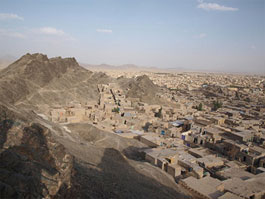
Zahedan, Iran |
| Press
Review: Killing of Balochistan’s Education Minister,
by Malik Siraj Akbar, Daily Times editorial, Oct 27,
2009 |
| Appeasing
Iran by Belaar, In Search of Baloch National Interest,
Oct 25, 2009 (also see Iran's
Ethnic Tinderbox, by John R. Bradley) |
| Iran,
Balochistan and Pakistan: The Next Insurgent Frontier?,
by Saad Khan, huffingtonpost.com, Oct 24, 2009 |
| The
riddle of Baluchistan, by Hamida Ghafour, TheNational,
Oct 23, 2009 |
| Inside
Balochistan's Ravaged Heartland, by Qurratulain
Zaman, Tehelka, Issue 43, Oct 31, 2009 |
| Ahmed
Rashid Takes On the Crisis in AfPak, by Ahmed
Rashid, The National Interest Online, Oct 21, 2009: "...Worse,
Pakistan is far less resilient than it was a few years
ago. Even as Pakistani officials bluntly criticize
Holbrooke for linking Afghanistan and Pakistan in
his “AfPak” strategy, some Pakistanis
already see a chronic “Afghanization” of
their nation. Current realities include a collapse
of law and order in parts of the country, state institutions
riddled with corruption and ineffectiveness, a justice
system that cannot deliver, a crashing economy with
severe joblessness, increasing ethnic tensions and
a strong separatist movement in Baluchistan province..." |
| Jundallah:
Profile Of A Sunni Extremist Group, by Abubakar
Siddique, Radio Free Europe, Radio Liberty: Oct 20,
2009: "...Analysts suggest that the turmoil in
this part of the world will rise unless regional states
rethink and reconfigure their relations with their own
citizens and with their neighborhood..." |
Asad Rehman |
| Revisiting
the Che Guevara-like days of Baloch resistance movement
with Asad Rehman, interview by Malik Siraj Akbar, Malik Siraj Akbar writes, Oct 19, 2009 |
| The
Pakistan Army's Political Gamble, by Ahmed Rashid,
The Daily Beast, Oct 17, 2009: "The military
launched a massive public-relations exercise, briefing
key TV talk-show hosts and journalists who were urged
to whip up public opinion against the U.S. aid bill..." |
| Without
democracy in Pakistan, forget victory in Afghanistan,
by Tareq Fateh, Globe & Mail, Oct 14, 2009: "Military
elites are stoking anti-U.S. hysteria to cripple Islamabad’s
fight against the Taliban...For the first time in U.S.-Pakistan
relations, American aid will be directed at Pakistan's
economy and social infrastructure and not entirely toward
its armed forces. The result is an uproar among the
beneficiaries of the country's military-industrial complex
whose sense of entitlement seems to be in a state of
disbelief..." |
| Opinion: War
and Peace, by Alexander Cockburn, counterpunch.org,
Oct 9-11, 2009: "...There have been two moments
in the last 40 years when life might have improved
for ordinary Afghans, particularly women. The first
came with the the reforming left regime of the late
1970s, destroyed by the warlords with US backing.
The second arrived with the US eviction of the Taliban
in 2001-2, which was welcomed by many Afghans. But
at this stage in the game, simply by definition, no
American intervention overseas can be anything other
than a ghastly disaster, usually bloodstained. Allready
the US had too many chits out to the warlords of the
Northern Alliance. The US “nation building” apparat
is irreversibly corrupt – with a network of
$250,000 a year consultancies, insider contracts,
and beyond that a de facto stake in the drug industry
now supply most of the West's heroin and opium." |
| US-Pakistan:
a client cannot defy but conforms, by Belaar,
In Search of the Baloch National Interest, Oct 10, 2009 |
| Britain
to train Pakistan’s Frontier Corps troops in
Baluchistan, by Jeremy Page, TimesOnline, Oct 9, 2009 |
| Book
Review: Transforming
Pakistan: Ways out of Instability by Hilary Synnott;
reviewed by Krishnan Srinivasan, The Telegraph, Calcutta,
India, Oct 9, 2009: 'According to [Synnott], India
sees no advantage in promoting anarchy in Pakistan;
Siachen has little or no strategic importance; Zardari
and his party are deeply unpopular; Urdu as a national
language is not an “entirely successful” device; the “strategic
depth” that the Pakistan military craves for in Afghanistan
is “a baffling idea”; the Pakistanis failed to create
a pliable government in Kabul after the Soviet pullout;
and there are limits to the ISI's control over militants...' |
 |
Will
TRC work? By Mir Mohammad Ali Talpur, Oct 7, 2009 |
| "Remember that this commission became possible only when the scenario changed completely after the white minority under F.W. de Klerk accepted the principle of majority rule in 1991 and negotiated the end of apartheid with the ANC..." |
| Comment: The
Truth and The Lies, by Diagoh, Pakistan (word) |
| Pakistan's
Pashtuns, looking for statehood, may look to Taliban, by Ben Arnoldy, Christian Science Monitor, Oct 4, 2009 |
| Sikander Hayat Jamali (1942-2009), Dr. Shahida
Jaffrey Jamali remembers her illustrious husband,
The Friday Times, reposted at Malik Siraj Akbar Writes,
Oct 1, 2009 |
| Chasing Taliban into Balochistan, by Belaar Baloch, In Search of Baloch National Interest, Oct 1, 2009 |
| From before: Baloch National Interest and the Middle East Conflict, by Belaar Baloch, In Search of Baloch National Interest, Feb 11, 2009 |
| The
Quetta Shura, by Malik Siraj Akbar, Oct 1, 2009:
"Nothing embarrasses and irks Pakistani spymasters more than the issue of Talibanisation
in Quetta..." |
Congratulations
to Ahmed Rashid:
Ahmed Rashid (author of 'Taliban' and most recently, 'Descent Into Chaos') has
won an award for the Best Columnist of the Year in Spain and will be presented
this award at a formal state dinner by the King and Queen of Spain. |
Photo: AhmedRashid.com |
Pakistani
journalist Ahmed Rashid discusses the challenges facing
President Obama in Afghanistan and Pakistan on
NPR's Fresh Air Radio, Oct 1, 2009 |
| Country
of Constant Sorrow: McChrystal's Afghan Desolation, by Vijay Prashad, counterpunch.org, Sep 30, 2009 |
| Poetry: This Balochi
poem by Gul Khan Nasir is translated by the famous
Urdu poet Faiz
Ahmed Faiz. Nawab Nawroz Khan's story is a tragic
one. I will try to find an English translation. |
Malik Siraj Akbar |
New: How
Panjgur is losing the battle, by Malik Siraj Akbar,
Sep 25, 2009 (original): "I
was told that a lot of money was coming from Saudi
Arabia, Kuwait and many other Arab countries these
days to radicalize the Baloch society... |
| Religious
schools are mushrooming. Outsiders are nipping to the
town to get education from the religious schools lavishly
funded by Arab countries. Interestingly, the language
centers that once played a magnificent role in the development
of the society have now began to teach the kids the
translation of short Quranic verses, the six Kalimas
and the religious prayers prescribed for eating, sleeping
etc." |
| The
Balochistan ‘package', by Sanaullah Baloch, Dawn.com,
Sep 21, 2009: "[Central govt.] control works
through three interrelated mechanisms: a) Divide and
rule... b) Economic dependence... c) Co-optation:
involving the non-dominant elite like greedy tribal
chiefs, feudals, drug tycoons and corrupt politicians
through partial dispensation of benefits and favours...The
Baloch have given 60 years to Islamabad to change
the fate of the region but have, instead, been showered
with bombs and bullets. Political, economic, social,
educational and cultural values have been all but
destroyed in the province..." |
| Face
to Face, “The entire world is open to us, why should
we confine ourselves to this country": Interview
with Nawab Khair Bakhsh Marri, by Amir Zia, Newsline,
Sep 2009 |
 |
New
York Review of Books: To
Live or to Perish Forever: Two Tumultuous Years in Pakistan,
by Nicholas Schmidle, reviewed by Ahmed Rashid, Sep
15, 2009 (original
here) |
| "Much
has been made of Pakistan as a potential failed state
on the verge of breakup, yet if there is even a remote
chance of that happening it will not be because of the
Taliban, but because of an underlying crisis that has
been studiously ignored by the West—the separatist movement
in Balochistan. " |
| Also
reviewed by Ahmed Rashid: Seeds
of Terror: How Heroin Is Bankrolling the Taliban and
al Qaeda, by Gretchen
Peters |
| Country
for sale?, Dawn editorial, Sep 14, 2009:
"...But there is little criticism of how our own government is threatening the
country's territorial integrity by engineering the lease
of millions of acres to foreign investors...Arab conglomerates
are to be leased vast tracts of land and will be allowed
to repatriate all produce and profits, even in the case
of a food deficit..." |
| Jewel
in the Crown: Reqo Diq Copper and Gold Deposits in
Balochistan Province of Pakistan, Sold for a Song,
by Dr. Babur Zahiruddin, Economistan.com, Sep 13,
2009 |
 |
If
I compromise on Baloch movement, my followers will
kill, replace and forget me, says Bramdagh Bugti,
by Malik Siraj Akbar, Malik Siraj Akbar writes, Sep
10, 2009 |

Shazain Bugti, APP photo |
The
Baloch perspective,
By Murtaza Razvi, Dawn.com, Sep 10, 2009 |
In
the region: An
Outside-The-Box Look at Afghanistan, New Ideas for Lasting
Peace and Stability, by Ahmad-Shah Duranai-Khan,
Apr 17, 2009. Mr. Duranai posted this pdf in response
to an article of Ahmed Rashid's;
In
Afghanistan, Let's Keep It Simple, WashingtonPost.com,
Sep 6, 2009;
also worth reading about: the 'cockamamie
schemes' to raise cashmere goats (only the Americans
could come up with this). |
| Essay: “Los
Churreteros”
By Mir Mohammad Ali Talpur, Sep 5, 2009 |
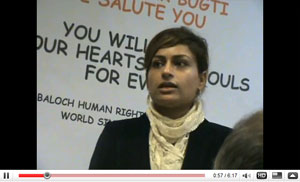
Speech
by Mahdim Baloch on occasion of meeting held to
honor Nawab Bugti, Aug 30, 2009: "We are facing
a very slow, but very calculated genocide on the part
of the Pakistan government..."
Release: Baloch
Human Rights Council (UK): The
Baloch And Sindhi Paid Tribute To Nawab Bugti, Sep
2, 2009 |
| Washington
awakens: US
senators raise Balochistan issue, Dawn.com, Sep
2, 2009: "Senators Carl Levin and Jack Reed of
the US Senate's Armed Services Committee and Edward
Kaufman of the Foreign Relations Committee stressed
the need for complete peace in Balochistan and asked
the government to settle all outstanding issues with
the Baloch people..." |
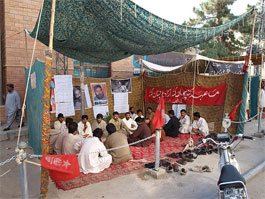
Gathering for disappeared at Quetta Press Club,
photo by Karlos Zurutuza |
| Iran-Pakistan
Joint Military Offensive Against East Baluchistan,
by Karlos Zurutuza, translated from the Spanish by
Elena Arengo (orig. publ. gara.net, Aug 30, 2009 |
| Blood
ONCE AGAIN ignites fire in Balochistan, Malik
Siraj Akbar Writes, Sep 1, 2009: "Violence broke
out in various districts of Balochistan on Monday after
the recovery of the dead body of another Baloch nationalist
leader..." |
| Balochistan
situation getting bleaker by the day, by
Malik Siraj Akbar, The Hindu, Opinion, Sep 2, 2009 |
| The
Gulf Widens, by Mir Mohammad Ali Talpur, Sep 1,
2009 |

Akhtar Mengal, Baluch National Party Leader, photo by
Karlos Zurutuza
|
Esta
operación unirá a la resistencia baluche a ambos
lados de la frontera, Interview with Akhtar Mengal,
by Karlos Zurutuza, gara.net, Aug 30, 2009 (in Spanish)
"This operation will unite the Baluch resistance on
both sides of the border."
|
| We
should receive a new report regarding military operations
in southern Balochistan shortly, but in the meanwhile,
I am posting what appears to be the first official acknowledgement
that Iranian rockets have been fired into the southern
province of Balochistan: Iran
Fired Rockets To Pakistani Control Balochistan,
BPP.com, Aug 22, 2009 |
 |
Dr.
Jumma Khan Marri, Baloch political leader and son of
the legendary Baloch leader Mir Hazar Khan Marri who
led the Baloch freedom struggle in the 1970s and 1980s. |
| 'India
only gives moral support to Balochistan', interview
with Dr. Jumma Khan Marri by Sheela Bhatt, rediff.com,
Aug 24, 2009 |
Series by Malik Siraj Akbar: Day
4: FC’s attack on Balochistan’s fearless Press,
Aug 24, 2009
Day
3: Khakis Press, Repress, Suppress, Aug 23, 2009
Boots,
guns, tanks now come to Daily Balochistan Express/ Azadi,
Aug 21, 2009 |
Why
Bleed Balochistan?, by Murtaza Razvi, Aug 24,
2009:
"It is becoming clear to an increasing number of Baloch people that while
the state wants their resources, it has little empathy for them...
With local governments about to be disbanded and no clear plan in sight to revamp
the system, it is the economically depressed districts and even entire provinces,
which will suffer most...
The army is not known to have solved any of Pakistan's problems — at wartime
or in peace — when left to its own devices. Its interference in public affairs
has compounded our challenges and distorted the normal course of events. Its
commercial interests pursued at the expense of the people are well documented.
Ms Jahangir is right in asserting that Balochistan cannot be left to military
decision-making mechanisms. The situation calls for political engagement among
all concerned..." |
| New: Make
Balochistan a priority, Dawn editorial, Aug 23,
2009 |
| New: Balochistan
burning: Great Game over Gwadar Port, By Ameen
Izzadeen, The Sunday Times, Aug 23, 2009 (comment
from editors) |
| Balochistan-Pakistan's
Other Colony, by Vikram Sood, posted at bso-na.org,
Aug 23, 2009: "Pakistan's largest province and
most backward state is resource rich and geo-strategically
located astride the energy routes from the Persian
Gulf and as a gateway to Central Asia..." |
| Army
running Pakistan's foreign policy: Asma Jahangir (chairperson
of the Human Rights Commission of Pakistan), Times
of India, Aug 13, 2009: Apart from ruthlessness of
the army that we witnessed in former East Pakistan
(now Bangladesh) or were witnessing today in Balochistan,
the military didn't even have a clear perception of
the major issues that confronts the country, Jahangir
said at a lecture on "Democracy and Human Rights in
Pakistan: A dead-end"... "Recently there has been
some development work in Balochistan, but it has not
been carried out according to the wishes of the people
of Balochistan, and the
only set of people benefiting from the work are the
Pakistan Army," Jahangir was quoted as saying
by the Daily Times newspaper. |
| Let
the dice fall, by Kamran Shafi, Dawn.com, Aug
18, 2009 |
 |
The
Afghan pipe dream, by Pepe Escobar, atimes.com,
Aug 20, 2009 |
| What Pakistan Should Really Worry About in Balochistan, by Patricia Lee Sharpe, WhirledView, Aug 20, 2009 |
| Bye
Bye Asaap, by Malik Siraj Akbar, Malik Siraj Akbar
Writes, Aug 18, 2009: "Since the government decided
to move a tank outside the Asaap offices, it has remarkably
worsened the situation. Due to this, all of our staff
members are panicked and unable to concentrate on their
professional responsibilities. Everyone knows that Asaap
began its publication amid very unfavorable circumstances.
Since the outset, the paper has stood on a clear policy
about Baloch and Balochistan..." also, see: “If
a book is to disintegrate a country then there is nothing
that can integrate a country,” Dr. Naseer Dashti and
We
all love Jan Dashti, also by Malik Siraj Akbar |
| New
translation: East
Baluchistan: The forgotten, endless war, by Karlos
Zurutuza, gara.net, Jun 29, 2009. New translation
by Daisann McLane, Aug 17, 2009 |
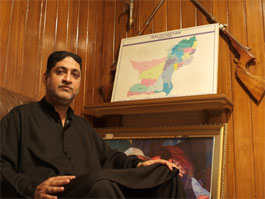
Akhtar Mengal photographed by Karlos Zurutuza
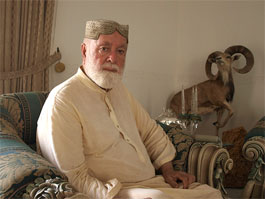
Khair Bux Marri
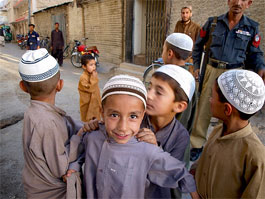
School children

Ataullah Mengal
Other photos by Karlos
Zurutuza: East
Balochistan, West
Balochistan, and the insurgency |
Editorial,
Dawn.com: Baloch ‘independence’,
Aug 13, 2009.
thebaluch.com comments: While
one may argue the wisdom of "altering physical
boundaries," the dawn.com editorial statement cited
below is disingenuous
and misleading.* Please see the text of the Aug 11,
1947 Standstill
agreement and the text of Kalat
State's Memorandum to the Cabinet Mission, 1946.
Interestingly, we also found the below text in an online
archive, copyright UK Parliament, titled "Kalat"
(HC Deb 11 March 1948 vol 448 c182W):
"...Mr.
Donner asked the Secretary of State for Commonwealth Relations whether his attention
has been drawn to the refusal of Kalat to join Pakistan; and whether it is
intended to offer, without prejudice to Kalat's relationship to the Dominion,
a treaty of friendship and/or alliance to the Khan.
Mr.
Gordon-Walker: My attention has been drawn to a Press report that Kalat has
refused to accede to Pakistan. I have no reason to believe, however, that
negotiations have come to an end. I understand that a standstill agreement
is in force..."
*(from dawn.com editorial, Aug 13: "... According to the then ruler
of Kalat, the agreement had been to accept the state's unique status and to
incorporate it into Pakistan as an independent and autonomous unit along the
lines of countries that are part of the European Union today. But this has
never been proved and is rejected by Pakistan...") |
Editorial,
Central Chronical: Balochistan
civil war unnerves Pakistan, by
MK Dhar, NPA, Aug 13, 2009:
"...Any talk of granting democratic, human and development rights to the people
of Balochistan, struggling to shake off the yoke of Islamabad 's rule for decades,
touches a raw nerve in the military-political establishment. Pakistan has still
not recovered from the shock of the Khan of Kalat choosing independence over
accession to Pakistan in the wake of the partition in 1947. He was forced to
sign an accession paper after his palace was bombed by the Pakistan Air Force,
making it clear he was doing so under duress and to ensure autonomy for Balochistan.
Ever since Islamabad has launched four major military campaigns against the Baloch
people, killing thousands, but has failed to subdue them. They have been denied
full autonomy, a fair share of development and resources and control of their
natural wealth. They have opposed fundamentalism and attempts to bring them under
the control of the mullahs, whom Gen Zia-ul-Haq and Musharraf had promoted. Islamabad
has pushed in Al Qaeda and the Taliban into the province as a safe haven for
operations against the US and NATO forces in Afghanistan, the people detest
the presence of such foreign elements, as also the Army garrisons stationed in
the province to continue military suppression of the nationalist forces.
To cover up its failure to integrate the Balochs, Pakistan has been looking for
scapegoats and a hidden "Indian hand" for what is happening in Balochistan, with
nationalists battling the Army and sabotaging vital communication links and the
gas supply pipelines to show their resentment. The people continue to languish
in poverty and ignorance, with little hope of relief with Islamabad having decided
to tighten its military control. An informal media censorship has been clamped
and nobody knows how many Baloch nationalists and Army personnel are getting
killed in the continuing clashes..." |
| Stunning reversal: China calls halt to Gwadar refinery,
by Syed Fazl-e-Haider, atimes.com, Aug 13, 2009: Cash-strapped
Pakistan, which has had to accept more than US$11 billion
from the International Monetary Fund, is threatened
with the loss of a huge foreign investment after China
said it had shelved its multi-billion dollar coastal
oil refinery project at Gwadar, in southwest Balochistan
province... |
New: Balochistan celebrates I-Day in London, praises India, by Akanksha Banerji / CNN-IBN, Aug 13, 2009: "In an act of defiance, Balochistan celebrated its Independence Day in London three days before Pakistan’s official Independence Day..." (video link)
Report on London I-Day celebrations, by Faiz Baluch, Aug 13, 2009 |
| New: Happy
Independence Day, Balochistan!, by Daisann McLane,
MsExPat at Correntewire.com, Aug 12, 2009 |
 |
New: The
62nd Anniversary of Balochistan's unsuccessful bid
for independence (Part I): Pakistan's Baloch: Life
on the margins of Punjab, by Karlos Zurutuza,
gara.net, August 11, 2009. (English translation by
Daisann McLane, Spanish
original).
|
New: The
62nd Anniversary of Balochistan's unsuccessful bid for
independence (Part II): Baluch of Iran: the "enemies of
God", by Karlos Zurutuza, gara.net,
Aug. 12, 2009
New: The
62nd Anniversary of Balochistan's unsuccessful bid for
independence (Part III): "The Baluchis have only two choices: death or slavery",
by Karlos Zurutuza, gara.net, August 13, 2009 |
click
for more articles archive . . . |
| |
| Balochistan
history in brief: |
| * |
Pakistan's
Baluch Insurgency by Selig Harrison, Le Monde
Diplomatique, Oct. 2006; For other articles
and book by Selig Harrison |
| * |
For perspective by Ahmed Rashid (author of 'Taliban'
and 'Descent into Chaos'): Frontier
Years Give Might to Ex-Guerrilla's Words,
by Jane Perlez, NY Times, Jul 5, 2008 |
| * |
Interview
with Ahmed Rashid by Munizae Jahangir from her
documentary 'The Baloch Battlefield.' |
| * |
Waiting
for the Worst: Baluchistan, 2006, by Nicholas
Schmidle, The
Virginia Quarterly Review, Spring 2007 |
| * |
Balochis
of Pakistan: On the Margins of History (right
click to download pdf) by Foreign
Policy Centre, London, Nov. 2006 |
| * |
Back
to the Future-The Khanate of Kalat and the Genesis
of Baloch Nationalism 1915-1955, by Martin Axmann,
Oxford University Press |
| * |
Baloch
Nationalism: Its Origin and Development, by Taj
Mohammad Breseeg, 2004; for pdf |
|
|
|
| From before: Frontier
Years Give Might to Ex-Guerrilla's Words,
by Jane Perlez, NY Times, Jul 5, 2008: "... Fresh out of
Cambridge University in the late 1960s, and steeped in the era's
favorites — Marx,
Mao and Che — Ahmed Rashid took off for the hills of Baluchistan,
a dry, tough patch of western Pakistan. He stayed for 10 years." |
From
the New York Times, 1947:
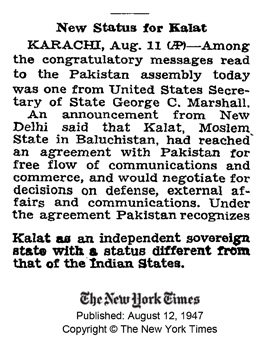
Related articles from the NY Times |
From
Before : Crisis
in Baluchistan: A Historical Analysis of the Baluch Nationalist
Movement in Pakistan, by Justin S. Dunne, Naval Postgraduate
School, Monterey CA
From before: Balochistan,
The Invisible War, Politics, natural resources and war in remote Pakistan,
by Merrill
Findlay |
From
1838: thank you to the University
of Texas for this magnificent
map of "Beloochistan,"
published by "The Society for the diffusion of Useful Knowledge,"
August 15th, 1838. Note the population of Curachee 15,000 (yes
thousand) and Kelat 20,000 and Kwettah 400.
From before: Balochistan:
missing the point, by Ayaz Amir, Dawn.com, Mar 25, 2005
From before: Balochistan,
A Backgrounder, by Priyashree Andley, Institute of Peace
and Conflict Studies, Special Report, Oct 2006 |
 |
Click for stunning photo of Balochistan
landscape; for other photos by Kamran Safdar, click
here |
| >> MORE
in ARTICLES ARCHIVE... |
Treaties,
agreements and letters exchanged with the British govt. and/or
Pakistan:
(right click to download pdfs; 14 relates to accession agreement) |
| From "Inside
Baluchistan": Appendices
1-5, 6-13,
14,
15-19;
All:
1-19 |
| Books: |
| In
Afghanistan's Shadow: Baluch Nationalism and Soviet Temptations.
Selig S. Harrison. New York and Washington: Carnegie Endowment,
1981 |
| BOOK:
The Baloch and Their Neighbours: Ethnic and Linguistic Contact
in Balochistan in Historical and Modern Times, Carina
Jahani, Agnes Korn (eds.), Sep 28, 2007 |
| Of
global importance: The
Shock Doctrine, by Naomi Klein, The Telegraph, Sept 22,
2007: "A new gangster class capitalises on conflicts .
. ."; in Truthout.org: "The Shock Doctrine" is a powerful
tour de force . . . In an age of corporatism partnered with
corrupted political elites, it's must reading . . ."; Interview |
| Baloch
Nationalism: Its Origin and Development by Taj Mohammad
Breseeg, 2004. To download a pdf of Mr. Breseeg's dissertation,
click here. |
| Inside
Baluchistan, Political Autobiography of Khan-e-Azam Mir Ahmed
Yar Khan Baluch, Ex-Ruler of Kalat State. Ahmed Yar Khan,
Royal Book Company, 1975 |
| Geography |
| http://www.transpakistan.com.pk/balochistan.htm |
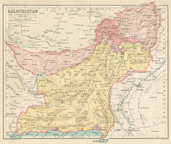 |
Map of Baluchistan through
the ages, click
for larger version; purchase book at amazon. |
| click for more
articles archive . . . |
|
| New: Balochistan: Amnesty official - Violations Belong Alongside Those In Iraq, Afghanistan And Gaza, UNPO.org, Sep 2, 2010; reposted from Examiner |
Demonstration: International Voice for Baluch Missing Persons (U.K section) to protest against enforced-disappearances,
When: Sept 5, between 12-5pm
Where: In front of 10 Downing Street |
| New: Flood Situation in Balochistan "A Tragedy within a Tragedy", reposted at balochwarna from reliefweb, Sep 2, 2010: ""I have worked in humanitarian crises all over the world, but I had never seen a situation as devastating as in Balochistan", said Mr. Kebede [Rep of UNHCR], "I owe it to the people there, to put this on the table and help end their plight." |
| Feature: From the Baloch nightmare to the British "Guantanamo", as told to Karlos Zurutuza and Wendy Johnson, Sep 1, 2010 |
 |
From thebaluch editors: Our friend Faiz Baluch has traveled a remarkable journey, one that started with efforts to win the release of Baloch prisoners in Pakistan and culminated with his own arrest and incarceration in Britain's Belmarsh Prison. Faiz was eventually declared not-guilty on all charges, but he still awaits a decision regarding his appeal for asylum in the UK.
Faiz's story affected us in an unexpected way. When we started this website in 2006, a young man named Imran started to send us articles to help populate our site. They were often scholarly, some anthropological, some historical--by respected writers like Selig Harrison. But one day Imran quit emailing. Since many Baloch of the diaspora are rightly concerned about the long reach of their respective governments, I hadn't asked Imran about his friends. I speculated that he had become busy with school or was traveling. In any case, I had no one to ask. Months went by till finally one day I got a call from London. A lawyer was on the line. She said, 'I'm calling to speak to you about your friend Faiz Baluch--you know him as Imran. Your friend is in prison on charges related to terrorism.'
I was speechless.
The Baloch have long suffered the consequences of rapacious government, but here this young man, leaving his home for the safety of the West, had found himself trapped in our own Kafkaesque War on Terror. Faiz's account is first and foremost about the Baloch of Balochistan, but it also serves to remind readers about the very real dangers associated with the West's War on Terror. |
| Poem and personal testimony: When will the Balochs stop being victims of the Pakistani paramilitary forces? by Khalid Hayat Jamaldin, Aug 31, 2010 |
 |
Press release: "We want our loved ones not any packages" (mother of missing Kabeer Baloch), full statement, Aug 31, 2010 |
| Press Release: Nawab Bugti Remembered by the Baloch and Sindhis in the UK, BalochWarna.org, Aug 30, 2010 (resolution) |
| The Missing Baloch: The Tragedy of Zakir Majid, by Imtiaz Baloch, Aug 30, 2010 |
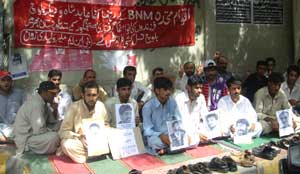 |
| (above) BNM (Malir Zone & Liyari Zone) Token Hunger Strike & Protest in front of Karachi Press Club, Aug 28, 2010 |
| Photo tribute to Shaheed Rasool Bakhsh Mengal, Baluchsarmachar, Aug 28, 2010 |
| Press Release: Pakistan: Thousands Of Persons Remain Missing, Human Rights Council, Fifteenth Session, submitted by the Asian Legal Resource Centre (ALRC), a non-governmental organisation with general consultative status, Aug 27, 2010 |
| Another Bullet-Riddled Body Found in Khuzdar, TheBalochHal, Aug 27, 2010 |
Agha Abid Shah
Abducted Aug 15, 2010 in Panjur |
Safeer Baloch
Abducted Aug 15, 2010 in Panjur |
Shams Baloch
Abducted Jul 1, 2010 in Lakpass
|
More abductions in Balochistan: On Aug 15, 2010, Safeer Baloch and Agha Abid Shah, along with Master Sattar Baloch, were abducted at a medical store by the Pakistani Frontier Corps in Panjur. Shams Baloch, ex-Tehsil administrator was abducted at Lakpass while taking his ill mother to Quetta in an ambulence. |
 |
The
Baloch Publication and Social
Sangat located
in Quetta are raising money and gathering
supplies to help victims of the flood
in Balochistan, especially in Jaffarabad
and Naseerabad. Financial support can
be sent to the foundation via Western
Union and if you are in Pakistan, you
can send or deliver donations to the
below address. (More
details and information on how to donate).
To help
flood victims:
To
send donations (using Western
Union or Moneygram, or whatever
option one prefers):
Title: SANGAT LIBRARY
AND SOCIAL SERVICES
Account Number:
40335315 1000164
Bank Name: Muslim
Commercial Bank Ltd.
Branch code:
MCB- 0562. Usta Muhammad Balochistan
Bank
SWIFT Code:
MUCBPKKA
For
further details:
Miss. Parveen
Naz, (Editor The Baloch Mag)
Email: naz.parveen@ymail.com,
missjeeap@gmail.com
+92 333 3505644
Mr. Khalid Mir
(Director Social Sangat)
Email: khalidmir.88@gmail.com,
socialsangat@gmail.com
+92 345 3838131
|
| More
flooding submerges Jaffarabad, Shikarpur,
DailyTimes.com, Aug 20, 2010: "According
to Balochistan Chief Secretary Mir Ahmed
Bukhsh Lehri, the
flash floods have washed away 2,584 villages
in Balochistan."; Seven
flood victims die of gastro in Balochistan, DailyTimes, Aug 20, 2010 |
| The
stuff of novels: Editorial:
End of Jalib Murder Investigation?,
The Baloch Hal, Aug 16, 2010: " Ironically,
the police account of the murder
suggests that the killers took Jalib
to the hospital, attended his funeral
and participated in the ensuing
protest rallies." |
| BNP
Rejects Police Disclosure over Jalib's
Killing, TheBalochHal, Aug 15,
2010: The Balochistan National Party
(BNP-Mengal) has termed the arrest
of culprits involved in Habib Jalib’s
assassination as a “cock and
bull story” and blamed the
Quetta police to have allegedly
provided protection to the real
mastermind of the murder whose roots
the BNP traces back to the government. |
| Quetta: BNP
Rally calling on the UN to investigate
disappearances in Balochistan, August
3, 2010 |
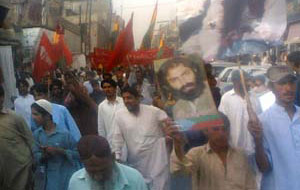 |
| BNP
leader shot dead in Khuzdar,
Dawn.com, Aug 11, 2010 |
| Bullet
riddled bodies of two Baluch disappeared
persons recovered in Quetta,
BalochWarna, Aug 6, 2010 |
| Two
bullet riddled bodies of Baloch
missing persons recovered from Quetta,
The Baloch Hal, Aug 7, 2010: Bahar
Khan Bangulzai and Ghaulam Qadir
Marri (earlier
post on Mr. Bangulzai's abduction) |
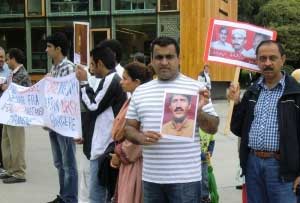 |
| Baluch
Community Norway protested against
forced-disappearance of Baluch activists, BalochWarna, Aug 6, 2010 |
 |
Protest:
August 6,
11am - 12 noon,
Location: in front of Nowegian Foreign Ministry |
Protest August 6, 11am - 12 noon: The family and friends of Ehsan Arjemandi, along with the Baloch community in Norway, will hold a demonstration in front of the Norwegian Foreign Ministry on Friday, August 6th, between 11am and 12 noon, to protest the passivity of the Norwegian government over the disappearance of her citizen, as well as all other disappearances in Balochistan, including the recent abduction of Zakeer Majid.
Note: After over a year of protests, campaigns and petitions on behalf of Ehsan Arjemandi, the Pakistan govt. has finally admitted it is holding Ehsan Arjemandi: Wanted Norwegian is
alive in Pakistan (video): Savnet
nordmann er i live i Pakistan (our
apologies, only google translation
is available: google
translation) |
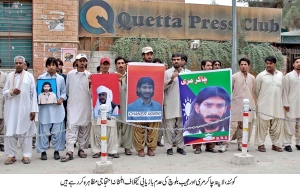 |
| The
token hunger strike protesting
the disappearance of BSO-azaad's
senior vice chairman, Zakir Majeed
Baluch,
entered its 83rd day. Still there
is no clue as to his whereabouts.
Report at BalochWarna, Aug 4, 2010 |
| Govt
urged to take notice of extra-judicial
arrests, The Nation, Aug 2,
2010 (reposted at BalochWarna) |
| Intelligence
agencies are paving way to kill
Zakir Majeed: Noora Baluch,
BalochWarna, Jul 31, 2010 (please
sign the petition) |
| Family
to block Quetta-Karachi highway against
non-recovery of Shams Baluch,
BalochWarna, Jul 31, 2010 |
| Baloch,
Sindhi expatriates protest before
UK PM’s residence,
Thaindian News, Jul 26, 2010 |
| Press
Release, BHRC (UK): Baloch
and Sindhi Diaspora demonstrate
against human rights violation in
Baluchistan, Balochwarna.com,
Jul 26, 2010 |
| South
Asia News - Killing
of Baloch leaders condemned,
youtube, Jul 26, 2010, reposted
at Intellibriefs |
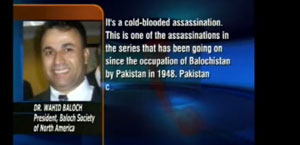 |
| Irked
BHC Takes Suo Moto Action Against
Missing Person’s Killing, The
Baloch Hal, Jul 28, 2010; Two
missing persons found dead, The Tribune, Jul
27, 2010 |
 |
Breaking
news! Wanted Norwegian is
alive in Pakistan (video): Savnet
nordmann er i live i Pakistan (our
apologies, only google translation
is available: google
translation) |
| Pakistani
agencies started killing Baluch
forced-disappeared activists: AIM,
BalochWarna, Jul 25, 2010 |
| Two
extremes digging in their heels,
by Cyril Almeida, Dawn.com, Jul
24, 2010 |
| London
Protest Rally, July 25, 2010: Baloch
Human Rights Council and World Sindhi
Congress are jointly holding a peaceful
protest rally in front of British
prime minister official residence
at 10 Downing Street, London on
Sunday 25 July 2010 at 2.00 to 4.00
pm against the Target Killing of
prominent Baloch politician Habib
Jalib by Pakistani military proxy
death squad. Pakistan and Iran are
committing heinous crimes against
humanity in Balochistan. Please
Join us in condemning Pakistan & Iran
against the gross human rights violation
in Balochistan (click
for word doc details) |
| Islamabad
Protest Rally, July 21, 2010: |
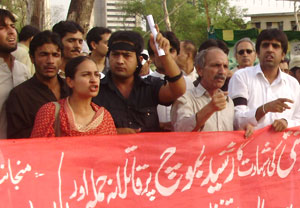 |
| Islamabad: Baloch
students organization (BSO) join with
citizens and political activists to
protest and condemn the cold-blooded
target killings of Habib Jalib Baloch
and Maula Baksh Dasti (read press
release); NBP Nushki Chapter
Protests Before QPC, The Baloch Hal,
Jul 18, 2010; Protest
Held in Islamabad Over Baloch Leaders' Killing, The Baloch
Hal, Jul 15, 2010 |
| BNP
leader Liaquat Mengal shot dead,
Dawn, Jul 20, 2010 |
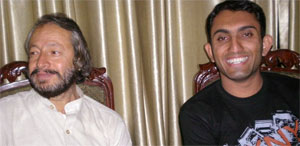 |
| I
cried for Jalib, by Malik Siraj
Akbar, The Baloch Hal, Jul 16, 2010:
"Finally, I have no option but to
delete 03003823908 from my cell phone..." |
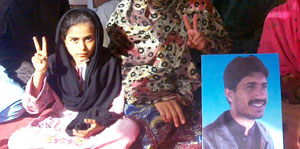 |
| 64
days of Zakir Majeed’s family
protest.... is anyone listening
to their plea?, BalochWarna,
Jul 16, 2010 |
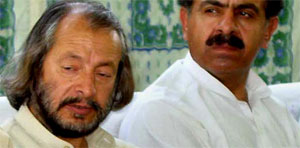
Photo source: Dawn.com |
| Statement
by the Asian Human Rights Commission:
PAKISTAN: The
killing of Baloch leaders exposes
the hate attitude of law enforcement
agencies towards Balochistan, Jul
16, 2010 |
| “No,
No, We Killed Jalib”: Al-Ansar-ul-Islam,
The Baloch Hal, Jul 16, 2010 |
| I.S.I.
sponsored outfit that killed Jalib
is led by former federal minister's
son, by Ahmar Mustikhan, Newsvine,
Jul 16, 2010 |
| Release: Balochistan: Human Rights Council (UK) condemns Assassination, UNPO.org, Jul 15, 2010: "BHRC (UK) strongly condemns the inhuman tactics of the Pakistani State Establishment of physically eliminating prominent nationalist leaders through the “proxy death squads” operating on behalf of security agencies like Inter Services Intelligence (ISI) and Military Intelligence (MI) in Balochistan..." |
| Press release from Human Rights Commission of Pakistan: Jalib's murder a blow to national integrity: HRCP, Jul 14, 2010: "Whoever the killers may be and whatever their motives, it will be very difficult to persuade the people of Balochistan that he was not killed for fighting for Balochistan’s rights..." |
| Dawn
editorial: Balochistan
killings, Jul
15, 2010 |
| BNP-M
leader Habib Jalib Baloch shot dead,
Dawn.com, Jul 14, 2010; From The Baloch
Hal, Jul 14, 2010: Agencies
Killed Jabib: Sardar Attaullah Mengal; Habib
Jalib Baloch Assassinated, Baloch
Muslha Tanzeem Claims Responsibility
For Jalib’s Murder; Balochistan Situation Similar To East Pakistan: Sardar Akhtar Mengal |
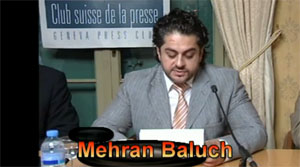 |
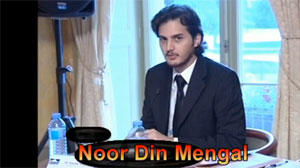 |
| Baloch
press conference in Geneva: with
speakers Mehran
Baluch and Noordin
Mengal, Jun 16, 2010 (youtube
post) |
| New: Iran
to Execute Baloch Minor Without
Trial, BalochWarna.org, Jul
13, 2010 |
| New: Pakistani
Occupation Forces have killed one
resident, injured many others
and killed scores of livestock in
a recovery operation in Kabu Spilengi,
South of Quetta, provided by sources
and news reports in Balochistan,
Jul 13, 2010 |
| Gunmen
shoot dead National Party leader
in Balochistan, BBC News, Jul
12, 2010 |
| Ex-Turbat
Nazim, Central National Party leader,
Maula Baksh Dashti, Gunned Down,
The Baloch Hal, Jul 11, 2010 |
| BSO
Vice Chairman Injured In Khuzdar
Target Shooting, The Baloch
Hal, Jul 9, 2010 |
 |
Petition
the UN regarding the abduction of
Zakir Majeed by Pakistan security
agencies:
please
sign |
| Pakistan: Few
women health workers in Balochistan,
UN Office for the Coordination of
Humanitarian Affairs - IRIN, Jul
7, 2010, posted at reliefweb, reposted
at BalochUnity |
| Tahir
Bizenjo Sees Disappearances As Balochistan’s
Biggest Issue, TheBalochHal,
Jul 7, 2010: "No one is making
any effort to trace the whereabouts
of my brother, the government and
nationalist parties just expressing
grief and sorrow and seemed to be
powerless before the Government
functionaries,” she [sister
of Zakir Majeed] said adding that
despite the Supreme Court directed
to lodge FIR of missing persons
cases, the Mastung Police Station
had refused to register the case..." |
 |
BHC
Chief Justice Takes Notice of Lawyer’s
Kidnapping, The Baloch Hal,
Jul 3, 2010 |
Release: Baluch
Community in London to mark Baluch
National Remembrance Day, BalochWarna,
Jul 2, 2010
"On behalf
of the Baluch Community of London
we invite all freedom loving people to attend 'The Baluch National Remembrance
Day of Baluch Martyrs and victims of state violence (Shahmiren Baluchani Roach)'"
Location: Dalgarno
Community Center
1 Webb Close, London W10 5QB (Closest Tube station: LADBROKE GROVE)
Date: Sunday
18 July 2010, 2pm - 5pm |
| List
of Baloch disappeared, as of Jul 4,
2010, posted at BalochJohd |
| Poem by Diagoh Murad: Oh Lord! Wake My Soul |
| Mothers
of Balochistan (Motheran-e-Baluchistan)
establish token hunger strike camp
for Baluch force-disaappeared activists,
Jul 1, 2010 |
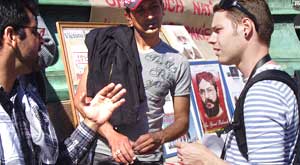 |
| Sweden: Baloch
Community Norway Marks International
Day Against Torture, TheBalochHal, Jun 28, 2010; BSO-azaad,
BUC and Baluch Community Sweden marked
International Torture day, BalochWarna.com,
Jun 28, 2010 |
| Protest
demonstration for the recovery of
Baloch forced-disappeared activists,
BalochWarna, Jun 28, 2010 |
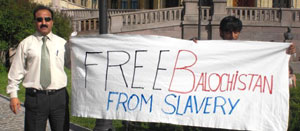 |
| Norway: International
Day in support of torture victims:
Baloch Community Norway protest report,
BalochWarna.com, Jun 27, 2010; Statement
by Baloch Community Norway |
| Karachi,
Balochistan, BNF and BSO-azaad Protest
on the International Day in support
of torture victims, BalochWarna.com, Jun 27, 2010 |
| Enforced
Disappearances: Pakistan
refusing visa to Asian team who want
to meet victim families, by Ahmar
Mustikhan, Pakistan
Christian Post, Jun 27, 2010 |
| A
letter to Ban Ki Moon: Deteriorating
human rights situation in Pakistan
and Iranian controlled Balochistan,
by Samad Baloch, General Secretary, Baloch Human Rights Council (UK), Jun 26, 2010 |
| International
Day in Support of Victims of Torture:
BNF to protest against abductions
of Baloch political activists, BalochWarna.com,
Jun 26, 2010 |
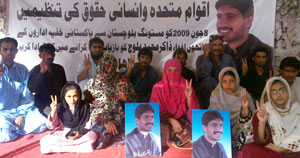 |
| Reason(s)
to dance, by Naimat Haider,
TheNews.com, Jun 18, 2010, reposted
at BalochWarna |
"...Meanwhile,
another form of protest, a peaceful
one, at the Karachi Press Club also
seems to be serving little purpose.
There, in the scorching heat, three
family members of Zakir Majeed Baloch,
a student political activist who is
claimed to have been missing since
a year ago, refuse to end their 34-day-old
hunger strike. With pain etched on
their faces, Zakir’s family
members, including his sister, refuse
to eat anything. They say they “will
not eat a morsel till Zakir is freed.” All
his sister says is that Zakir should
be produced before a court if he has
done anything unlawful, and yet her
voice seems to be diffusing with the
wind..." (background
on abduction)
|
 |
Pakistan
court issues 'disappearances' ruling,
by Syed Shoaib Hasan, BBCNews, Jun
18, 2010 |
| "Pakistan's
Supreme Court has ordered the powerful
ISI intelligence agency to appear
in court to explain what has happened
to a missing political leader." |
World
Refugee Day, Jun 20, 2010 (click
for poster)
|
| June
18, 2010: Speeches
presented by Baloch representatives
at Geneva Press Club by Mehran
Baloch, Noordin Mengal, Ahmar Mustikhan; Noordin
Mengal statement (word
doc) |
| June
16, 2010: The Geneva Press Club -
Club suisse de la Presse, has the
pleasure to invite the international,
the Swiss press and its members
to a press conference on the theme "Balochistan:
Militarization and Human Rights
Violations" (details), pdf; Mehran
Baloch speech in Geneva, Ahmar
Mustikhan speech |
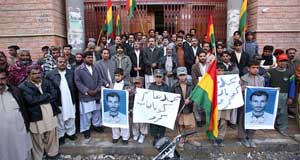
photo: TheBalochHal |
| Plea
made for the release of missing
Baloch persons, The Baloch Hal, Jun 15, 2010 |
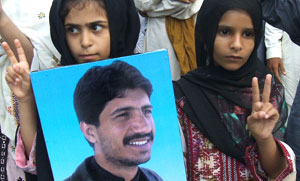 |
| Picture
gallery from rallies held for
the release of Zakir Majeed Baloch
(click
to view); background of abduction |
| Appeal
for the release of Zakir Majeed Baloch, abducted
by Pakistani security agencies on
June 8, 2009 (read
more);
(Click for Memorandum word
doc; click for Appeal
word doc) |
| Additional
reports: Baloch
student’s mother continues hunger
strike camp in Karachi, BalochWarna.
Source: The
Baloch Hal, June 12, 2010 |
| Missing
persons, Dawn.com editorial,
Jun 14, 2010: "The apex court
has been seized of the matter for
five years now but the current government,
like the previous one, has done
little to recover the missing, a
large number of whom belong to Balochistan
where Gen Musharraf launched an
operation to rein in Baloch nationalists..." |
| Disappearances
in Balochistan noted by Spanish activists
at Notas Desaparecidos: No
clues as to whereabouts of Ehsan Arjemandi,
Mar 2010 (notas.desaparecidos.org) |
| Balochistan
doctors boycott duties to protest
killings, DailyTimes, Jun 13,
2010; Strike
continues in support of ‘disappeared
Baloch doctors”, The Baloch
Hal, Jun 12, 2010 (The missing:
Dr. Naseem Baloch May 25, 201 (pic
below), Dr.
Akbar Marri, Apr 19, 2010 and Dr.
Din Mohammad Baloch (pic below),
Jun 29, 2010; others
missing |
Dr. Naseem Baloch |
Dr. Deen Mohd. Baloch |
| Some
details of human rights abuses reported
by US Dept of State in Pakistan: 2009
Human Rights Report: Pakistan,
March 11, 2010 |
| Pakistan
rejects Amnesty International report,
DailyTimes, Jun 13, 2010 |
| Judiciary
takes notice of missing persons’ case,
DailyTimes, Jun 13, 2010; Baloch
Bar observed a ‘black day’ on
Chief Justice Iftikhar Chaudhry’s
arrival in Baluchistan, Jun 11,
2010 |
| Ahmar
Mustikhan speech at International
Interfaith Seminar in Geneva, BalochWarna, Jun 12, 2010 |
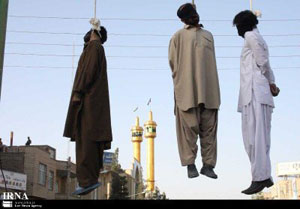 |
| Release: List
of young Baloch hanged/killed in
Iran, 2004 - 2010: "Trust me, there
are no 'aid flotillas' heading towards
the Balochistan coast of Iran to help the persecuted
Baloch people. There is a zero likelihood of any protest
march outside the Iranian Embassy anywhere in the world
by the permanently outraged Islamist groups and their
leftist allies..." |
 |
| "Better
days" video tribute to missing and
killed in Balochistan (youtube, blip.tv) |
| Release: List
of young Baloch hanged/killed in Iran,
2004 - 2010 |
| Former
Kohlu nazim’s brother “missing” for 9 months, The Baloch Hal, Jun 10, 2010 |
| 63
relatives of missing people record
statements, DailyTimes, Jun 4, 2010 |
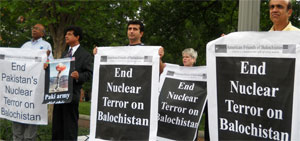 |
| Laurie
Deamer’s speech on May
28, Washington DC protest, BalochWarna,
Jun 1, 2010; May 28, Washington, DC
protest: Free
Balochistan is the hope for peace |
| Ilyas
Baloch, nephew of writer Hafeez
Hasan Abadi, arrested,
source: Daily Tawar, May 31, 2010 |
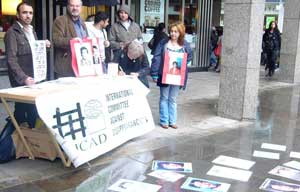 |
| ICAD
vigil in front of Westminster Cathedral
against forced-disappearances,
BalochWarna, May 30, 2010; International
Committee Against Disappearances
London meeting report, BalochWarna,
May 24, 2010 |
| |
 |
BNF
activists protest against abduction
of Dr Naseem Baloch, BalochWarna, May
28, 2010 |
| BALOCH
SAY "NO MORE ISLAMIC NUCLEAR BOMBS," by Imtiaz Baloch, Intellibriefs,
May 28, 2010 |
| Balochs
mark “black day” against
1998 nuclear tests, TheBalochHal,
May 28, 2010 |
| Protest: against
nuclear tests in front of White
House on May 28: "Pro-independence
Baloch from the U.S.A. and Canada
and their allies and friends will
converge in the U.S. capital on
May 28 to protest against Pakistan's
nuclear tests in Occupied Balochistan
in front of the White House..." |
| May
17 - 31: International
Struggle Week Against Disappearances,
organized by Committee Against Disappearances
- ICAD (read: Wars,
National Movements and Disappearances; pdf; word) |
 |
Jail
administration mistreating Wahid
Qambar Baluch and others: AIM, BalochWarna,
May 20, 2010 (source DailyTawar) |
 |
We
have faith in Baluch Nation; we
won’t rely on superpowers for our freedom: Dr Allah Nazar, Interview, trans. by BalochWarna; source DailyTawar |
| Despair
for Baloch families over missing relatives, BalochWarna, May 16, 2010 |
 |
| Shaeeda
Roya Sarani, killed in Iran on May
16, 2007 by Iranian security forces. Click
for details. |
It's
About US, by K.B.
We
are living in the sounds of Bullets
We are the subject of peace
We are the chapter of freedom
We are the jewel of mountains
We are the ambassadors of harmony
Sky is our Bed
Moon is our lamp
Mountains are our home
Snow is our blanket
Love is our nature
Respect is our culture
Peace is our identity
We listen the music of breeze
Our home land is THE HEAVEN
We belong to the paradise of Earth
It is "BALOCHISTAN"
(for everyone who lives in Balochistan and loves Balochistan)
|
| "I
am also a Baloch, Leave a Space for
Me in Prison." |
 |
| New: BSO-azaad
(Malir Zone) protest against forced
disappearances of Baloch activists,
BalochWarna, May 5, 2010 |
 |
| Translation provided
by Diagoh Murad from audio report/interview
at gwank.org re: Baloch
held at a location known as Pakistan
house. The interviewee appeals
to the UN to investigate the location
and allegations of torture |
| Three
sisters suffer acid attack in Kalat,
by Saleem Shahid, Dawn.com, Apr
30, 2010 |
| On
April 30, Americans who have visited
Pakistan will join international activists
to pay tributes to more than a 1,000 Baloch
missing persons and Prisoners of Conscience. Event
details |
| Apri
27, 2010: TheBaluch.com joins BSO-NA.org
in condeming the killing of professor
in Quetta: Baloch
Society of North America strongly
condemns the killing of a female professor: BLA
claims responsibility for killing
professor in Quetta, by Saleem
Shahid, Dawn.com, Apr 27, 2010 |
Jalil Ahmed Reki Baloch |
The
case of Jalil Ahmed Reki Baloch: The
High Court is unable to recover
a man from illegal military detention
after 15 months, Asian Human
Rights Commission (AHRC), Apr 27,
2010 |
 |
| Protest: April
28, 2010: Confront
Barrick Gold in Toronto, details
at BaluchSarmachar (how Barrick Gold
is involved in Balochistan: Pakistan
pressed on Barrick mine rights), by Rick Westhead, TheStar, Jan 14, 2010 |
| Video: South Asia News1: Pakistan's
gross human rights violations in Balochistan,
Apr 19, 2010 |
| Another
two Baloch political workers are
arrested, BBC News, Urdu, Apr
20, 2010 (Eng.
trans.) |
| Four
prisoners hanged in Kerman, Behbahan
and Shadgan, Baluchnet, Apr 21,
2010 |
Ehsan Arjemandi
Missing since Aug 2009 |
Mahboob Wadhela Baloch
Missing Apr 2, 2010 |
|
| Appeal: Open
letter to U.S. Secretary of State
Hillary Clinton regarding the abductions
of Ehsan Arjemandi and Mahboob Wadhela
Baloch, by Wendy Johnson, Apr 20,
2010 |
| Comment: The
Norwegian government is failing
Ehsan Arjmandi, by M. Sarjov,
BalochUnity, Apr 8, 2010 |
| Eyewitness
accounts of Mahboob
Wadhela's abduction, VSH TV
News, with English subtitles |
 |
|
BNM activist Mahboob Wadhela Baloch and son of Mir Abdul Nabi Bangulzai whisked away, Balochwarna.org, Apr 2, 2010
sign petition for Mahboob Baloch |
| Additional photos and report, Intellibriefs, Apr 4, 2010 |

4th April 2010 protest over the abduction of Mehboob Wadhela Baloch in front of Karachi Press Club. (video 1, video 2) |
| Enforced disappearances, a common sight in Balochistan, South Asia News, Apr 2, 2010, reposted at Intellibriefs |
| Disappearances
in Balochistan noted by Spanish activists
at Notas Desaparecidos: No
clues as to whereabouts of Ehsan Arjemandi, 2010 |
| Urgent
Appeal: PAKISTAN:
The Frontier Corp bring a disappeared
person in front of the media after
nine months under fabricated circumstances, by Asia
Human Rights Commission, Mar 31, 2010 |
| Baloch
and Sindhi activists demand Pakistan
be declared as 'terrorist state',
NewKerela.com, Mar 29, 2010; photos
at bso-na.org |
| Murad
Marri’s family refutes official
allegations, The Baloch Hal,
Mar 28, 2010; update: Four
relatives of Haji Murad Khan Marri arrested,
Mar 29, 2010, reposted at balochwarna |
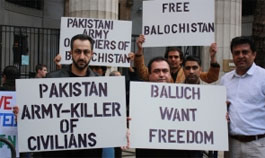 |
| Protest: Baloch
and Sindhi community protest on “Balochistan Occupation Day” in
the UK, Mar 28, 2010 |
| Protest
Mar 28, 2010: Against
Forcible Annexation of Balochistan by
Pakistan on Mar 27, 1948, Baloch
Human Rights Council, UK, and World
Sindhi Conference |
|
Khan
of Kalat calls for silent protest,
BSO-NA.org, Mar 25, 2010 |
| Uprising
in Balochistan: short documentary
on Balochistan with interviews from
attendees of the International Conference
on Balochistan, Bangkok, South Asia
News, reposted at Intellibriefs |
 |
| Majeed
Baloch (junior) murdered by Pakistani
security forces, balochwarna.com,
Mar 17, 2010, reposted from gwank.org; appeal and
graphic photos from crime scene,
bso-na.org |
 |
| Relatives
of Balochistan's missing persons
organize long march to Islamabad,
NewKerala.com, Mar 15, 2010; Relatives
of force-disappeared Baloch protest
rally in front of Pakistan's PM
residence, Mar 20, 2010 |
| Addition: to Bangkok
Conference page. Munir Mengal:
Bangkok Declaration full
text |
| UN
Headquarters, Geneva: Sindhi,
Baloch and other Human Rights activists
from UK, USA and Canada protesting
in front of UN head quarters against
Human Rights Violations in Balochistan,
Sindh and Balawaristan: Human
Rights activists Protest in Geneva
to highlight the plight of Baloch
and Sindhi Nation, BalochWarna.com,
March 13, 2010 |
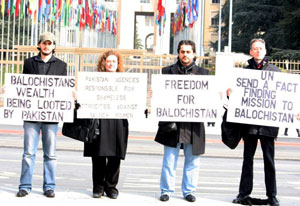
L to R: Noordin Mengal, Laurie Deamer,
Mehran Baloch and Peter Tatchell.
Report: UNPO
Address Human Rights in Pakistan
at the UN, Mar 12, 2010
Speeches by Peter Tatchell (Part
1, Part
2) and Laurie Deamer; other speeches here; read Peter Tatchell's speech |
|
Addition to Bangkok
Conference page: Chairman of
the Balawaristan National Front
(BNF) Abdul
Hamid Khan's remarks to conference.
Reposted at TheBalochHouse
(please visit full
site. Click here for photos of Balawaristan.) |
 |
Addition to Bangkok
Conference page: On Feb 25,
2010, human rights activist Faheem
Baloch delivered details of two
HRCP reports:
1) Baloch IDPs, and
2) Turbat
Fact Finding Report |
 |
New: Qambar
Chakar Baloch case, balochunity.org,
Mar 10, 2010; from
before: Qambar
Baloch brought before court,
Balochwarna.org, Jul 15, 2009: Eyewitnesses
report that Qambar could not walk
properly. Note the chains in the
photo. |
From
before : Qambar
Jan tho kuja hey?, by Malik
Siraj Akbar at Malik Siraj Akbar
writes, Jul 11, 2009: "...Fresh
reports suggest that this amazing
Baloch activist has been whisked
away by the personnel of the Frontier
Corps and the intelligence agencies..." |
| Mar
5, 2010, Hong Kong: Pakistan-Online
petition on forced disappearances,
Asian Human Rights Commission (intro
article at Intellibriefs). Background: State
of human rights in Pakistan in 2009,
Asian Human Rights Commission; Protestors
demand recovery of Baloch missing
persons, Dawn.com, Mar 7, 2010 |
| New
Asian Human Rights Commission site: Stop Disappearances in Pakistan. Read speech presented at Bangkok Conference by Asian Human Rights Commission member Baseer Naveed. |
Washington
D.C. Event: March 5, 2010 Rountable: The
Middle East Institute and the American
Friends of Balochistan Invite You
to a Roundtable Discussion: Drone
Attacks on the Quetta Shura? Pros
and Cons
Featuring: Selig S. Harrison, Asia Director, Center for International Policy,
Ahmar Mustikhan, Founder, American Friends of Balochistan,
Andrew Eiva, Former Executive Director,
Federation for American Afghan Action,
Raja Karthikeya, Independent security
analyst, Ashraf Kakar, Fulbright
scholar, American University, Moderated
By: Marvin Weinbaum, MEI Scholar
and Professor Emeritus at the University
of Illinois |
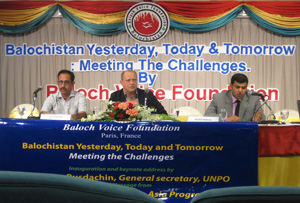 |
| Balochistan
Yesterday, Today and Tomorrow, Conference
in Bangkok, Thailand, Feb 22-24, 2010:
I am gathering papers and photos to
post at this
link. Rozhn.tv and
the Baloch Voice Foundation have videotaped
the entire conference. As those videos
go online, I will link to them, as
well. |
|
Asian
Human Rights Commission: Pakistan:
No clues as to whereabouts of Ehsan
Arjemandi - Iran denies extradition,
Mar 1, 2010 |
A
voice for the Baloch suspended
from the UN Economic and Social
Council: Burundi,
Cuba, China, Egypt, Angola, Qatar,
Sudan and Guinea side with Pakistan. The
UN complies with Pakistan's wishes.
(full
text details)
statement
by Mehran Baloch
Mehran Baloch |
Noordin Mengal |
"...The Committee [on Non-Governmental Organizations (NGOs)] took up a complaint
lodged by the representative of Pakistan, on 25 January (see Press Release ECOSOC/6404-NGO/684)
against Interfaith International, a Geneva-based non-governmental organization
with special status. The delegate explained that,
by its actions during Human Rights Council meetings, it had violated the United
Nations Charter and Economic and Social Council resolution 1996/31 by trying
to undermine Pakistan’s sovereignty and territorial integrity. That
was no minor infraction as the territorial integrity of a sovereign State could
not be called into question, he said, adding that there were limits to freedom
of expression.
Expressing
their support for the request were
the representatives of Burundi,
Cuba, China, Egypt, Angola, Qatar,
Sudan and Guinea. Egypt’s
representative said the organization
was clearly involved in a pattern
of activities against a Member State,
which contravened resolution 1996/31
as well as the principles and provisions
of the Charter. Turkey’s
representative said the non-governmental
organization had violated the resolution,
implementation of which was the
Committee’s responsibility.
However,
the representative of the United
States said that despite all the
information provided, it was not
clear what rules had been violated
and what evidence there was of any
violation. Before the Committee
took the “very dire” sanction
of withdrawal, those matters should
be clear. There might
be small technical violations of
minor rules, warranting some sort
of sanction, but no evidence had
been seen that would substantiate
the sanction of withdrawal of consultative
status.
Emphasizing that the purpose of civil society was to provide critical assessments
of Government actions, he said the non-governmental organization in question
had not advocated overthrowing a Government or changing the territorial integrity
of a sovereign State. Those two issues were different from the right to
self-determination, which was enshrined in the Charter, he said, adding that
he had not seen evidence of the group’s involvement in any violent action
against any Member State.
The United Kingdom’s representative echoed that statement, stressing that
non-governmental organizations had a right to express their opinions freely..."
New: Dark
day in human rights history as China-backed
rogue state wins, by Ahmar Mustikhan,
NowPublic.com, Feb 9, 2010 |
| U.S.
Condemns Iranian Executions,
VOA, Feb 5, 2010: "Human Rights Watch
also noted that in addition to the
human rights crisis following the
elections, security forces systematically
harassed members of religious minorities
and carried out a campaign of arbitrary
arrest against Kurdish, Azeri, Baluch
and Arab civil society..." |
| Updated
list and details of missing provided
by Anjuman-e-Itehad Marri,
Balochwarna.com, Feb 9, 2010: Full
list |
| Terror
Rules In Pakistan - South Asia Intelligence
Review, By Ajit Kumar Singh
for SATP, Eurasia Review, Feb 8,
2010 |
| Mystery
of Balochistan disappearances,
by M. Ilyas Khan, BBCNews.com, Feb
4, 2010 |
| Various
Lists of Missing Persons, posted
at Govt. of Balochistan website |
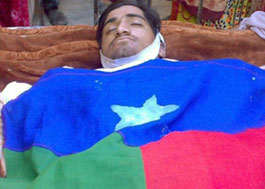
Pictured: Saddam Baloch, unarmed protestor shot dead in Khuzdar by Pakistani
security forces Jan 15. |
| In
Khuzdar: Editorial:
Killing of democrats in Khuzdar,
TheBalochHal.com, Jan 15, 2010: "In
what appeared to be a provocative
incident of firing on unarmed democratic
activists, security forces killed
two young students-cum-political
activists in Khuzdar district on
Friday..."; Two
soldiers shot dead, two injured
in Khuzdar, The Baloch Hal,
Jan 23, 2010; Two
Pakistani Army soldiers killed & two
injured, BLA claimed responsibility,
BalochWarna.com, Jan 23, 2010; |
| Report: More
than 168 children have disappeared
from Balochistan, a war crime tribunal
should be constituted, A Statement
by the Asian Human Rights Commission,
Feb 2, 2010: "Among the lists
of disappeared persons from Balochistan
province are the names of 168 children
and 148 women. Two lists of disappeared
persons were released separately,
one by Voice for Baloch Missing
Persons (VBMP), an NGO which works
to document the cases of missing
persons from the area and the other
by the Provincial Interior Ministry
of Balochistan. The missing people
have allegedly been taken by Pakistani
intelligence agencies for interrogation
over their alleged link to Balochistan
separatists and other militant groups
in the country." |
Pakistan: Over
8,000 cases of violence against women
in 2009,
DailyTimes.com.pk, Feb 2, 2010: Aurat
Foundation: Violence Against Women
criticise state institutions for not
taking action
Graphical illustration: Violence
against women in Punjab compared with
Balochistan, Intellibriefs, Feb
2, 2010 |
| Letter
to Mr. Ban Ki Moon by Baloch Human
Rights Council of Canada against
the brutal method of torture of
Baloch Political worker by Pakistani
Army,
Intellibriefs, Feb 1, 2010 |
| Turbat: Baloch
parliamentarians should join National
struggle: BRP, Balochwarna.com,
Jan 29, 2010: BRP’s senior
leader Waja Hussein Ashraf Baloch
and BRSO leaders appealed to "Baloch
parliamentarians to come back to
the Baloch National circle and join
the Baloch peoples’ struggle
for the liberation of the mother
land..." |
| In
the region: Terror
comes at night in Afghanistan, by Anand Gopal, atimes.com, Jan 30, 2010 |
| New: Barrick
Gold of Canada, who is currently
pressuring Pakistan to not cancel
its mining lease in Balochistan,
is rated by a Swiss research firm
as 12th
worst in ethical performance of
multinational corporations. The
12 Least Ethical Companies In The
World: Covalence's Ranking,
HuffingtonPost.com, Jan 28, 2010 |
Sustainable
development corner (articles)
The Jan 9, 2009 announcement that the Balochistan provincial government was canceling
its contract with mining company Tethyan is a remarkable development, but
also a cautionary one, for U.S.
Ambassador Anne Patterson immediately warned Pakistan that multinational
investment would dry up if Pakistan failed to honor agreements. In effect, she
is telling the Pakistan government to 'put the screws' to the Baloch, as are
the Canadians.
Balochistan's experience with foreign mining companies (Saindak)
is identical to that of developing countries worldwide. One can almost guarantee
that environmental standards will not be adhered to and local populations will
see no development. One can also count on government officials to side with foreign
investors at the expense of the health and wellbeing of its citizens. The Canadians
say they have spent $1.5 million on goodwill projects like schools, but one must
keep in mind that this was the exploration stage. The environmental threat and
actual damage will occur in the mining process.
Remarkably, till now, with the exception of the Saindak experience, Balochistan
has to some degree thwarted destructive predatory mining. In order to monitor
the situation, we are starting a section on development. TheBaluch.com will launch
a new design in February (inshaallah) that will better incorporate this section
into the site. And since no small nation can successfully fend for itself in
this global economy characterized by powerful multi-nationals and weak, corrupt
governments, we will also include articles related to mining experiences in other
countries because many others are already fighting these battles and, in some
cases, have a wealth of information to share on sustainable mining practices.
The pressure to exploit Balochistan's minerals will only grow. There is a good
chance that Balochistan also possesses what are called 'rare
earth minerals,' the mining of which is accompanied by massive pollution
of ground and water resources, as well as ruinous effects on worker health. Many
countries possess these minerals, but can't extract them in a cost-effective
manner. China, however, holds the corner on the market because its government
will look the other way as worker health, land and water sources are destroyed.
For
links to articles on Saindak, Reqo
Diq, rare earth minerals, Gwadar,
etc., click
here. If you want to share an
article relevant to this topic, please
email us at wj@thebaluch.com. |
| In
the region: Afghanistan:
Women Dying and Torture Run Amuck, TruthOut.org, Jan 19, 2010 |
| In
the US: Robert
Gates Confirms What U.S. Government
Has Denied for Months: Blackwater
Is in Pakistan, by Jeremy Scahill,
The Nation, January 22, 2010; Salt in Guantanamo's Wounds: Task
Force Announces Indefinite Detentions,
by Andy Worthington, Truthout.org,
Jan 22, 2010; The
Guantánamo “Suicides”: A Camp Delta
sergeant blows the whistle, by
Scott Horton, Harper's, Jan 18, 2010; Murders
at Guantanamo: Exposing the Truth
About the 2006 Suicides, TruthOut.org,
Jan 19, 2010 |

click for powerpoint
presentation of
pictures |
| UK:
Protest against the killing of Baloch
in Karachi and Khuzdar, Balochwarna.org,
Jan 17, 2010 |
| Report
on Political Prisoners Sentenced
to Death in Baluchistan, Jan
14, 2010 |
|
Baloch
in Karachi should not feel lonely:
Mir Suleman Dawood, Balochwarna.org,
Jan 13, 2010 |
 |
PPP
doesn’t consider Baloch as human
beings: Hyrbyair Marri, reposted
from balochwarna.org, Jan 14, 2010 |
| Release: Baloch
Human Rights council (UK) strongly
condemns Baloch Killings & operation
in Lyari, Karachi, Jan 11, 2010 |
| In
the U.S.: President
Obama, the CIA and the Master of the
Cover-Up, by Melvin A. Goodman,
truthout.org, Jan 11, 2010 |
| Obama's
Alternate Universe, by Scott
Ritter, TruthDig.com, Jan 8, 2010: "The
inability or unwillingness of American
policymakers to accurately define
the problems confronting the United
States in Iraq/Iran and Afghanistan/Pakistan
prevents any meaningful solution
to these issues..." |
 |
| The
face of grief: The
mess over the missing in Balochistan,
The Hindu, by Nirupama Subramanian,
Jan 8, 2010: "Since December 30
last, a group of two dozen boys and
girls, accompanied by a few adult women,
has been squatting outside the Quetta
Press Club, braving the biting cold
that sweeps through Pakistan’s Balochistan
province at this time of the year. The
group is on a daily hunger-strike, protesting
the disappearance of a father or a brother,
allegedly after he was taken away by
state intelligence agencies..." |
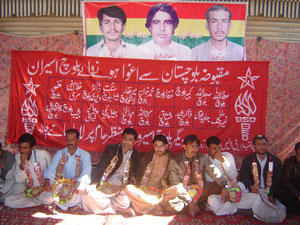 |
| Khuzdar:
Baloch Students Organization, BSO(M),
on hunger strike
over missing Baloch students, Jan
10, 2009 |
| ‘Only
4 missing persons have been released
so far’, by Shahid, Husain,
The News, Jan 7, 2010 |
| The
Baloch Hall editorial: Children
of the conflict, Jan 3, 2010 |
| Urgent
Appeal for donations: Urgent
Appeal for hospitalized senior
Baloch journalist, Irshad Masthoi,
The Baloch Hal, Jan 2, 2010 |
 |
Baloch
Hal editorial: Dishonored
killings, Jan 1, 2010: "The
society in Balochistan has remained
a silent viewer of such cases..." |
 |
| Baloch
Hal Exclusive: Dilip
Dass: A hero of the 1970s Baloch movement, Dec
31, 2009: "The Baloch Hal has acquired
exclusive photographs of Dilip Dass,
an active participant of the group
of young non-Balochs who joined the
armed resistance of Balochistan in
the 1970s..." |
| In
the US: One
Day We’ll All Be Terrorists,
by Chris Hedges, truthdig.com, Dec
28, 2009; Internal
Army Report Finds Early Missteps
in Afghanistan, by James Dao,
NYTimes.com, Dec 30, 2009 |
| Analysis: Forced
or volitional? by Mir Mohammad
Ali Talpur, DailyTimes.com, Dec
26, 2009 |
| Never
Mind The Baluch, by Ben Hayes, Transnational Institute, Jun 1, 2007 |
| Pakistan
journalist uses slur against Christians, by Ahmar Mustikhan, balochwarna.org,
Dec 25, 2009 |
 |
Baloch
student JahanZaib
Baloch is a candidate
to become one of 1,500 young
leaders of tomorrow in an initiative
sponsored by One Young World. You
can cast
your vote of support here. |
| Arrests
of Baloch leaders and siege of towns “gifts” of
Balochistan package: AIM, TheBalochHal
News, Dec 13, 2009 |
| Missing
people’s list rejected by
Baloch organisations, by Amanullah
Kasi, Dawn.com, Dec 11, 2009 |
 |
Appeal
to free Ebrahim Mehrnehad by Balochistan
Human Rights Activists Association,
reposted at Balochwarna.org, Dec 11,
2009 |
 |
Abdul
Ghafar Langou Baloch once again abducted
by Pakistani intelligence agencies,
Balochwarna.org, Dec 11, 2009 |
| International
Human Rights Day, Dec 10, 1948 |
| Does
the UDHR apply to the people of Balochistan? By
Faiz Baluch, Dec 9, 2009 |
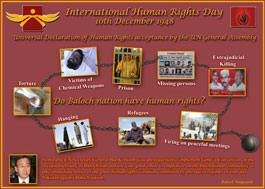
click thumbnail to view larger version,
or for
other posters, visit Baloch Vanguards |
| Comment: “Dignity
and Justice for all of us”,
by Diagoh Murad, Dec. 10, 2009 |
|
Release: WASHINGTON
DC, Dec 9, 2009: "The Baluch
in the USA are marking the international
human rights day by drawing the world
attention to nearly 8,000 Baluch missing
in Pakistan Occupied Baluchistan. |
| Rain,
snow or shine, a dawn to dusk hunger
strike will be staged by an activist
of the American Friends of Baluchistan
in front of the Norwegian embassy
in Washington DC, to apprise the world
about the silence over the abduction
of Norwegian Baluch national Ehsan
Arjemandi, 34..." click for details |
Faiz Baluch and Hyrbyair Marri |
| New: Two
years of the Baloch case in the
United Kingdom--Bail money still
pending? by Faiz Baluch, London.
Dec 4, 2009 (reposted from balochwarna.com) |
 |
New: Letter
from Sharry Qambar, daughter of
disappeared Baloch Mr. Wahid Qambar,
Dec. 7, 2009 |
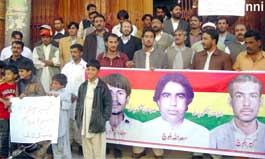 |
| New: Rally
for missing members of Balochistan
National Party. Dec. 4, 2009:
Kabeer Baloch, Attaullah
Baloch and Sadullah Baloch |
| New: A
Baloch's tale of the torture cell (graphic reading) |
| New: America's
regression, by Glenn Greenwald,
salon.com, Dec 3, 2009 |
| The
package is out but where is Sami
Mengal?, by Bari Baloch, The
Baloch Hal, Nov 28, 2009; Five
missing people return home,
by Saleem Shahid, Dawn.com, Nov
28, 2009 |
| In
the U.S.: Is
Obama's civil liberties record understandable?
by Gleen Greenwald, Salon.com, Nov
27, 2009 |
| Baloch
Unity Conference is reporting that
disappeared Norwegian Baloch human
rights activist Ehsan Arjemandi is
being held in a Military Intelligence
camp at Malir Cantonment, Karachi.
More as this story develops. |
| New: 'Cruel,
illegal, immoral': Human Rights
Watch condemns UK's role in torture
Pressure for inquiry grows as torturers
themselves allege British complicity,
The Guardian, Nov 24, 2009: "After
an investigation spanning more than
a year, Human Rights Watch (HRW)
today condemned Britain's role in
the torture of terror suspects detained
in Pakistan as cruel, counter-productive
and in clear breach of international
law..." |
Nov
21, 2009: Baluchistan International
Conference in Washington,
DC.
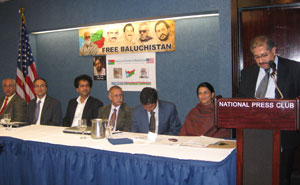
theBaluch is compiling a page that includes photos, speeches and video links
from the U.S. conference. I am posting what I have gathered thus far. It is incomplete.
I will post missing items
as I receive them.
Speeches
from the Baluchistan International Conference (last
updated Dec 10).
Also, please visit World
Sindhi Congress for information regarding its work and past
collaborations with Baloch groups on events like this one. |
Tributes
to Balach Marri:
Balach
Marri, A Life of Courage and Sacrifice,
by Surayia Makhdoom, Nov 25, 2009
The
Balaach, by Dr. Naseer Dashti,
Nov 23, 2009
Ah
Balaach!, by Belaar, Nov 21,
2009
|
US: 'Independence
for Pakistani and Iranian Baloch',
by Javed Soomro, BBC News Urdu,
Nov 24, 2009; Report
on International Conference on Balochistan provided
by Khalid Hashmani. Nov 23, 2009;
Report
on International Conference on Balochistan provided
by gwank.org (in Balochi), Nov 23,
2009
Other press, blogs:
Al
Arabiya,
Nov 27, 2009
Defence.pk, Nov 26, 2009
|
| UK: UK:
Tributes paid to Shaheed Balaach Marri,
by Samad Baloch, Nov 24, 2009, balochwarna.org;
photos at balochetawaar.com |
Where
is my son, by Malik Siraj Akbar,
Malik Siraj Akbar writes, Nov 17,
2009: Malik Siraj interviews family
members of missing persons in Balochistan.
 |
Nov
22, 2009 Commemoration of Balach
Marri
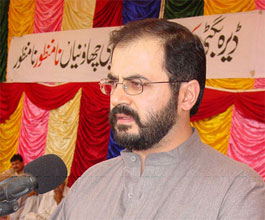 |
Release:
"In
a joint press statement Baloch Human
Rights Council UK, Balochistan Rights
Movement and World Sindhi Congress
have announced that the second martyrdom
anniversary of the great Baloch
hero, Mir Balaach Marri, will be
held on Sunday 22nd November from
1-4 pm in London. The event will pay
tribute to the life, work, contributions
and ultimate sacrifice of Mir
Balaach Marri who was target-killed
by the Pakistan army on 2oth Nov
2007."
The
memorial will be held at University of London Union
building, Room 3E.
Mallet Street, London
WC1E 7HY
Date: Sunday 22 November
2009
Time: 1:00 – 4:00
PM
(Nearest Tube Stations:
Russell Square, Euston Square) For
details, please click
here: |
Nov
21-22, 2009:
Baluchistan International Conference
(organized by American Friends
of Baluchistan)
The first-ever international conference in the U.S. to highlight the plight of
the Baluch people in Pakistan and Iran -- to mark the second anniversary of the
extrajudicial killing of Nawabzad Bala'ach Marri. Mehran Baluch, a brother of
the slain leader and Baluch representative at the U.N. Human Rights Council,
Geneva, will preside over the conference. When: Saturday,
Nov. 21, 2009, 10 am – 6 pm
Where: National Press Club, Washington DC
Click here
for details (event is free, but RSVP)
Panel
assembled for Baluch international moot,
by Ahmar Mustikhan, Newsvine.com, Nov
2, 2009 |
| Baloch
women stage rally in Quetta, Dawn.com, Nov 17, 2009 |
Death
of a social activist, by Ardeshir
Cowasjee, Dawn.com, Nov 15, 2009:
Madiha Baloch, "...My 45-year
old husband, Nisar Baloch, resident
of Old Golimar in Karachi, worked
most of his life for the poor people
of our area, and laboured especially
hard over the past 16 years to preserve
the remaining 480 acres of Gutter
Baghicha Trans-Lyari Park...";
from before: A
message for Lahore, by Ardeshir
Cowasjee, Dawn.com, Jul 2, 2006;Anti-land
mafia Baloch activist shot dead,
by M. Waqar Bhatti, The News, Nov
8, 2009, additional reporting at BalochWarna.
Nisar Baloch was a social worker and
schoolteacher. He started his career
by establishing a street school "Aap
Ka Madressah" that provided free
education to children and adults. |

Beurag Baloch, age 3 |
| Jail
me but free my dad, by Malik Siraj
Akbar, Nov 10, 2009 |
Justice
Dept. Asked For News Site's Visitor
Lists, CBSNews.com, Nov 10,
2009: '...The grand jury subpoena
also required the Philadelphia-based Indymedia.us Web
site "not to disclose the existence
of this request" unless authorized
by the Justice Department, a gag
order that presents an unusual quandary
for any news organization...After
talking to other Indymedia volunteers,
Clair ended up calling the Electronic
Frontier Foundation in San Francisco,
which represented her at no cost..."This
is the first time we've seen them
try to get the IP address of everyone
who visited a particular site," Bankston
said. "That it was a news organization
was an additional troubling fact
that implicates First Amendment
rights."'
Related: Salon
Radio: Rep. Jerry Nadler on State
Secrets Act, by Glen Greenwald,
Nov 10, 2009: 'The key House subcommittee
chairman calls state secrets privilege "the
greatest threat to liberty in this
country"' |
| IFJ:
Situation Report for Pakistan,
Nov. 9, Nov 9, 2009: "Media personnel
in Balochistan contend with alarmingly
regular violence and threats as a
consequence of their work, leading
to widespread self-censorship..." |
|
Bizenjo’s
autobiography launched, by Rasheed
Khalid, The News, Oct 23, 2009; Bizenjo’s political acumen
acclaimed at launch of his autobiography,
by Latif Baloch, Dawn.com, Sep 29,
2009
From
before: Mir
Ghaus Baksh Bizenjo's Speech at
DAR-ul-AWAM on 12th December 1947
at Dhadhar. |
| Hyrbyair
Marri's speech in the UK House of
Commons, Oct 29, 2009, balochwarna.com:
"...The UK however should know
that if it was not for the secular
Baloch people in the region, today
Balochistan would have been full of
Taliban extremists..." (video, part
1 and part
2), reposted here. |
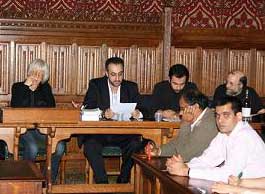 |
| Oct
25, 2009: BNP
(Baloch National Party) Rally in Khuzdar, Balochistan (district
profile) |

headband reads: Free Balochistan
|
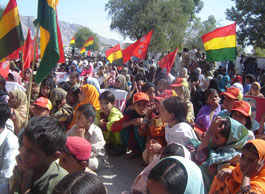
Khuzdar, Balochistan: BNP Rally, Oct
25, 2009 |
| HRCP
reports 30 new ‘forced disappearances’ in
Balochistan, by Ghulam Dastageer,
TheNews, Oct 19, 2009 |
| New
film: This
is where we take our stand:
Veterans reveal the truth about
Iraq and Afghanistan in a six-part
web series by David Zeiger, Director
of Sir! No Sir!, and Bestor Cram & Mike
Majoros, Directors of Unfinished
Symphony. 2009 |
| New: White
House "Ordered" Lawmakers to
Amend FOIA in Order to Conceal Torture
Photos, by Jason Leopold, truthout.org,
Oct 17, 2009: "Obama's
decision to conceal the photos marks
an about-face on the open-government
policies that he proclaimed during
his first days in office..." |
| Video: Interview
with philosopher Slavoj Zizek in
NY, Democracy Now, Oct 15, 2009: "We
really live in cynical times..." |
| For
recent updates related to
extrajudicial killings of Baloch
nationalists, as well as protests
scheduled by Banok Karima Baloch
to draw attention to abducted Zakir
Majeed (Senior Vice Chairman BSO
Azaad), and other disappeared, visit
sagaar.org |
| Inside
look at Amnesty International: Irene
Khan: Banged to rights, The
Independent, Sep 11, 2009: Just
when Amnesty International might
have been addressing prisoner abuse,
it turned its focus elsewhere. Its
out-going boss admits to a sense
of failure. Paul Rodgers meets Irene
Khan: "The more resources Amnesty
pumps into campaigning against poverty
and women's issues, the fewer it
has available to defend prisoners
of conscience. The world has plenty
of organisations devoted to alleviating
poverty, though often without the
human rights angle, but few that
are dedicated to prisoners of conscience,
and none as effective as Amnesty....When
we meet, Khan is preparing for a
trip to Sierra Leone to launch an
Amnesty campaign to raise awareness
of maternal mortality..." |
| HRCP
(Human Rights Commission of Pakistan)
for demilitarisation of Balochistan,
DailyTimes.com.pk, by Malik Siraj
Akbar, Oct 12, 2009: "[Asma
Jahangir, HRCP Chairwoman] said the
human rights organisation had “ample
evidence to support the allegations
of the victims’ families
that the perpetrators of the enforced
disappearances are intelligence agencies
and security forces. This has been
conceded by officials and politicians
in high authority”. |
| Abuse
in America-Material Witness Process: Afghan
Men Tricked Into U.S. Trip, Detained, by Carrie Johnson, WashingtonPost.com,
Oct 10, 2009 |
| USA: Pro-Independence
Baloch activists Protest against
Musharraf, by Ahmar
Mustikhan, BalochWarna.com, Oct 10,
2009 |
|
Ehsan
Arjemandi:
Abducted in Pakistan on Aug. 7, 2009.
Still missing, Oct 11, 2009
Aid
to Pakistan Military Troubling, Looking for Trouble, by Larry Johnson of
Seattle Post-Intelligencer, Oct 9, 2009 |
Update
October 8, 2009
Given the refusal on the part of Pakistan's
government or its security agencies
to make public information regarding
Ehsan's arrest, it still can not
be determined with certainty whether
Ehsan is held in Pakistan or has been
extradited to Iran. We call on the
Pakistani government (and/or the Iranian
government) to honor international
conventions and inform the Norwegian
government of the whereabouts of its
citizen. thebaluch.com
apologizes for any errors in our reporting.
Update
October 7, 2009
Letter
to Norwegian Minister of Foreign Affairs
on behalf of Ehsan Arjemandi,
by BHRC-Canada, Oct 7, 2009
past
updates and what is known of Arjemandi's arrest at this time |
| In
the region: American
troops in Afghanistan losing heart,
say army chaplains,
TimesOnline, Oct 8, 2009: "...They
feel they are risking their lives
for progress that's hard to discern,” said
Captain Sam Rico, of the Division's 4-25 Field Artillery Battalion. “They are
tired, strained, confused and just want to get through.” The chaplains said
that they were speaking out because the men could not..." |
| Petition
Amnesty International: Please
sign this petition on
behalf of missing Baloch. Also,
please email Amnesty International
Sec. General Irene Khan: ikhan@amnesty.org on
behalf of missing Baloch. |
Human
Rights Commission of Pakistan (HRCP)
Turbat Fact Finding Report: Three
Baloch leaders Assassinated in District
Kech, April 24–29, 2009 (doc),
Oct 7, 2009;
Release by
Munir Mengal (about Munir Mengal: The
Man Who Survived Pakistan's Gestapo,
by Rahimullah Yusufzai, The News,
December 13, 2008) |
| Video: Mehran Baluch's Speech at UN Human Rights Council, October 6, 2009 |
 |
Balochistan: Human Rights Violations Discussed at HRC, UNPO report, Sep 28, 2009 |
| "Human rights activist Mr. Noordin Mengal explains the role of the Pakistani government in the atrocities taking place in the Balochistan province. He presents his case at a side event of the UN Human Rights Council, where not only the case of Balochistan, but also that of the Gilgit-Baltistan region was discussed." |
Release: World
Sindhi Conference (WSC) ORGANISES
A BRIEFING AT THE HUMAN RIGHTS COUNCIL
IN GENEVA, Sep 18, 2009 (word
doc)
Briefing: Self Determination of Sindh and Balochistan – A Strategy for Regional Peace |
| Human
Rights Council, United Nations,
Geneva, Switzerland: General
State Terrorism is responsible for
human rights violations in Balochistan
and Gilgit-Baltistan of Pakistan,
Press Trust of India, Sep 22, 2009 |
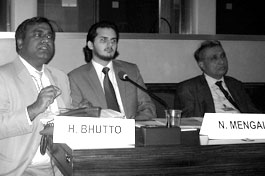
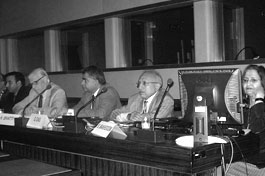
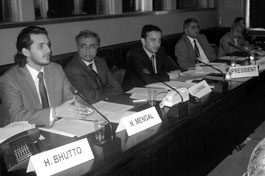 |
| From before: Balochistan Conference Report, UNPO, Aug 14, 2009: Self-Determination in Balochistan-Its Relation to Regional and Global Security, Palais Des Nations, Geneva, Jun 8, 2009 |
The list of disappeared or arrested
Baloch appears countless, but here
are some more photos provided by
readers:
|
Begum Jamila Daud |
Friends: Begum Jamila Daud, president of Anjuman
Khawateen-e-Islam, has expanded
the mandate of her NGO in an effort
to help coordinate and deliver aid
to Baloch IDPs. |
| Begum
Jamila's NGO was established in 1982
and is registered with the
Government of Balochistan under the 1966 Social Welfare Act (Social Welfare
Department Registration No. S.W.D. 71).
Your
contributions can help save the lives
of people living in Baloch IDP
camps. At present, these people receive
no state or foreign aid. Please
donate generously. For further
info, please visit
the site. |
 |
From
before: Human
Rights Council addresses on
behalf of the Baloch, by Mehran
Baloch, years 2002 - 2009 |
Your Urgent Action needed today
Dear Supporters of Human Rights, the Baloch Unity Conference requests that as
many people as possible email the Secretary General of Amnesty International,
London, on behalf of countless missing Baloch: ikhan@amnesty.org.
Please click here for
the full text of this message and a partial list
of missing Baloch. |
Ehsan Arjemandi |
Update:
Sep 28, 2009
|
Officials at the Norwegian
embassy in Islamabad are pursuing all diplomatic channels available to them in an effort to learn the wherabouts of Ehsan Arjemandi and to secure his release. Thus far they have been unsuccessful. If you live outside Pakistan, please contact your respective senators, representatives and/or embassy officials and request that they pressure the government of Pakistan to disclose the identity and status of all disappeared Baloch.
(background: Norway
to raise Arjemandi issue during
UN assembly, By Ahmar Mustikhan,
Baloch Warna.org, Sep 22, 2009) |
| Human
Rights-related: Budget
airline pilot, Julio Alberto Poch, arrested
over 1,000 deaths in Dirty War, Sep 24, 2009 |
| Norway
to raise Arjemandi issue during
UN assembly, By Ahmar Mustikhan,
BalochWarna.org, Sep 22, 2009: "Norway
said it will take up the issue of one
of its nationals, who went missing after
being abducted by the Pakistani Military
Intelligence in the restive Baluchistan
province more than six weeks ago, at
a meeting with Pakistan foreign minister
during the United Nations General Assembly
in New York." |
| American
Rose fights for Pakistani husband,
by Salman Siddiqui, Dawn.com, Sep
17, 2009 |
| Release: Sindhi
American Political Action Committee
(SAPAC):
SAPAC was established to engage in political advocacy and lobbying activities
on behalf of the Sindh province in Pakistan, and the Sindhi people internationally. Summary
of the September 16, 2009, meeting and video footage of speeches related to
Sindh and Balochistan will be forthcoming... |
| In
the region: New'
Bagram rules under fire, by
William Fisher, atimes.com, Sep
16, 2009: " Chip Pitts . .
. told IPS, "Judge Bates' decision
laudably made that distinction and,
rather than fight it, the Obama
administration should take the opportunity
to restore sensible and moral rules
in keeping with nearly a millennium
of legal evolution." |
| Bullets
Sprayed on Innocents, reposted
at balochWarna.com, Sep 12, 2009,
from Sep 9 BBC Urdu report by Riaz
Suhail (with video from Thump when
Frontier Corps fire) |
Release: BALOCH
HUMAN RIGHTS COUNCIL-CANADA
Subject: Protest meeting against extrajudicial killing and firing on peacful
civilian in Balochistan by Pak Army, Sep 11, 2009 (details and videos)
This protest meeting is being held on:
Date: September 12, 2009
Location: 1338 old Yorkmills Road, Toronto
Time: 6:30 |
 |
Press
release,
Hyrbyair Marri, Baluch
Sarmarchar,
Sep 11, 2009 (in Urdu) |
| Amnesty
plan ready for Balochistan,
by Syed Irfan Raza, Dawn.com, Sep
11, 2009: "President Zardari
. . . had said: ‘Ways and means
may be explored for the voluntary
return of exiles and grant of general
amnesty to political prisoners .
. . Give them the autonomy they
have been demanding for 60 years,'
he said. |
| From
before: Two years later and
nothing has changed: Pakistan/Iran:
The Baluchi Minority's 'Forgotten
Conflict', by Abubakar Siddique,
Radio Free Europe, Oct 25, 2007 |
| Baluch
killings; Sen. McCain's help sought
for independent Baluchistan,
by Ahmar Mustikhan, Newsvine, Sep
9, 2009 |
| Mass arrests continue in Balochistan, Two BSO azaad member went missing, BalochWarna.com, Sep 9, 2009 (source: sagaar.org) |
U.S.
Tried to Soften Treaty on Detainees,
by R. Jeffrey Smith, WashingtonPost.com,
Sep 8, 2009;
Despite
Slump, U.S. Role as Top Arms Supplier
Grows, by Thom Shanker, NYTimes.com,
Sep 6, 2009 |
Frykter
broren holdes på torturcelle,
NRK, Sep 8, 2009
|
Sherry
expresses concern over Balochistan
killings, Dawn.com, Sep 8, 2009
Release: A
Statement by the Asian Human Rights
Commission: PAKISTAN:
Frontier Constabulary stormed peaceful
memorial service, killing one and
critically injuring women and a child,
Sep 7, 2009
For additional information, see report by
Archen Baloch, Sep 7, 2009.
videos from the event: here and here. |
 |
Frontier Constabulary
storms memorial
service for
Meer Jan Meeral (left), who was reportedly
killed by the Pakistani army on Sep
3, 2009.
Statement submitted by the Asian Legal
Resource Centre (ALRC): PAKISTAN:
Police threaten indiscriminate revenge
killings in Balochistan, Sep 2, 2009 |
| For
other reports regarding missing persons,
see sagaar.org,
most recently Mujeeb Baloch and Bebagr
Baloch. |
Release: Oslo
Demonstration
'Friends of Ehsan' and supporters will hold a demonstration in Oslo, Norway,
to protest the abduction of Norwegian Baloch Ehsan Arjemandi and the disappearances,
arrests and extrajudicial killings of other Baloch political prisoners, both
in Iran and Pakistan. for
more information
Appeal
published in Dagbladet.no |

photo source: dailytawar.com |
R.I.P.
Shutter
down strike observed in Balochistan,
Dawn.com, Sep 1, 2009: "The call
for strike was given by Baloch nationalist
parties against the killing of BNM
leader Rasool Bakhsh Mengal." |
photo source: dailytawar.com |
The
body of Mir Rasool Baksh Mengal: signs
of torture (photo tribute at baluchsarmachar site) |
2
killed as missing Baloch leader
found dead, by Malik Siraj Akbar,
DailyTimes.com.pk, Sep 1, 2009:
"Mengal was allegedly whisked away
by intelligence agencies from Uthal
area on August 23."
Additional reports: Balochwarna.com, Gwank.org |
| |
| > MORE HUMAN RIGHTS-RELATED NEWS IN
ARCHIVE |
| >>
Also see events archive: more
in events |
| |
| from
before: |
|
Appeal: BHRAA:
Norwegian-Baloch human rights activist
was abducted by Pakistani "military
forces", feared tortured, Radio
Balochi.org, Sweden, Aug 11, 2009. |
| Ehsan
Arjmandi, Norwegian Baloch activist,
arrested in Pakistan, by intellibriefs,
Aug 11, 2009 |
| Baloch
political activist Mr Ehsan Arjumandi
arrested at Uthal check point,
Aug 7, 2009, balochwarna.org: A
Norwegian citizen visiting family
in Balochistan was removed from
a bus by plain-clothes men in umarked
cars while traveling to Karachi. |
 |
| Qambar
Baloch brought before court, Balochwarna.org,
Jul 15, 2009: Eyewitnesses report
that Qambar could not walk properly.
Note the chains in the photo. |
 |
From
before : Qambar
Jan tho kuja hey?, by Malik
Siraj Akbar at Malik Siraj Akbar
writes, Jul 11, 2009: "...Fresh
reports suggest that this amazing
Baloch activist has been whisked
away by the personnel of the
Frontier Corps and the intelligence
agencies..."
Pakistan's
Other War, by Matthieu
Aikins, National Post,
May 14, 2009
|
|
| |
>> more
in events or human
rights archive |
|
| |
| |
|
| |
|
|
| |
|